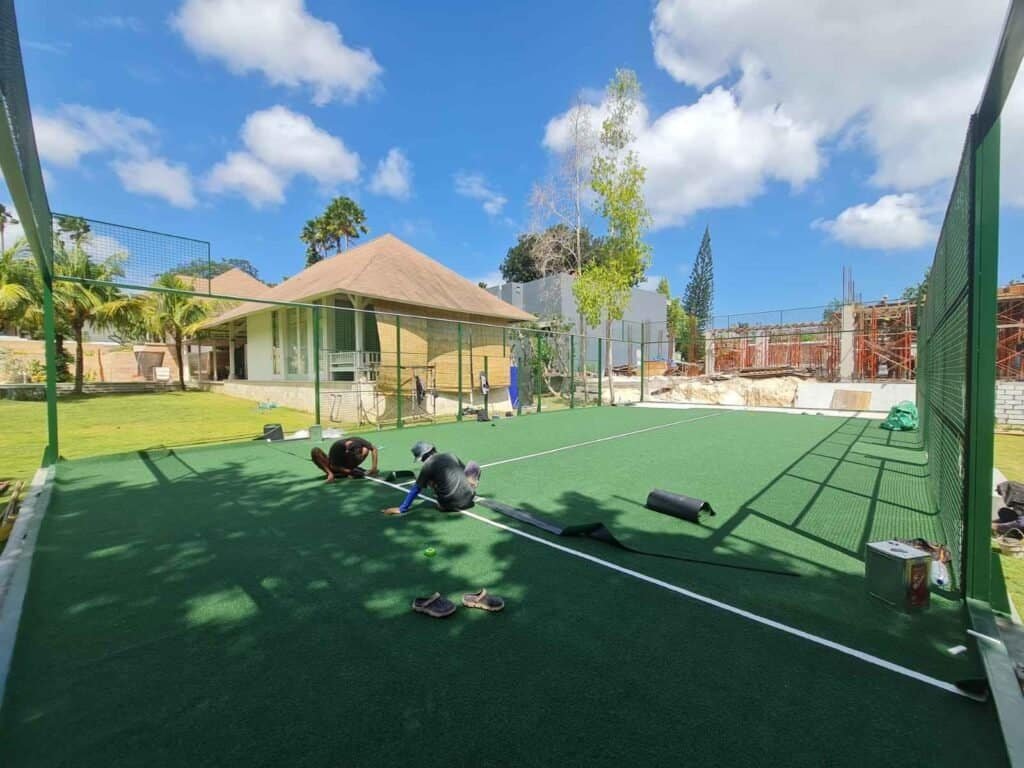
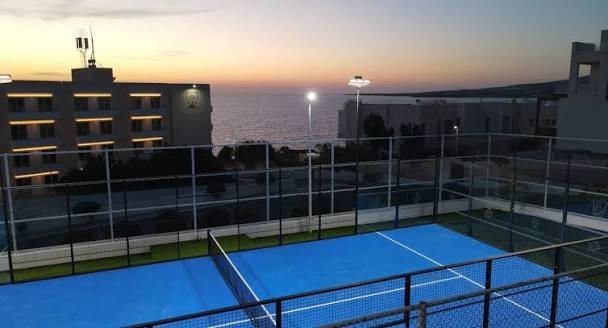
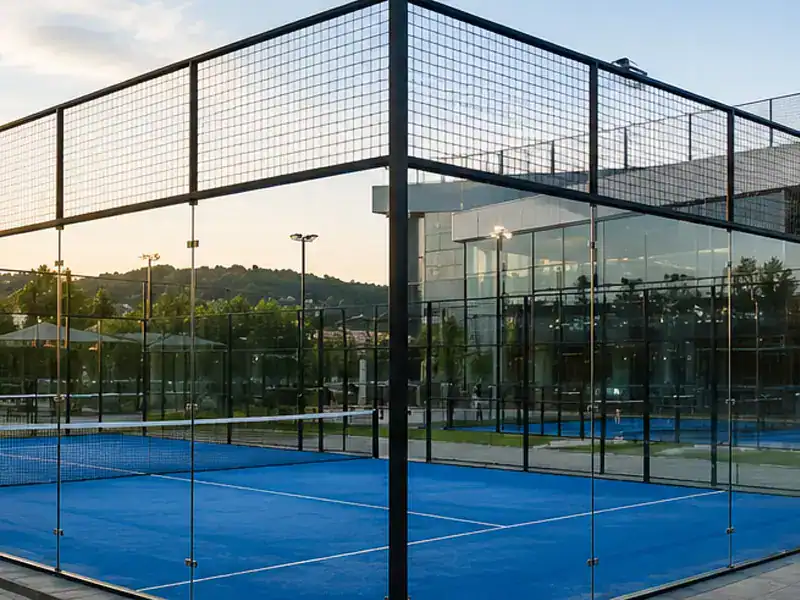
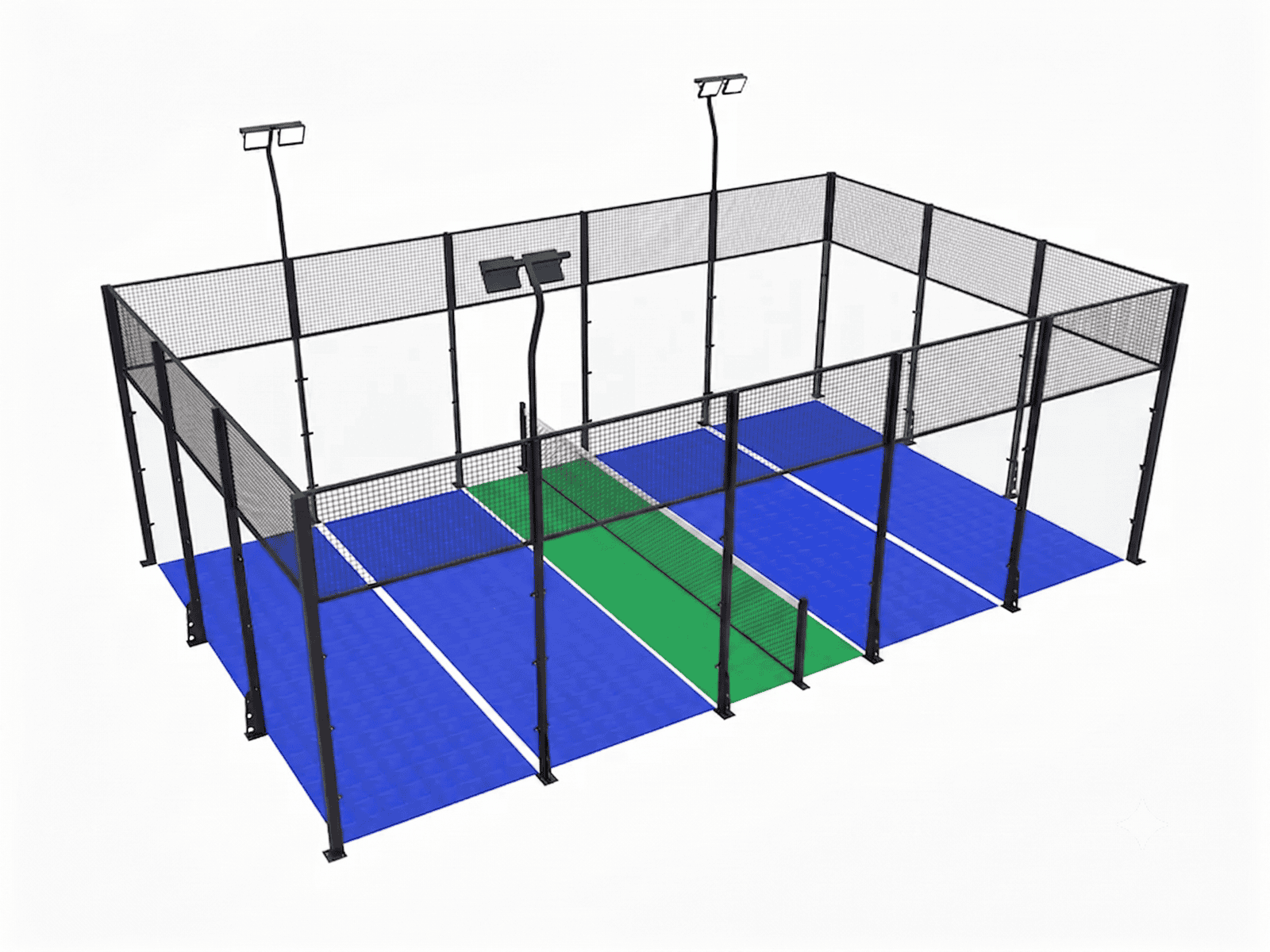
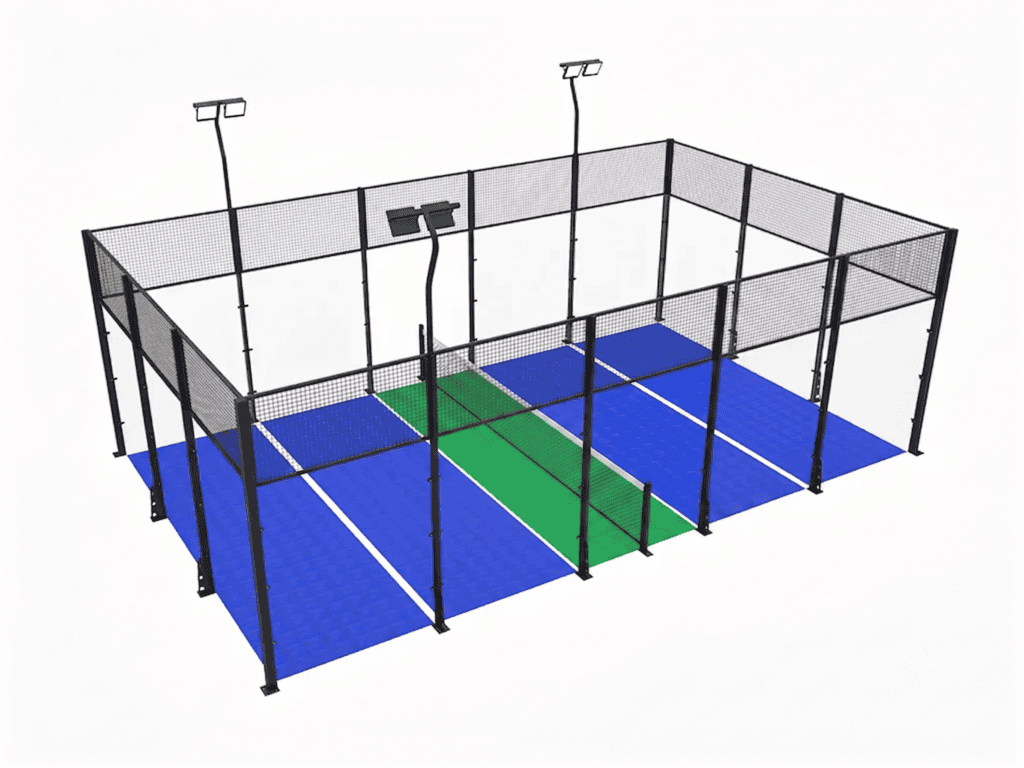
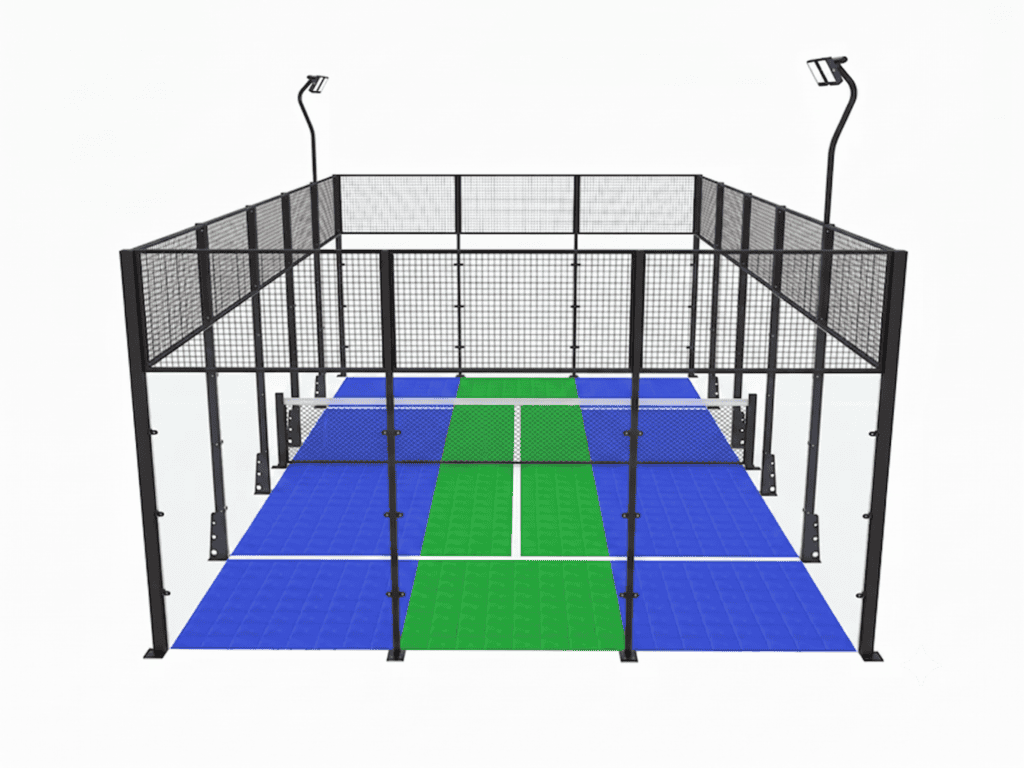
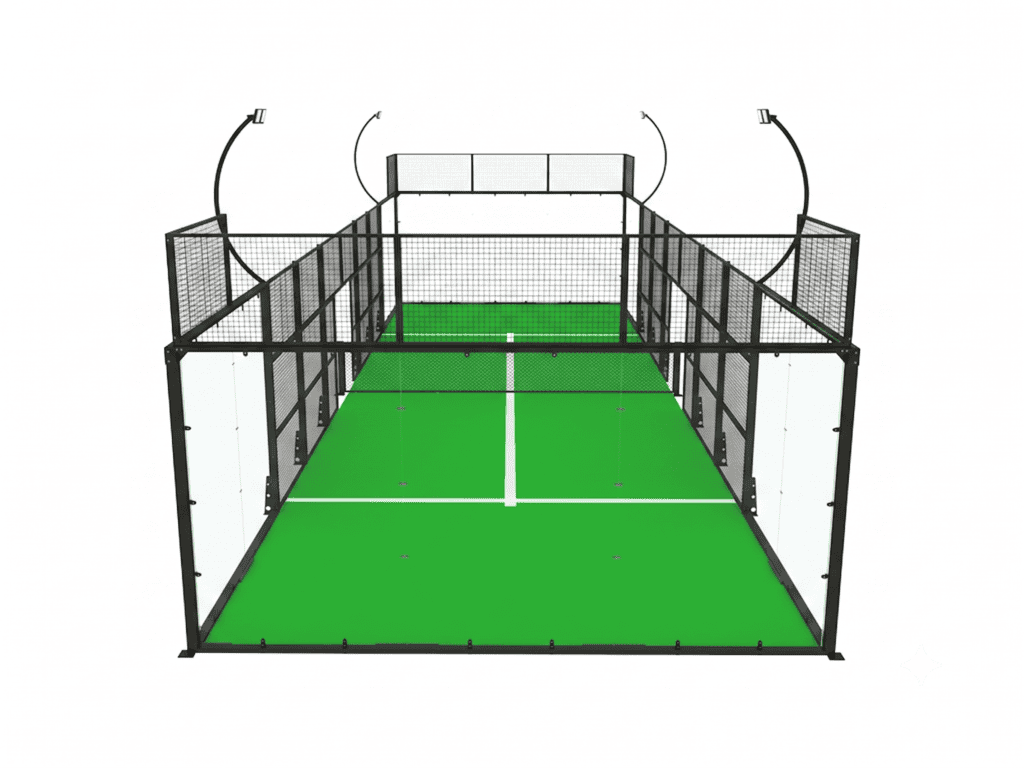
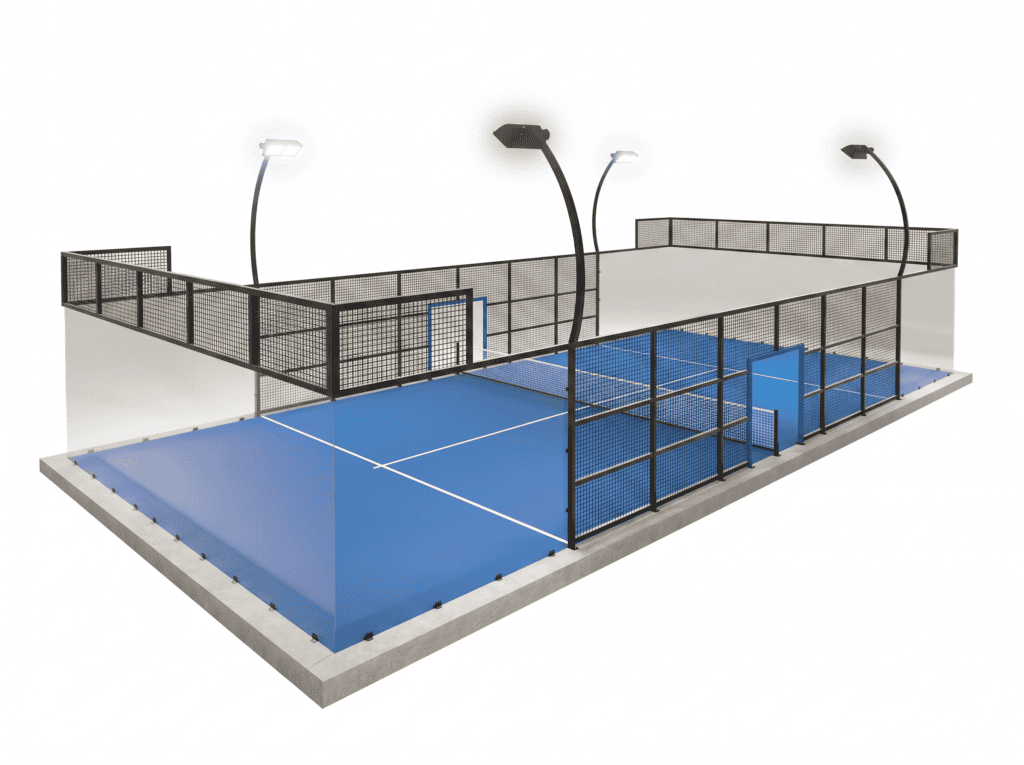
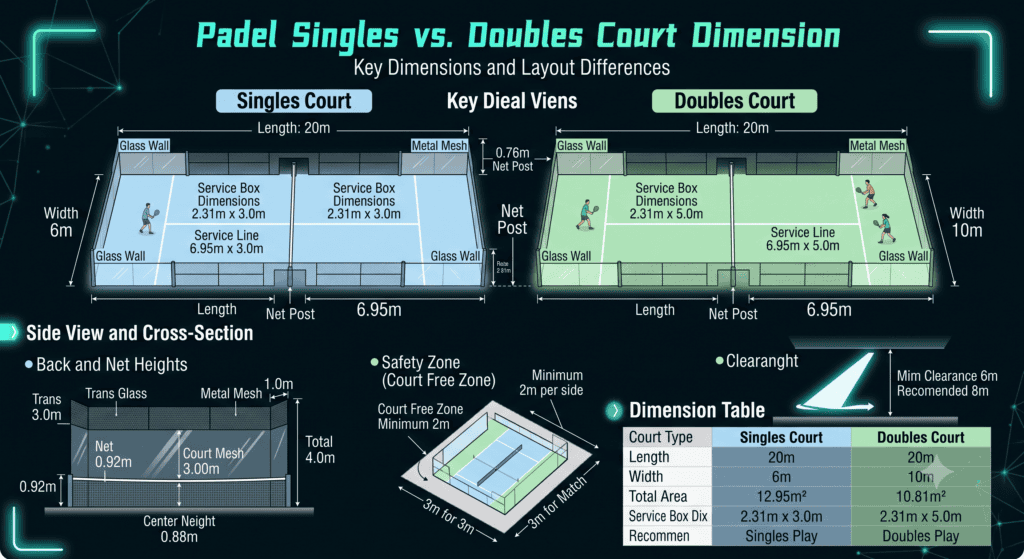
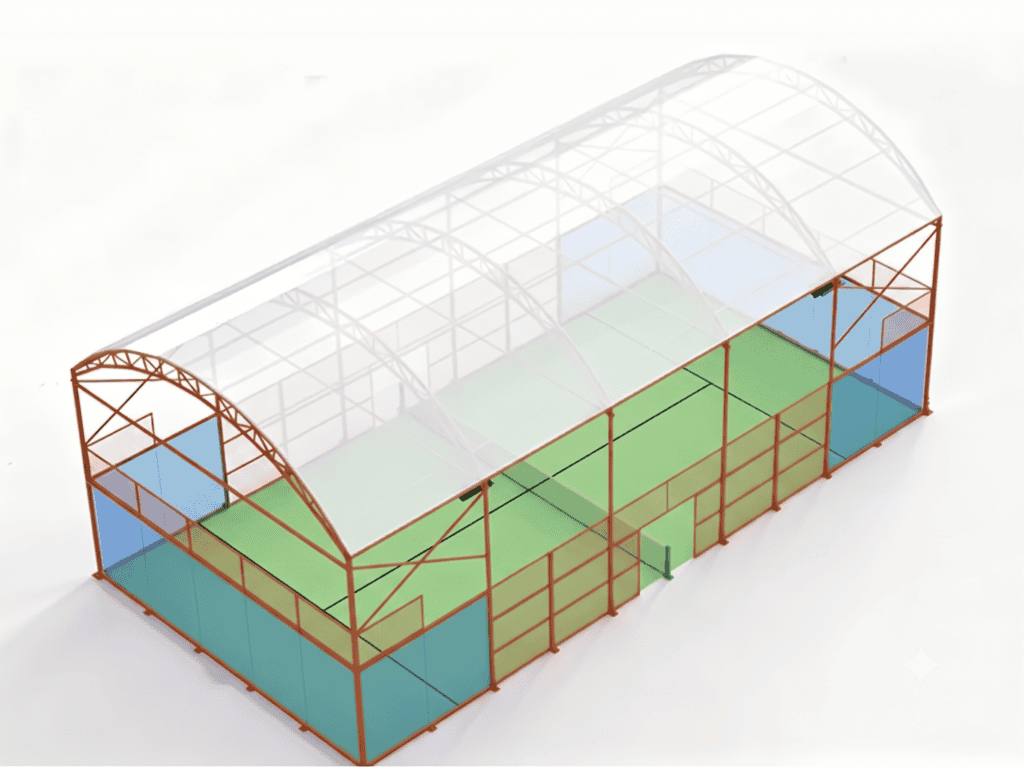
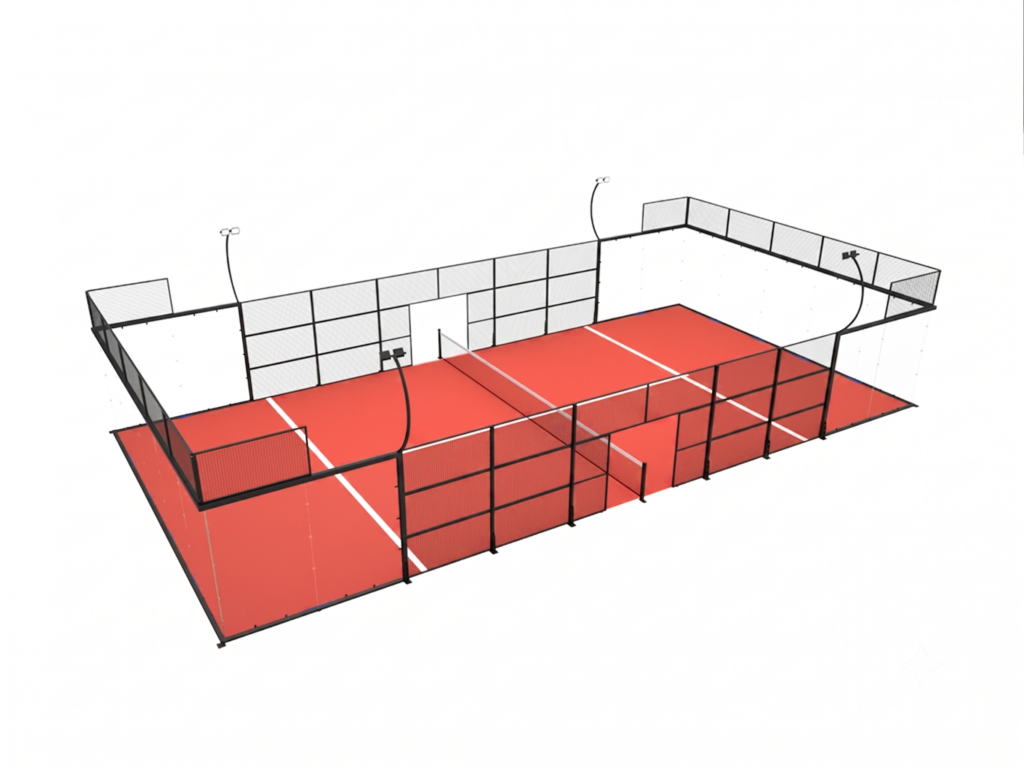
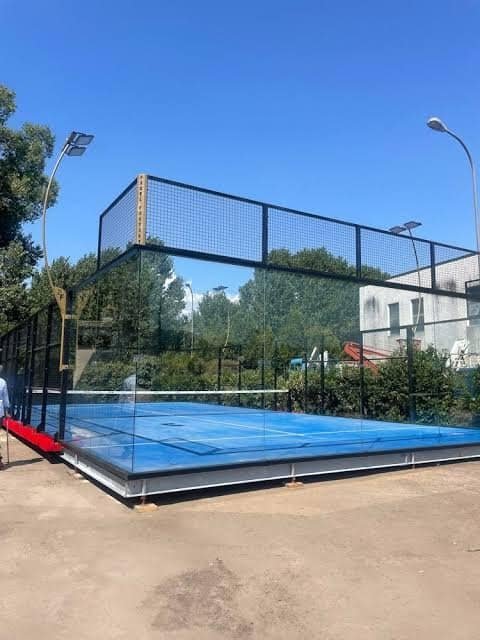
A Turkish padel company approached PP Courts for a four-court outdoor padel project in Turkey, requesting a complete factory-direct solution covering the steel structure, tempered glass, artificial turf, LED lighting and installation accessories.
The buyer provided detailed technical requirements and wanted to compare both new production and available ready-stock courts, with particular attention to structural specifications, component quality, production lead time, packing efficiency and overall project cost.
Based on these requirements, PP Courts prepared a complete technical and commercial configuration for four outdoor courts.
Customer Requirements
The project called for a standard 20 × 10 m outdoor padel court designed around a hot-dip galvanized steel structure.
The requested configuration included:
Component
Project Requirement
Court Size
20 × 10 m
Installation
Outdoor
Main Steel Posts
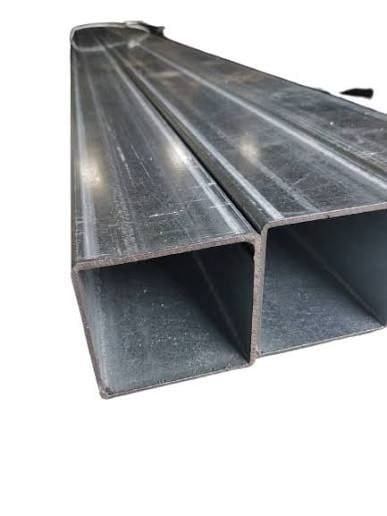
100 × 100 × 3 mm
Secondary Steel
80 × 40 × 3 mm or equivalent
Surface Protection
Hot-dip galvanized
Welded Mesh
Approx. 4 mm wire / 50 × 50 mm
Tempered Glass
12 mm safety glass
Glass Quantity
18 panels per court
Glass Panel Size
Approx. 2 × 3 m
Artificial Turf
12 mm
Turf Density
63,000+
Turf Dtex
9,500+
LED Lighting
8 × approx. 200 W
Light Poles
Included
Fasteners
Stainless steel
Quantity
4 complete courts
Outdoor Steel Structure
Because the courts are intended for outdoor installation, corrosion protection was an important part of the project requirements.
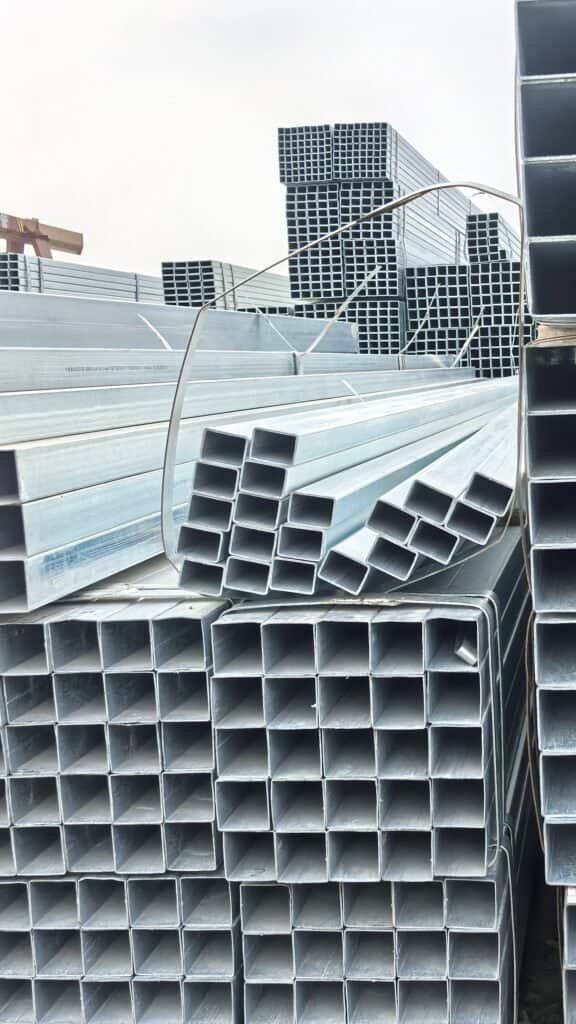
The requested structure uses hot-dip galvanized steel, with 100 × 100 × 3 mm main posts and 80 × 40 × 3 mm secondary structural sections or an engineering-equivalent configuration.
For outdoor projects, PP Courts evaluates the complete structural system rather than steel dimensions alone. Local wind conditions, foundation design, anchoring and site exposure should also be considered before the final structural configuration is confirmed.
12 mm Tempered Safety Glass
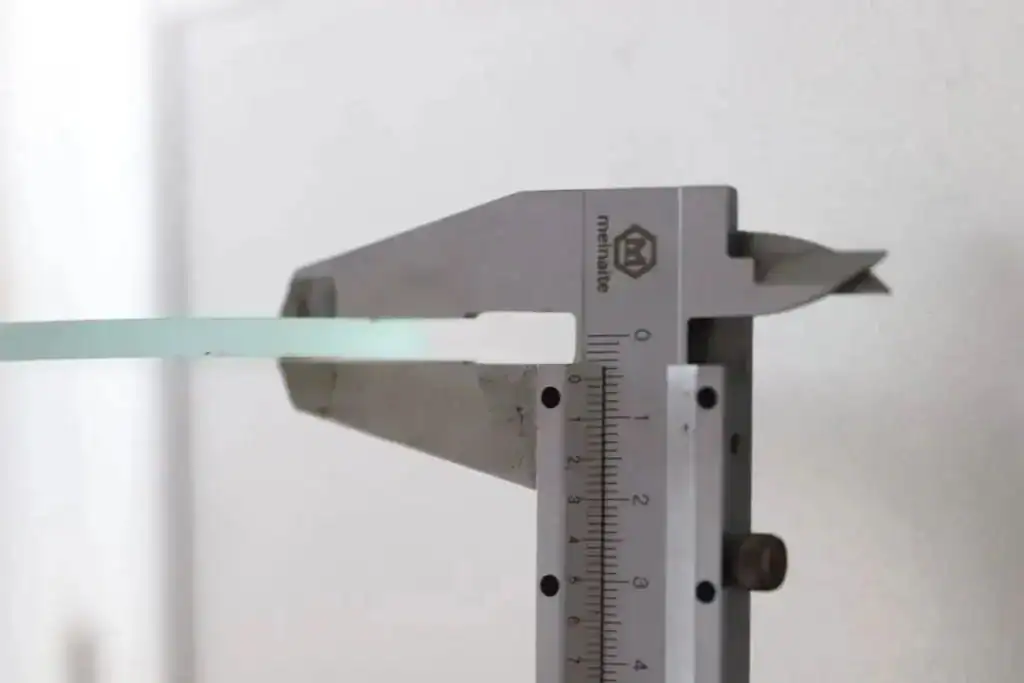
The requested configuration specifies 12 mm tempered safety glass, with approximately 18 panels per court.
For a four-court project, this means approximately 72 tempered glass panels are required.
Glass dimensions and hole positions must match the steel structure precisely, so the glass and frame system are checked together before packing and shipment.
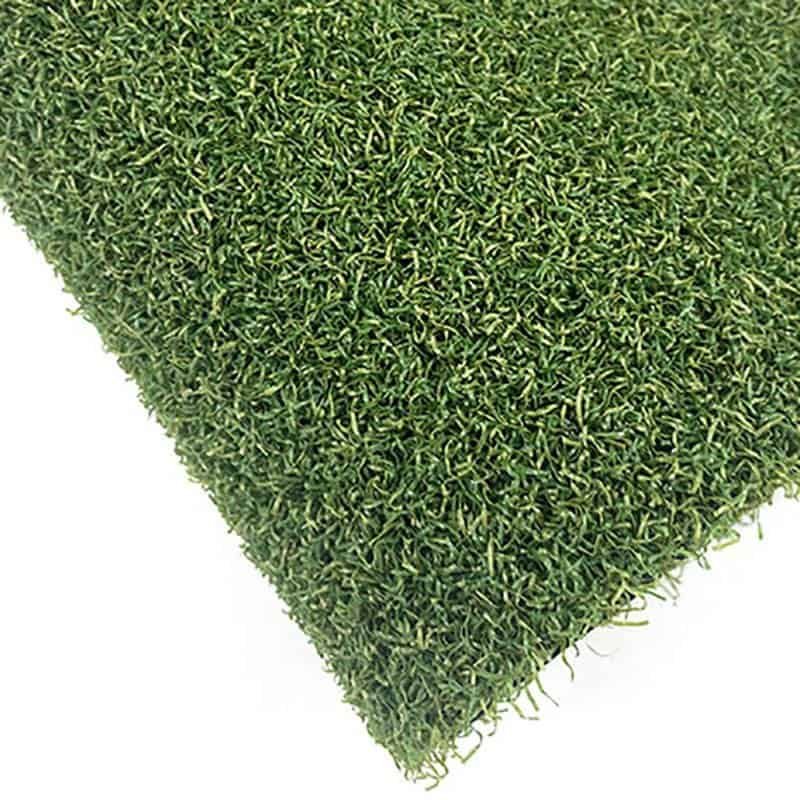
Artificial Turf
The buyer requested 12 mm artificial turf with:
63,000+ stitch density
9,500+ Dtex
Outdoor suitability
Turf specification affects ball response, player movement, durability and long-term maintenance, so PP Courts confirms the final turf model according to the project’s playing requirements and budget before production.
LED Lighting System
Each court is configured with approximately:
8 × 200 W LED sports lights
with the required lighting poles and mounting components.
For four courts, the complete project therefore requires approximately 32 LED fixtures.
Lighting configuration can be adjusted according to recreational, club or competition-level requirements and the required illumination level at the site.
Complete Four-Court Supply Scope
The requested supply package includes:
Structural steel system
Welded mesh frames
12 mm tempered safety glass
Artificial turf
LED lighting system
Lighting poles
Stainless steel bolts
Anchoring and fixing components
Installation accessories
The objective is to ship the major court components as a coordinated system rather than requiring the buyer to source steel, glass, turf and lighting separately.
New Production vs. Ready-Stock Courts
An important part of this Turkey project was the buyer’s interest in comparing new-production courts with possible ready-stock opportunities.
Ready-stock courts can occasionally become available because of production scheduling changes, cancelled projects or surplus production. However, stock availability changes continuously and the specification may not exactly match a new project.
For available stock courts, buyers should verify:
Court model
Quantity
Production date
Steel specification
Glass specification
Turf specification
Lighting
Actual product photos or videos
Packing condition
Gross weight and CBM
Earliest shipping date
For this reason, PP Courts evaluates ready-stock opportunities separately from standard new-production quotations.
Packing and Shipping to Turkey
For this project, the buyer requested both EXW and FOB pricing, together with detailed packing information.
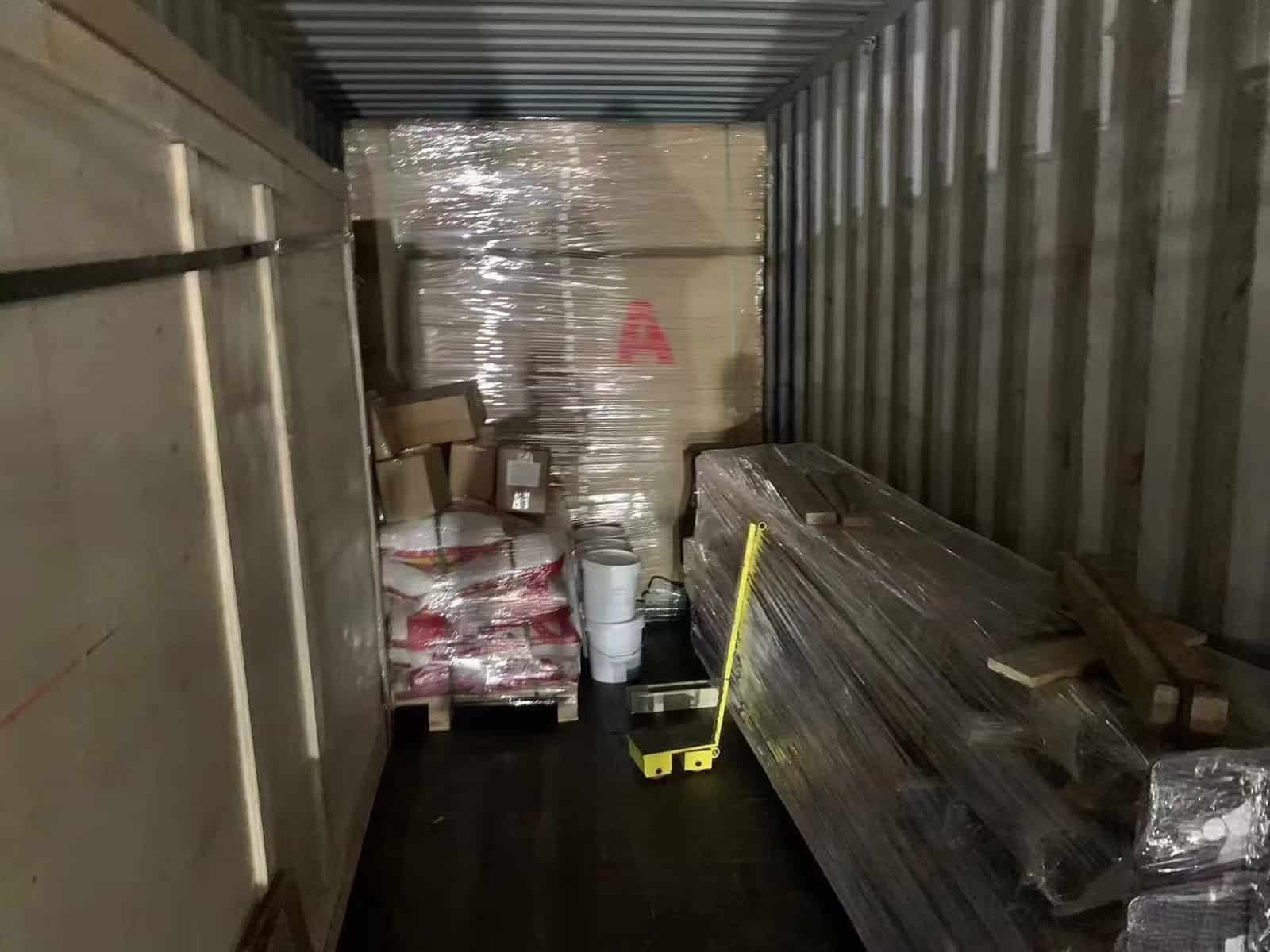
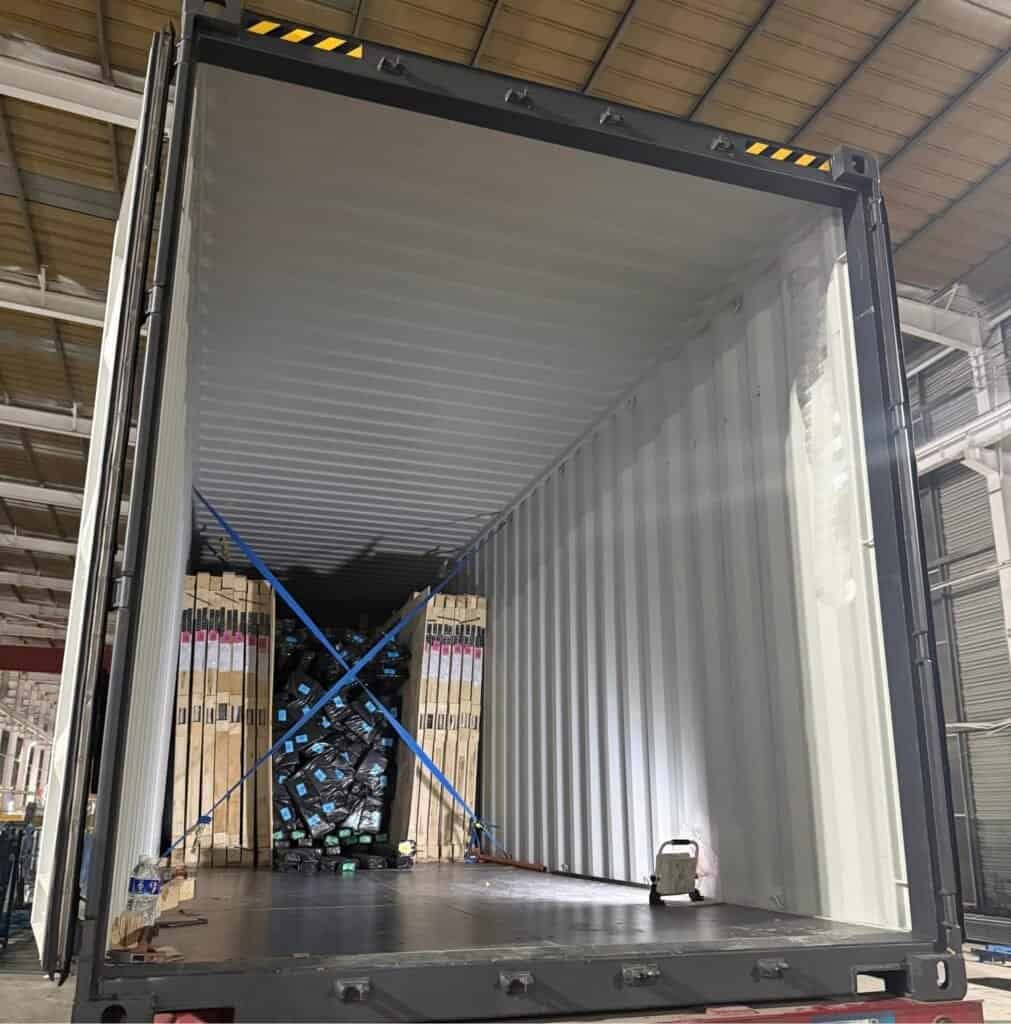
Before shipment, the four-court order would be organized into separate component packages for the steel structure, glass, turf, lighting and accessories.
A final packing list can specify:
Number of packages Net and gross weight CBM Container requirement Loading plan
For Turkish projects, FOB shipment can be arranged through Tianjin Port, depending on the final production and loading configuration.
What This Project Shows
This inquiry illustrates an important point when sourcing padel courts from China:
The factory price alone is not enough to compare two padel court quotations.
For example, two suppliers may both quote a “12 mm panoramic padel court,” while using different steel dimensions, steel weights, galvanizing processes, turf specifications, lighting systems and accessories.
Professional buyers should therefore compare quotations using the same technical specification and supply scope.
Planning a Similar Padel Court Project?
PP Courts supplies complete padel court systems for clubs, distributors, contractors and sports-facility projects.
If you are planning an outdoor padel project, send us:
Project country and city Number of courts Court type Indoor or outdoor installation Required delivery date
Our team can recommend the appropriate court configuration and prepare an EXW, FOB or CIF quotation based on your project requirements.
China has become an important sourcing market for padel courts, particularly for buyers looking for factory-direct pricing, OEM customization, steel fabrication capability and complete court systems for international projects.
But who are the best padel court manufacturers in China?
There is no official industry ranking that identifies a single “best” Chinese manufacturer. The right supplier depends on the project: a distributor ordering 20 courts has different requirements from a club purchasing one panoramic court or a coastal resort requiring enhanced corrosion protection and wind-load engineering.
For this guide, we compare Chinese padel court manufacturers using buyer-relevant criteria including:
Manufacturing capability
Padel court specialization
Product range
Published technical specifications
Production capacity
Export experience
OEM and customization capability
MOQ flexibility
Pricing transparency
Installation and after-sales support
The goal is not to declare one company the universal No. 1 manufacturer. Instead, this guide helps buyers identify which Chinese padel court suppliers are worth including in a sourcing shortlist and what should be verified before placing an order.
Important: Factory size, production capacity, export markets, prices and other company-specific figures in this guide are based on publicly available manufacturer information unless otherwise stated. Buyers should independently verify current specifications and commercial terms before purchasing.
Quick Comparison of Padel Court Manufacturers in China
Classic, Panoramic, Super Panoramic, Covered, Singles
High
Buyers wanting published reference prices
Fortune Padel
China
Large-scale export production
Multiple court systems
Quote required
Distributors & repeat orders
AKEEPO
Guangzhou
20,000 m²; 15 production lines
Classic, Panoramic, Full Panoramic, Mobile
Quote required
Buyers wanting detailed specifications
PanoCourt
Hebei
12,000 m² reported factory
Panoramic & customized courts
Published reference ranges
Custom/OEM projects
Boyue Sports
Shandong
5,000 sets/year reported capacity
Classic, Panoramic, Super Panoramic, Covered
Quote based
Large projects
NEWLEZHEN
Hebei
Factory-direct production
Classic, Panoramic, Super Panoramic, Covered
Quote required
OEM & project customization
Manufacturing scale and capacity figures are manufacturer-reported or published on supplier profiles and should be verified during supplier due diligence.
1. PP Courts — Best for Volume and Custom Projects
Location: China Reported Factory Area: 15,000 m² Reported Annual Capacity: 2,500+ complete padel courts Main Products: Panoramic, Super Panoramic, Classic and Singles Courts Best For: Distributors, contractors and multi-court projects
Company Overview
PP Courts is a China-based padel court manufacturer focused on complete court systems for international projects.
According to the company, its specialized production facility covers approximately 15,000 m² and has the capacity to manufacture and ship more than 2,500 complete padel court sets per year.
Unlike general sports-equipment suppliers that include padel as one product category among many, PP Courts positions its manufacturing operation specifically around padel court engineering and production.
Manufacturing Capability
PP Courts states that it controls production from galvanized steel processing through structural fabrication and surface finishing.
For international buyers, this type of manufacturing control can be particularly important because the steel structure is one of the largest cost and engineering components of a complete padel court.
Its product range includes:
Standard Panoramic Padel Courts
Super Panoramic Padel Courts
Classic Padel Courts
Singles Padel Courts
Customized court configurations
Why Include PP Courts in Your Supplier Shortlist?
PP Courts may be particularly relevant for buyers purchasing multiple courts because of its reported annual production capacity and focus on complete export-ready court systems.
Potential applications include:
Padel clubs
Sports-facility contractors
Importers
Distributors
Resorts
Multi-court developments
Private-label/OEM projects
2. SSTD — Best for Published Price Transparency
Company: Shengshi Sports Tech Tianjin Co., Ltd. Location: Tianjin, China Established: 1998 Reported Factory Area: More than 10,000 m² Main Products: Classic, Panoramic, Super Panoramic, Covered and Singles Courts Best For: Buyers who want public reference pricing before requesting quotations
Company Overview
SSTD is a Tianjin-based sports-equipment manufacturer producing padel courts as well as other sports-facility systems.
One of its main advantages for sourcing research is pricing transparency.
While many Chinese manufacturers require buyers to request a quotation before seeing any pricing information, SSTD publishes reference prices for several padel court models.
Published examples include approximately:
Court Type
Published Reference Price
Classic Padel Court
US$8,000–9,100
Panoramic Padel Court
US$8,000–9,900
Super Panoramic Padel Court
US$8,000–9,900
These are manufacturer-published reference prices and should not be interpreted as fixed market prices.
Final pricing can change according to steel specifications, turf, lighting, glass, customization, quantity and shipping terms.
3. Fortune Padel — Best for Distributor and Repeat-Order Programs
Fortune Padel is a Chinese padel court manufacturer focused heavily on international distribution and customized court solutions.
The company states that its production processes follow ISO 9001:2015 standards and include multiple independent quality inspections.
It also emphasizes supply-chain management, customized flooring options and relatively fast production and dispatch.
For distributors, the important consideration is not simply whether a factory can manufacture one court. It is whether the supplier can repeatedly produce courts with consistent:
Steel specifications
Glass dimensions
Surface finishing
Turf
Lighting
Packaging
Spare parts
This makes repeat-production consistency one of the main issues buyers should investigate when evaluating Fortune Padel or any other supplier for a distribution program.
4. AKEEPO — Best for Detailed Technical Specifications
Location: Guangzhou, China Reported Production Base: 20,000 m² Reported Production Lines: 15 Main Products: Classic, Panoramic, Full Panoramic and Mobile Courts
AKEEPO publishes relatively detailed specifications for its padel court systems.
For example, published specifications for its panoramic court include:
20 × 10 m playing dimensions
Q235 hot-dip galvanized steel structure
12 mm tempered safety glass
12 mm artificial turf
Approximately 40,000 stitches/m² turf density
8 × 200 W LED sports lights
4 mm wire mesh
For procurement teams, this level of specification is useful because it makes supplier comparison more objective.
Instead of comparing:
Supplier A: US$8,000
versus
Supplier B: US$9,000
buyers can compare the actual steel, glass, turf, lighting and structural system included in each quotation.
5. PanoCourt — Best for Custom and OEM Projects
PanoCourt is a Hebei-based Chinese padel court supplier focused on factory-direct and customized court systems.
The company reports a 12,000 m² factory and promotes OEM/ODM customization covering court structure, surface, enclosure and branding.
This type of supplier may be particularly relevant for:
Distributors developing private-label products
Clubs requiring custom colors
Branded sports facilities
Non-standard indoor projects
Buyers requiring project-specific configurations
Buyers should request technical drawings before confirming any non-standard court design.
6. Boyue Sports — Best for Large-Capacity Sourcing
Shandong Boyue Sports Equipment offers Classic, Panoramic, Super Panoramic and Covered padel court designs.
A current supplier profile reports production capacity of approximately 5,000 sets per year.
Published specifications for one panoramic model include:
Q235 hot-dip galvanized steel
12 mm tempered glass
100 × 50 × 3 mm main structural sections
8 × 200 W LED lighting
Custom colors
OEM customization
The reported capacity makes Boyue worth considering for larger procurement programs, although buyers should verify actual current output, factory utilization and lead times before relying on stated annual capacity.
7. NEWLEZHEN — Best for Flexible Factory-Direct Projects
NEWLEZHEN is based in Yanshan, Cangzhou, Hebei.
The company presents itself as a factory-direct padel court producer serving clubs, schools, hospitality projects and sports developers.
Its product range includes:
Classic Padel Courts
Panoramic Padel Courts
Super Panoramic Courts
Covered Court Solutions
It also promotes OEM/ODM options for frames, turf and venue branding.
For buyers considering smaller or highly customized projects, the main questions should be MOQ, engineering support, export experience and the supplier’s ability to provide documentation for installation.
Which Chinese Padel Court Manufacturer Is Best for Your Project?
There is no single best padel court manufacturer for every buyer.
A better approach is to match the supplier to the project.
Buyer Type
Main Priority
First-time importer
MOQ, documentation and installation support
Padel club
Playing quality, turf, lighting and warranty
Distributor
OEM capability and repeat-production consistency
Multi-court developer
Production capacity, QC and lead time
Coastal project
Galvanizing and wind-load engineering
Premium club
Panoramic design, finish and lighting
Budget-sensitive buyer
Landed cost rather than FOB price alone
A manufacturer that is ideal for a 20-court distributor order may not be the best supplier for a single premium club project.But both can send me the RFQ, i will give you the best price and suit product .
FAQ
Who are the best padel court manufacturers in China?
There is no official ranking of China’s best padel court manufacturers. Suppliers worth evaluating include manufacturers such as PP Courts, SSTD, Fortune Padel, AKEEPO, PanoCourt, Boyue Sports and NEWLEZHEN. The best supplier depends on project size, specifications, budget, customization and required engineering support.
How much does a padel court cost from China?
Published Chinese manufacturer prices commonly fall around US$8,000–10,000 for many standard and panoramic configurations, although lower and higher quotations exist. Final price depends on steel, glass, turf, lighting, structural design, customization, quantity and Incoterms.
How do I verify a padel court manufacturer in China?
Request the company’s business information, factory address, production videos, technical drawings, material specifications, certifications, export references and recent loading records. For larger orders, consider a live factory inspection or independent third-party audit.
Should I choose the cheapest Chinese padel court supplier?
Not necessarily. A lower price may reflect differences in steel weight, wall thickness, galvanizing, turf, lighting, glass or engineering. Compare technically equivalent specifications and total landed cost rather than FOB price alone.
Can Chinese padel court manufacturers customize courts?
Many Chinese manufacturers offer OEM/ODM customization including frame colors, logos, turf, lighting, structural configurations and branding. Structural modifications should be supported by appropriate engineering drawings and calculations.
What should I ask a padel court manufacturer before ordering?
At minimum, request steel specifications, galvanizing, glass specifications, turf data, lighting, wind-load design, foundation drawings, warranty, production lead time, packing details and installation support.
Conclusion
The best padel court manufacturer in China is not necessarily the factory offering the lowest quotation or claiming the largest production capacity.
For professional buyers, supplier selection should be based on manufacturing capability, technical specifications, quality control, engineering support, export experience and total landed cost.
PP Courts, SSTD, Fortune Padel, AKEEPO, PanoCourt, Boyue Sports and NEWLEZHEN represent different types of Chinese suppliers worth evaluating, from high-capacity production and transparent pricing to OEM customization and specification-driven manufacturing.
The most effective sourcing strategy is to shortlist several manufacturers, send each supplier the same RFQ, and compare technically equivalent offers before making a final purchasing decision.
The global padel industry is expanding rapidly, creating growing demand for padel courts, equipment and installation services.
According to the Global Padel Report 2026, the global market reached 58,334 padel courts in 2025, with 7,898 new courts added during the year, representing approximately 16% year-on-year growth. The market is projected to exceed 91,000 courts by 2028.
This expansion is increasing demand not only for established European padel court manufacturers but also for export-oriented manufacturers in China.
For buyers, however, choosing a padel court supplier involves more than comparing the initial price. Steel specifications, glass quality, artificial turf, lighting, corrosion protection, wind-load design, manufacturing capacity, shipping and installation support can all affect the final project cost and long-term performance.
This guide examines the China padel court supply market, including prices, manufacturing capacity, Chinese suppliers, China vs. Spain sourcing, cost structure and the key factors buyers should evaluate before placing an order.
China Padel Court Market: Key Facts
Indicator
Reference
Global padel courts in 2025
58,334
New courts added in 2025
7,898
Global growth in 2025
Approx. 16%
Projected global courts by 2028
More than 91,000
Implied 2025–2028 CAGR
Approx. 16.0%
Spain installed courts in 2025
Approx. 17,400
Spain share of global installed courts
Approx. 29.8%
Typical published Chinese FOB court price
Approx. US$6,000–10,000
Common court dimensions
20 × 10 m
Typical tempered glass
10 mm or 12 mm
Typical export order quantity
Varies; some manufacturers accept 1 set
Data note: Global market figures are based primarily on the Global Padel Report 2026 and related industry sources. Manufacturer prices, capacity and specifications in this article are based on publicly available company information and should be verified directly before procurement.
Global Padel Court Demand: 2025–2028
Global padel court demand remains on a strong growth trajectory. The number of courts worldwide reached 58,334 in 2025, after 7,898 new courts were added during the year.
The market is projected to exceed 91,000 courts by 2028.
Using 58,334 courts in 2025 and 91,000 courts in 2028, the implied compound annual growth rate is approximately:
CAGR ≈ 16.0%
This is a calculated growth rate based on the published market figures rather than a separately published annual forecast.
The projected increase from 58,334 to more than 91,000 courts means that the global market may require more than 32,000 additional courts over the 2025 installed base by 2028.
For clubs, investors, distributors and sports-facility contractors, this growth creates a second question beyond demand:
Who can manufacture and deliver the required courts at competitive cost and consistent quality?
That question is increasing the importance of both European and Chinese padel court manufacturers.
Spain vs. China: Two Different Padel Court Supply Models
Spain and China represent two important but different padel court sourcing models. Spain has a mature padel ecosystem and several internationally recognized court manufacturers, while China has developed a strong export-manufacturing model based on metal fabrication, component sourcing, customization and containerized shipping.
Spain: Established Padel Industry and Premium Manufacturing
Spain is one of the world’s largest padel markets.
With approximately 17,400 installed courts in 2025, Spain represented roughly 29.8% of the world’s 58,334 installed padel courts.
This figure represents Spain’s share of the installed global court base, not its share of global padel court manufacturing or exports.
Several major Spanish manufacturers report substantial international experience.
For example:
Padel Galis reports more than 10,000 courts installed in 85 countries, a 15,000 m² production facility and more than 120 employees.
Padel10 reports more than 15 years of industry experience and more than 4,500 courts manufactured and exported.
MejorSet manufactures multiple professional court designs in Spain, including panoramic and competition-oriented models.
Spanish manufacturers are particularly strong in premium projects, professional club installations and markets where European manufacturing origin is an important purchasing criterion.
China: Export-Oriented Manufacturing and Customization
China’s competitive position is different.
Chinese padel court manufacturers benefit from an established industrial ecosystem for:
Many Chinese manufacturers therefore operate as integrated export suppliers, providing the steel structure, glass, turf, lighting and accessories as a complete court package.
For international buyers, the main attractions are usually factory-direct pricing, OEM customization, flexible specifications and export logistics capability.
There is currently no comprehensive public database that reliably measures China’s exact share of global padel court manufacturing or exports. Different suppliers and customs databases also classify padel courts under different HS codes.
For this reason, claims about an exact Chinese global production percentage should be treated cautiously unless supported by a clearly defined dataset.
How Much Does a Padel Court Cost in China?
A Chinese-manufactured padel court commonly falls within an approximate published FOB price range of US$6,000–10,000 per set, depending on design and specification.
For example, one Chinese manufacturer, SSTD, publicly lists the following indicative FOB prices:
Professional buyers should therefore compare suppliers based on landed project cost, not factory price alone.
How Much Does a Padel Court Cost in Europe?
European padel court pricing is generally higher when installation and project services are included.
The Global Padel Report 2024 presented an indicative standard-court cost of approximately €23,000–25,000, including major components and installation.
One indicative cost structure included:
Component
Indicative Cost
Steel structure + glass
€16,000
Artificial turf
€3,500
Lighting
€1,000
Additional equipment
€500
Installation
€2,000–4,000
Using a €24,000 midpoint for illustration, steel and glass would represent roughly two-thirds of total court cost.
This helps explain why structural design, steel processing and glass sourcing have such a significant influence on padel court pricing.
Other European suppliers report court construction prices beginning around €15,000, with typical project prices extending toward €25,000 or higher, depending on specification and installation scope.
Again, these prices are not directly comparable with Chinese FOB quotations because the commercial scope may be different.
Why Can Chinese Padel Courts Be More Price Competitive?
Chinese padel courts can be price competitive because several major court components are produced within established domestic industrial supply chains.
The advantage is not simply lower labor cost.
Four structural factors are particularly important.
1. Integrated Steel Processing
The steel frame is one of the most important cost components of a padel court.
Chinese manufacturers can source structural steel and combine cutting, welding, galvanizing, powder coating and fabrication within established metal-processing clusters.
This can reduce subcontracting and intermediate logistics costs.
2. Access to Major Court Components
A complete padel court requires more than steel.
Manufacturers also need:
tempered safety glass;
artificial turf;
LED lighting;
fasteners;
nets;
posts;
electrical components;
packaging materials.
China’s industrial supply network allows many of these components to be sourced domestically.
3. Container Export Infrastructure
Many northern Chinese padel court manufacturers are located relatively close to Tianjin Port, one of China’s major international container ports.
For export-oriented factories, proximity to a major port can simplify container loading, consolidation and international shipping.
4. OEM and Specification Flexibility
Chinese manufacturers frequently support customization of:
steel structure;
court dimensions;
frame color;
glass thickness;
turf;
lighting;
branding;
logo;
packaging.
This is particularly useful for distributors, contractors and buyers developing their own padel court brand.
What Makes Up the Cost of a Padel Court?
Steel structure and tempered glass typically represent the largest share of the physical court cost, followed by artificial turf, installation and lighting.
The exact percentage varies substantially between court designs and suppliers.
The major cost categories are:
Steel Structure
Important variables include:
steel grade;
tube dimensions;
wall thickness;
welding quality;
hot-dip galvanizing;
powder coating;
structural reinforcement;
wind-load design.
A lower quotation may sometimes result from lighter steel sections or a less comprehensive corrosion-protection process.
Tempered Glass
Padel courts commonly use 10 mm or 12 mm tempered safety glass.
Buyers should verify:
glass thickness;
tempering standard;
edge processing;
hole processing;
certification;
breakage policy;
replacement availability.
Artificial Turf
Turf cost and playing characteristics depend on:
fiber type;
pile height;
Dtex;
stitch density;
UV resistance;
backing;
sand requirements;
manufacturer.
The cheapest turf option is not necessarily the lowest-cost option over the life of the facility.
Lighting
Lighting specifications should be evaluated using more than wattage.
Important factors include:
number of fixtures;
wattage;
lux level;
uniformity;
glare;
IP rating;
pole configuration.
Logistics and Installation
For imported courts, logistics and installation can materially change the final cost.
Four Chinese Padel Court Manufacturers Worth Considering
The following companies illustrate different types of Chinese padel court manufacturing and export capacity.
The figures below are based on information published by the manufacturers themselves and should be independently verified during supplier qualification.
PEDI Sports Technology reports more than 15 years of industry experience and a production base of approximately 20,000 m² near Tianjin Port.
Its published manufacturing capabilities include CNC cutting and robotic welding.
Typical published product specifications include:
10 mm or 12 mm tempered glass;
hot-dip galvanized steel;
artificial turf;
8 × 200 W LED lighting;
approximately 300 lux lighting configuration.
The company also promotes flexible order quantities and customized padel court solutions.
PEDI may therefore be relevant to both trial-order buyers and larger project customers.
How Much Padel Court Production Capacity Does China Have?
There is no authoritative public dataset that provides a verified total number of padel courts manufactured in China each year.
This is an important limitation when evaluating market-share claims.
Public customs data are fragmented because padel courts may appear under different HS classifications depending on the shipment structure and importing country.
Possible classifications can include categories related to:
sports equipment;
prefabricated structures;
steel structures;
tempered glass;
court components.
Shipment records confirm that complete padel courts and padel court components are exported from China to markets in Asia, Latin America, North America and other regions.
However, these records should not be interpreted as a complete measure of national production.
For procurement purposes, factory-level capacity may therefore be more useful than unsupported national market-share estimates.
Buyers can verify capacity by requesting:
factory videos or live video inspections;
production schedules;
welding and fabrication equipment lists;
monthly output records;
recent container-loading records;
export documentation;
third-party factory audits.
China vs. Spain: Which Padel Court Supplier Should You Choose?
China is generally attractive for buyers prioritizing factory-direct pricing, OEM customization and volume sourcing, while Spain is particularly strong for premium European-origin projects and established padel-industry branding.
Neither country is automatically the better choice for every project.
Premium clubs, European projects, branded installations
The correct decision should be based on the complete project requirement rather than manufacturing country alone.
How to Evaluate a Chinese Padel Court Manufacturer
A padel court supplier should be evaluated primarily on engineering specifications, manufacturing control, documented quality and project support—not price alone.
Before comparing quotations, buyers should request the same technical information from every supplier.
Steel Structure
Ask for:
steel grade;
tube dimensions;
wall thickness;
total steel weight;
welding method;
hot-dip galvanizing specification;
coating thickness;
powder-coating process;
wind-load design.
Tempered Glass
Verify:
10 mm or 12 mm thickness;
applicable safety standard;
tempering certification;
edge finish;
hole tolerances;
replacement policy.
Artificial Turf
Request:
fiber type;
pile height;
Dtex;
stitch density;
backing;
UV resistance;
color;
sand requirement;
manufacturer.
Lighting
Request:
number of lights;
wattage;
expected lux;
lighting uniformity;
IP rating;
fixture brand;
warranty.
Commercial Terms
Compare:
MOQ;
FOB price;
CIF price;
production lead time;
payment terms;
warranty;
spare parts;
packaging;
container loading;
installation support.
Without standardized specifications, comparing two padel court quotations can be misleading.
A US$7,000 court and a US$9,000 court may not be technically equivalent.
Why Wind-Load Design Matters
Wind-load design is a critical structural requirement for outdoor padel courts, especially in coastal, tropical and high-wind regions.
A padel court contains large glass surfaces combined with a steel frame. Wind pressure can therefore generate substantial structural loads.
Buyers should ask the supplier to specify:
design wind speed;
structural calculation method;
steel reinforcement;
anchoring system;
foundation requirements;
local engineering assumptions.
This is particularly important for projects in coastal regions, islands and locations exposed to typhoons, hurricanes or strong seasonal winds.
A generic statement such as “strong steel structure” is not an adequate substitute for engineering documentation.
How to Buy a Padel Court from China
A typical China padel court procurement process includes the following stages:
Ask several manufacturers to quote against the same specification.
3. Compare technical differences
Do not compare only the total price.
Review steel, glass, turf, lighting, galvanizing, warranty and structural design.
4. Verify the manufacturer
Check business information, production facility, export history, certifications and previous projects.
For larger orders, consider a third-party factory audit.
5. Confirm drawings and foundation requirements
Structural and foundation drawings should be approved before civil work begins.
6. Confirm commercial terms
Agree on Incoterms, payment terms, lead time, packaging, warranty and spare parts.
7. Production and quality inspection
Inspection should occur before the balance payment and container loading where commercially practical.
8. Shipping and customs clearance
Confirm container requirements, freight, import documentation and destination handling.
9. Installation
Use supplier instructions or professional installers familiar with padel court tolerances, glass installation and turf installation.
Can I Order Only One Padel Court from China?
Yes, some Chinese padel court manufacturers accept an MOQ of one complete court.
For example, SSTD publicly lists a minimum order quantity of one set for certain court models.
However, MOQ and logistics efficiency are different issues.
A one-court order may have a higher freight and handling cost per court than a multi-court order because container space may not be used as efficiently.
Buyers planning a trial order should therefore compare:
There is no single certificate that automatically proves an entire padel court is suitable for every market.
Certification requirements depend on the component, destination market and project.
Buyers should verify applicable standards for:
tempered safety glass;
structural steel;
welding;
electrical components;
LED lighting;
artificial turf;
corrosion protection.
For competition-oriented facilities, buyers should also verify whether the court dimensions, playing area and other technical characteristics meet the requirements of the relevant federation or competition organizer.
A supplier stating that a court is “FIP standard” should be asked to identify the exact specifications being referenced.
Frequently Asked Questions
How much does a padel court cost in China?
Published Chinese manufacturer prices commonly place complete padel court packages in an approximate US$6,000–10,000 FOB range, depending on the court design, steel structure, glass, turf, lighting and customization.
This does not normally include foundations, international freight, import costs or local installation.
Is it cheaper to buy a padel court from China?
China can offer lower factory prices because of integrated steel fabrication, domestic component sourcing and export-oriented manufacturing.
However, buyers should compare landed project cost rather than FOB price alone.
Freight, duties, foundations and installation can significantly affect the final cost.
Can I buy one padel court from a Chinese manufacturer?
Yes. Some Chinese manufacturers publicly offer an MOQ of one set, although policies vary between suppliers.
Single-court orders may have higher logistics costs per court than multi-court projects.
What is the standard size of a padel court?
A standard doubles padel court is generally 20 metres long and 10 metres wide.
The complete facility also requires structural space for steel framing, glass, lighting and foundations.
Should I choose 10 mm or 12 mm glass for a padel court?
Both 10 mm and 12 mm tempered glass are used in padel court construction.
The correct choice depends on structural design, applicable standards and project requirements. Buyers should evaluate the complete engineering system rather than selecting glass thickness in isolation.
What is the difference between a panoramic and standard padel court?
A panoramic court reduces or removes structural posts around key glass viewing areas, creating better visibility for spectators and broadcasting.
Because the structure must compensate for fewer visual obstructions, panoramic designs may require different structural engineering and are often priced above basic standard courts.
How long does it take to manufacture a padel court in China?
Lead time varies by manufacturer, order quantity and customization.
As one public reference, SSTD lists approximately 20–35 days for certain padel court orders. Buyers should confirm the current production schedule before paying a deposit.
How do I verify a Chinese padel court manufacturer?
Buyers should verify the factory through business documentation, live or third-party factory inspection, production equipment, technical drawings, material specifications, previous export projects and pre-shipment inspection.
For large orders, third-party factory audits and loading inspections can reduce procurement risk.
China or Spain: which is better for buying a padel court?
China is often attractive for factory-direct pricing, OEM customization and volume procurement, while Spain is strong in premium European manufacturing, established padel expertise and professional project experience.
The best sourcing country depends on the project’s technical requirements, budget, branding and installation needs.
Conclusion: China’s Role in the Global Padel Court Supply Market
The global padel market reached 58,334 courts in 2025 and is projected to exceed 91,000 courts by 2028.
If this projection is achieved, the global installed base would increase by more than 32,000 courts compared with 2025.
Spain remains one of the most important centers of the global padel industry, with approximately 17,400 installed courts and several internationally established manufacturers.
China is developing a different role: an export-oriented manufacturing base for steel structures, tempered glass, turf, lighting and complete padel court packages.
For international buyers, China’s main advantages are not simply lower prices. They include integrated manufacturing, component sourcing, OEM flexibility, container export capability and the ability of some manufacturers to support both trial orders and larger projects.
However, procurement decisions should not be based on country or price alone.
The most reliable approach is to compare manufacturers using standardized technical specifications covering steel, galvanizing, glass, turf, lighting, wind-load design, foundations, warranty and landed project cost.
As global padel infrastructure continues to expand, buyers who apply a structured supplier-evaluation process will be better positioned to balance price, quality, engineering and long-term operating cost.
Sources and Data Notes
Market-size figures in this article are based primarily on the Global Padel Report 2026, produced using industry data associated with Playtomic and Strategy&.
The indicative European court cost structure is based on information published in the Global Padel Report 2024 and should be treated as a reference rather than a universal market price.
Spain’s approximately 29.8% share is calculated from roughly 17,400 Spanish installed courts divided by 58,334 global installed courts. It represents installed-court share, not manufacturing or export market share.
Chinese manufacturer prices, factory areas, production capacities, export markets, MOQ and lead times are based on publicly available information published by the respective manufacturers. These figures are company-reported and not independently audited unless otherwise stated.
Because padel courts and their components may be declared under different customs classifications, publicly available trade data do not currently provide a sufficiently standardized basis for stating an exact China-versus-Spain global manufacturing or export market share.
Installing a commercial panoramic padel court is a precision engineering project, not a simple DIY assembly. Because full panoramic models eliminate the rear structural pillars to maximize spectator views, the entire system relies heavily on flawless foundation work, calculated wind-load engineering, and meticulous site planning. For club owners, investors, and distributors, mastering the installation process is the difference between running a highly profitable, FIP-compliant venue and facing costly structural liabilities.
Before breaking ground, the project must begin with rigorous legal compliance and environmental assessment to protect your investment.
Phase 0: Legal Compliance, Zoning & Permits
Planning Permission & Zoning: Confirm your land is officially zoned for commercial sports or recreational facilities. Verify local setback regulations, floor area ratios, and property line restrictions before finalizing your court layout. Click here to understand your local law .
Structural Engineering Certification: Because panoramic courts lack rear metal pillars, they rely entirely on the heavy-duty base and 12mm glass for stability. You must submit certified CAD structural mechanics calculations to municipal building departments, proving the framework can withstand local wind and snow loads. As a manufacturer, PP Courts provides these certified blueprints to streamline your approval process.
Environmental & Acoustic Regulations: The percussive sound of rackets and ball rebounds can create friction in residential zones. Many municipalities, particularly in Europe and North America, require formal acoustic impact assessments and the potential integration of sound-absorbing barriers.
Lighting & Light Pollution Approvals: Submit a professional Lux Distribution Diagram. You must prove that the asymmetric LED floodlights direct light strictly downward onto the playing surface, ensuring zero glare spillover into neighboring residential windows or active roadways.
Phase 1: Site Assessment & Environmental Planning
Court Application & Grade: Define the facility’s exact purpose. A casual recreational court requires different out-of-bounds safety clearances and lighting (Lux) levels compared to a premium commercial club or an FIP-sanctioned professional tournament venue.
Space & Ceiling Height Requirements: For indoor padel courts, ceiling clearance is critical for the lob—a fundamental defensive shot. The absolute minimum height is 7 to 8 meters, though 9 meters or higher is strictly recommended for professional play. This vertical space must be completely free of HVAC ducts, hanging lights, or low structural beams.
Climate & Geological Factors:
Temperature & Humidity: Extreme temperature swings dictate the thermal expansion gaps required between the steel and glass during installation. High humidity directly impacts the curing time of the two-component polyurethane glue used for turf seams.
Frost Line Depth: In freezing climates, foundation excavation must penetrate deeply below the local frost line. Failure to do so leads to frost heave, which will crack the concrete pad, misalign the heavy steel frame, and ultimately shatter the panoramic glass.
Wind & Snow Load Specifications: The site assessment must account for maximum regional wind speeds (e.g., 120km/h+) and extreme snow accumulation to dictate the thickness of the concrete slab and the chemical anchoring requirements.
Phase 2: Foundation & Drainage Engineering
The structural integrity of a panoramic padel court relies entirely on the quality of its foundation. A substandard, uneven concrete slab will cause the massive glass panels to misalign and the steel frame to warp, leading to inevitable glass breakage.
Dimensions & Concrete Grade: A standard padel court measures 20m x 10m, but the foundation requires a minimum footprint of 21m x 11m to provide a 0.5m structural perimeter for anchoring. The slab must be constructed using C25 or C30 grade concrete with a double-layer, bi-directional steel rebar mesh to prevent cracking under dynamic loads.
Excavation & Slab Depth: The concrete slab should typically be 15cm to 20cm thick. As assessed in Phase 1, the sub-base excavation must reach below the local frost line in cold climates to prevent frost heave from lifting and fracturing the foundation.
Water Flow & Drainage Systems: For outdoor installations, standing water will ruin the artificial turf and rust the bottom hardware.
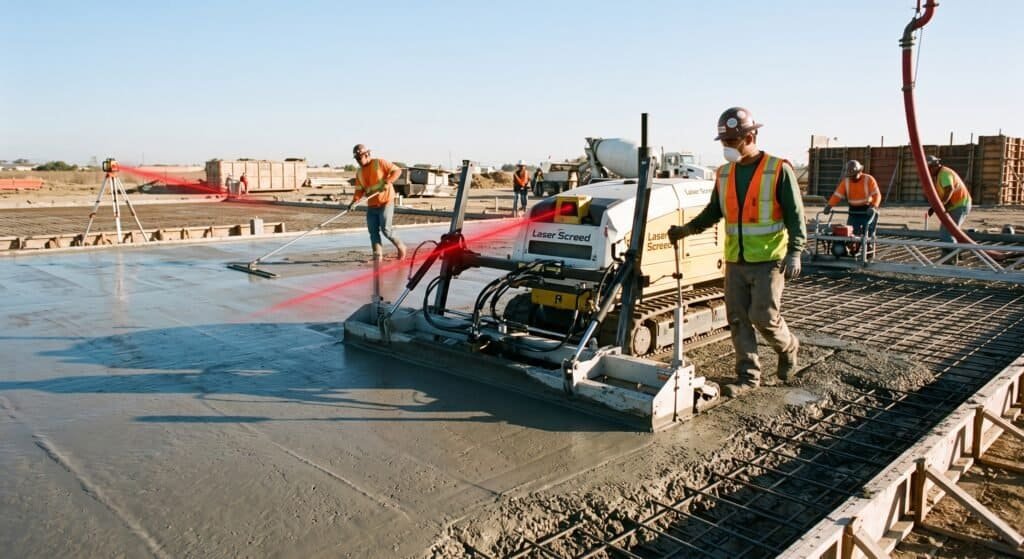
The Slope: The concrete slab must be poured with a laser-leveled 0.5% to 1% micro-slope. This is usually designed as a “turtle back” (sloping from the center outwards) or a single-direction slope to guide rainwater away.
Peripheral Drainage: Install concealed drainage trenches around the outer perimeter of the 21x11m slab, connecting directly to the municipal stormwater system.
Phase 3: Structural Frame Assembly & Anchorage
With a perfectly cured and leveled foundation, the metal skeleton of the court is erected. For panoramic courts, the base and corner pillars must absorb the entire wind load and player impact, as there are no rear vertical supports.
Steel Grade & Anti-Corrosion:PP Courts utilizes heavy-duty, hot-dipped galvanized steel profiles. Unlike cheap zinc-sprayed alternatives, hot-dipped galvanization provides a deeply bonded barrier that prevents rust even in high-humidity or coastal salt-air environments.
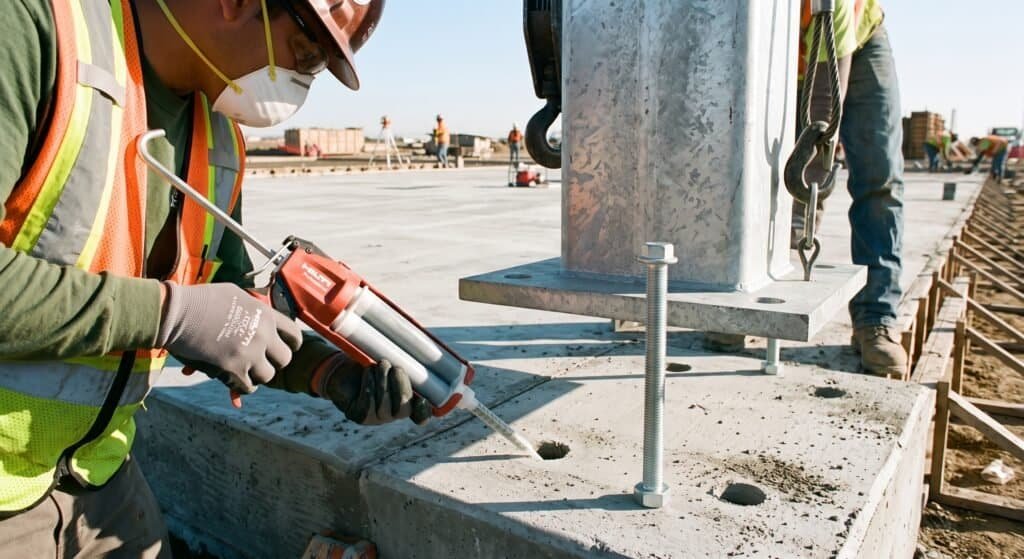
Connection to Foundation (The Anchoring Strategy): Never use standard mechanical expansion bolts for a commercial court—they will loosen under continuous vibration. The steel base plates must be secured to the concrete using high-strength M12 or M16 Chemical Anchors. Chemical resin completely fills the drilled hole, fusing the threaded rod directly to the concrete for immovable, vibration-proof stability.
Assembly Sequence:
Align and chemically anchor the bottom guide rails and corner load-bearing pillars.
Connect the upper horizontal beams to lock the rigid perimeter.
Install the electro-welded wire mesh panels on the sides.
Erect and secure the lighting poles (preparing them for the 8 x 200W asymmetric LED fixtures).
Phase 4: 12mm Glass Installation
This is the most critical and hazardous phase of the installation. A full panoramic back wall is essentially a massive, transparent sail that must flex safely without shattering.
Glass Specifications: Full panoramic courts strictly require 12mm CE/SGCC certified tempered glass. Standard 10mm glass is structurally insufficient for a pillar-less design and poses a severe safety hazard to players.
Placement & Handling: These heavy panels cannot be maneuvered manually. Installers must use a specialized vacuum suction lifter attached to a crane or forklift to vertically position the glass with millimeter precision. The bottom edge of the glass must rest on high-density rubber load-bearing blocks, never directly on the steel or concrete.
Flexible Connection System (Zero Hard Contact):
Isolation: There must be absolute zero metal-to-glass contact. Every connection point requires thick EPDM or Neoprene rubber gaskets to isolate the glass from the steel brackets and countersunk stainless steel bolts.
Thermal Expansion Gaps: Installers must use torque wrenches to secure the fasteners and leave a deliberate 2-3mm gap between adjacent glass panels. If the panels are installed flush against each other, the thermal expansion of the glass during a hot afternoon will cause them to crush each other and spontaneously explode.
The playing surface is the most tactile part of the court and dictates the ball bounce, player grip, and overall club reputation. High-quality texturized (curly) turf requires meticulous installation to ensure FIP-compliant performance.
Turf Unrolling & Acclimatization: Artificial grass rolls arrive tightly packed. Before any cutting or gluing, the rolls must be unrolled and laid flat on the concrete slab for at least 24 hours. This allows the synthetic fibers to acclimate to the ambient temperature and releases the memory tension from packaging, preventing future wrinkling.
Laying & Seaming (The Invisible Bond):
The turf rolls are aligned, and the excess edges are trimmed.
A heavy-duty seaming tape is placed under the joints, and a two-component polyurethane (PU) glue is applied. PU glue is mandatory because it remains flexible and impervious to rain once cured.
Line Integration: The 50mm white functional playing lines are not painted; they are precisely cut and embedded into the green turf using the same taping and gluing process for permanent durability.
Silica Sand Infill: FIP standards require a specific ball bounce that turf alone cannot provide. Installers must evenly distribute 0.2 to 0.8mm kiln-dried, rounded silica sand (approximately 8-15kg per square meter, depending on the turf type). A specialized mechanical rotary brush is used to push the sand deep into the base of the turf fibers, locking the carpet in place and ensuring a consistent, fast playing surface.
Phase 6: Common Pitfalls & Troubleshooting
Even with premium materials from PP Courts, contractor errors during installation can ruin a project. Here is how to avoid the most expensive installation mistakes:
Uneven Foundation (The Glass Killer): If the concrete slab is not laser-leveled, the metal base will sit unevenly. When the heavy 12mm glass is bolted to a twisted frame, the torsional stress will eventually cause the glass to spontaneously explode. Solution: Any foundation deviations exceeding 3mm over 3 meters must be corrected with self-leveling concrete compounds before erecting the frame.
Weather Disruptions:
Wind: Never attempt to use a crane to lift 3-meter glass panels if wind speeds exceed Level 4 (approx. 20-28 km/h). The glass acts as a sail and can easily cause fatal accidents or shatter on impact.
Rain: The two-component PU turf glue will fail to cure if exposed to moisture before setting. Turf must only be installed during dry weather windows.
Galvanic Corrosion: When stainless steel bolts come into direct contact with galvanized steel frames in humid environments, an electrochemical reaction occurs, accelerating rust. Solution: Always ensure nylon washers or rubber gaskets isolate different metal types to prevent galvanic corrosion.
Phase 7: Long-Term Maintenance & Care
(Image Suggestion: Facility staff using a wide push-broom to redistribute sand, or a technician using a torque wrench on glass fasteners)
A panoramic padel court is a heavy-duty asset. To maximize its lifespan and maintain a premium experience for your club members, implement a strict preventative maintenance schedule.
Weekly Brushing: Use a wide push-broom or mechanical brush to comb the turf against the grain. This prevents the fibers from flattening (compaction) and keeps the silica sand evenly distributed.
Quarterly Top-Ups: High-traffic zones—like the baseline, service areas, and the net—will lose sand over time. Top up these areas to prevent the turf fibers from wearing out prematurely and to maintain optimal FIP bounce dynamics. Remove all organic debris (leaves, twigs) immediately, as they can rot, clog the drainage, and breed moss.
Glass & Structural Fastener Checks:
Monthly Torque Checks: Seasonal temperature changes cause the steel frame and glass to expand and contract. Once a month, use a torque wrench to check the countersunk screws on the glass panels and the chemical anchors at the base.
Gasket Inspection: Ensure the neoprene rubber gaskets are not cracking or shifting out of place.
Cleaning: Clean the glass regularly using non-abrasive, professional window squeegees. Never use acidic or alkaline cleaners that could drip and degrade the rubber gaskets or metal coatings.
Metal Frame & Hardware Upkeep:
Even hot-dipped galvanized steel can rust if deeply gouged by heavy equipment. Immediately touch up any deep scratches with a commercial-grade cold zinc spray.
Lubricate the hinges and latches on the court access doors every 6 months to prevent squeaking and jamming.
Wipe down the lenses of the asymmetric LED floodlights quarterly. Dust and pollen accumulation can significantly reduce the Lux levels on the court.
Inspect waterproof junction boxes annually, especially before heavy rainy seasons, to prevent electrical shorts.
Ready to Build Your Premium Padel Facility?
Installing a commercial padel court requires precision engineering, premium materials, and a trusted manufacturing partner. By sourcing directly from PP Courts, you bypass trading companies to secure factory-direct pricing, guaranteed structural integrity, and dedicated logistics support.
Whether you are outfitting a new indoor sports club, expanding an outdoor recreational facility, or looking to distribute high-quality courts in your region, our export procurement team is here to help. We provide complete structural blueprints, CAD layouts, and container loading optimizations for every project.
Partner directly with the source today. Contact us for specific technical details, custom OEM configurations, or to request our latest wholesale FOB price list.
If you are planning to build a premium padel club or distribute sports equipment globally, sourcing directly from a manufacturer is the best way to maximize your ROI. However, understanding the padel court china price goes far beyond just looking at a single number. The final cost depends heavily on the structural type, material specifications, and logistics.
As a leading manufacturer at PP Courts, we have created this comprehensive guide to break down the real factory-direct prices and the critical specifications you must consider before placing an order.
1. Padel Court China Price: Breakdown by Court Type
The design and structural complexity of the court directly dictate the manufacturing cost. Here is the current factory-direct pricing landscape for commercial-grade padel courts:
1-on-1 gameplay (20m x 6m) to maximize leftover floor space in existing facilities.
2. What Dictates the Price? (Crucial Technical Specifications)
When evaluating a padel court china price quote, you must look closely at the bill of materials. Cheaper quotes usually mean dangerous compromises on the following core components:
A. Glass Specifications: 10mm vs. 12mm Tempered Glass
A professional quote must clearly clarify the glass thickness. Standard and some panoramic courts use 10mm CE/SGCC certified tempered glass. However, if you are purchasing a Full Panoramic Court, you must ensure the quote includes 12mm tempered glass. Without structural metal pillars supporting the back, 12mm glass is absolutely mandatory to safely handle heavy player body impacts and high wind loads without shattering.
B. Steel Anti-Corrosion Treatment
The steel framework’s lifespan is a major differentiator in pricing. You must specify whether the frames are hot-dipped galvanized or simply zinc-sprayed/electro-galvanized. For outdoor installations or coastal regions with high humidity and salt in the air, hot-dipped galvanization is non-negotiable. It provides a thick, deeply bonded layer of superior rust prevention, whereas basic zinc-spraying will start rusting within a few years.
C. Turf Quality (Artificial Grass)
The playing surface directly dictates your club’s reputation among players. Check the quote to see if it includes standard monofilament grass or premium texturized (curly) turf. Professional texturized turf locks the silica sand in place, providing a much more consistent ball bounce and better grip to prevent player injuries. Ensure the specifications list a 12mm pile height and a high stitch density for commercial longevity.
D. Lighting & Electrics
A professional evening match requires flawless visibility without blinding the players. A high-quality court package should include an advanced lighting setup, typically 8 x 200W asymmetric LED floodlights. The “asymmetric” design is crucial—it directs the lux downward onto the playing surface and eliminates harsh glare when players look up for a lob.
3. Container Loading & CBM (Maximizing Your Logistics)
The FOB price is only one part of the equation; ocean freight heavily impacts your final landed cost. At PP Courts, we always advise our buyers to focus on container efficiency.
The cubic meter (CBM) volume and weight of padel courts require strategic loading. For example, a standard 20ft container can typically only fit 2 to 3 courts, meaning the shipping cost per unit is relatively high. Conversely, a 40ft HQ container can efficiently hold between 6 to 8 courts depending on the model. We highly encourage buyers to optimize their order quantities to fill a 40ft HQ, drastically reducing the ocean freight cost distributed per court.
Upgrade Your Club with PP Courts
Don’t compromise on player safety or equipment lifespan. If you are looking for transparent pricing, tournament-grade materials, and a manufacturer that understands heavy-duty structural engineering, we are here to help.
Ready to start your project?Contact PP Courtstoday to get a detailed CAD drawing, technical spec sheet, and an exact CBM logistics calculation for your location.
Executive Summary: For padel club investors, the court surface is not just a visual element—it is the functional heart of the game. It dictates the ball’s rebound speed, the players’ joint safety, and your ongoing maintenance costs. Choosing the wrong turf can lead to severe player injuries, dead ball bounces, and premature replacement.
As a professional manufacturer, PPcourt has created this comprehensive guide to help B2B buyers, club owners, and contractors understand exactly what makes a premium padel surface, how it must be installed, how to evaluate its lifespan, and how to maintain it for maximum ROI.
1. What is a Padel Court Surface? (Choosing the Right Turf)
While historical padel courts used porous concrete or acrylic (like tennis hardcourts), modern professional padel is played almost exclusively on artificial turf filled with silica sand.
However, not all artificial grass is created equal. You cannot simply use repurposed soccer or landscaping turf. Padel requires extremely short, dense fibers designed specifically for vertical ball rebound and controlled player sliding. When purchasing turf, you will encounter three main types:
The 3 Types of Padel Turf
Fibrillated Turf (Straight Grass): The older standard. The straight fibers are sliced to create a honeycomb structure. It is durable and cheap, but the silica sand tends to sit loosely on top, making the court slippery and requiring constant brushing.
Monofilament Turf: Individual straight fibers that stand upright. It looks great initially but struggles to hold the sand in place over time, leading to rapid wear on the exposed fiber tips.
Texturized Turf (Curly Grass) – The PPcourt Recommendation: This is the premium standard used in the World Padel Tour (WPT). The fibers are heat-curled, acting like a dense sponge that traps and encapsulates the silica sand completely.
Why Buyers Choose It: Players play on the grass, not on the sand. It offers ultimate grip, eliminates slippery dead-zones, and requires significantly less maintenance.
Key Purchasing Specs to Look For:
Pile Height: Strictly 10mm to 12mm. Anything longer absorbs the ball’s kinetic energy, killing the bounce.
Density: Look for high-density stitching (usually around 40,000 to 50,000 stitches per square meter) to ensure a firm, fast playing surface.
Yarn Dtex: A higher Dtex (e.g., 8,000+) means thicker, more durable individual fibers.
2. Artificial Turf Padel Court Installation: The Professional Process
Even the most expensive texturized turf will fail if installed incorrectly. Proper artificial turf padel court installation requires precision, dry weather, and specialized tools. Here is the standard protocol PPcourt engineers recommend to local contractors:
Step 1: Base Preparation
The turf must be laid over a perfectly flat, level sub-base—typically porous concrete or asphalt with a slight drainage slope (0.5% – 1%). Any bumps or depressions in the concrete will translate directly through the 10mm turf, ruining the ball bounce.
Step 2: Unrolling and Acclimatization
The heavy rolls of turf are unrolled across the court. Crucial Step: The turf must be left to “relax” in the sun for several hours. This removes manufacturing wrinkles and allows the backing material to expand naturally before gluing.
Step 3: Seaming and Gluing
Padel turf comes in wide rolls that must be joined together. Contractors fold back the edges, lay down a specialized seaming tape, and apply a two-component polyurethane (PU) adhesive. The seams must be perfectly butted together—even a 2mm gap will cause the ball to deflect wildly.
Step 4: Line Integration
The white playing lines are not painted on; they are physically cut into the green turf and glued in place using the same seaming technique.
Step 5: Silica Sand Infill (The Most Critical Step)
You cannot use regular beach sand. The installation requires washed, rounded silica sand (typically 0.2mm – 0.6mm grain size).
The sand must be 100% dry.
It is applied in multiple thin layers using a drop spreader.
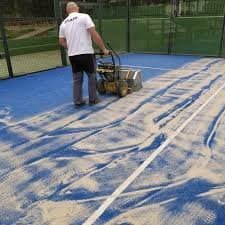
Between each layer, a heavy mechanical rotary brush pushes the sand deep into the base of the curly fibers. For a texturized court, you will typically need about 8kg to 12kg of sand per square meter.
3. How to Assess the Condition of Your Padel Turf
If you are buying an existing club, or evaluating when to replace your current courts, how do you judge the “health” of the artificial turf? A visual glance from afar is not enough. You must step onto the court and check these four critical indicators:
A. The “Sand Float” & Slip Test
Healthy: In texturized turf, the sand should be practically invisible, locked at the bottom of the fibers. You should feel the soft grip of the grass under your shoes.
Degraded: If the court looks like a sandy beach and players are constantly slipping, the turf fibers have either been crushed flat or worn away entirely, leaving nothing to hold the sand. This is a massive liability for player injuries.
B. Fiber Fibrillation (Splitting)
Get on your knees and inspect the individual blades of grass, especially in high-traffic areas (near the service line and the net).
Healthy: Fibers retain their original shape (curly or straight) and stand upright.
Degraded: The tips of the plastic fibers look split, frayed, or melted. This “fibrillation” means the plastic has structurally failed due to UV degradation and friction. It cannot be repaired; replacement is imminent.
C. The Compaction Hardness
Padel should be gentle on the knees. Tap your heel hard into the baseline area.
Healthy: There should be slight shock absorption.
Degraded: If it feels like hitting solid concrete, the silica sand has compacted. Sweat, rain, and dust mix with the sand over time, turning it into a cement-like crust. This kills the ball bounce and causes severe joint pain for players.
D. Seam Separation
Check the white lines and the joints between the main turf rolls. If you can see gaps, or if the edges of the turf are curling upward, the polyurethane glue has failed. This is a severe tripping hazard.
4. Post-Installation Maintenance: Protecting Your Asset
Artificial turf is low maintenance, but it is not zero maintenance. To maximize the lifespan of your PPcourt turf (typically 5 to 7 years under heavy commercial use), implement this routine:
Weekly Brushing: Use a wide, soft-bristle drag brush to redistribute the sand evenly. Sand naturally migrates toward the net and the edges of the glass walls during play. Brushing pulls it back into the heavy-traffic baseline zones.
Monthly Decompaction: If the sand begins to harden, use a specialized maintenance machine with soft metal tines to gently agitate and loosen the sand layer without ripping the grass fibers.
Debris Removal: Leaves, pine needles, and organic debris must be blown off the court immediately. If organic matter decomposes inside the silica sand, it creates a breeding ground for moss and algae, which makes the court dangerously slippery and blocks water drainage.
Sand Top-Up: Once a year, assess the sand levels in the high-wear areas and add fresh silica sand as needed to protect the base of the grass fibers from direct shoe friction.
Partner with PPcourt for Premium Surfaces
The surface is the soul of your padel club. Investing in premium texturized turf not only elevates the playing experience but drastically reduces your long-term maintenance costs and replacement frequency.
If you are planning a new facility or need to upgrade your existing worn-out courts, contact the PPcourt materials team. We supply world-class, FIP-compliant texturized turf engineered specifically for the ultimate padel experience.
Executive Summary: For luxury homeowners, deciding to build a padel court at home is not about calculating commercial ROI or hourly booking rates. It is about acquiring the ultimate backyard amenity. However, installing a massive architectural structure in a private residence brings unique anxieties: HOA approvals, neighbor noise complaints, ruined landscaping, and aesthetic clashes.
As a premium manufacturer, PPcourt regularly partners with private contractors and high-net-worth families to seamlessly integrate professional-grade padel courts into luxury estates. Here is how we engineer solutions for the six biggest challenges of residential padel, plus a transparent breakdown of what it actually costs.
1. Space & Zoning: Defeating the HOA
A standard padel court requires a 10x20m footprint. Adding the necessary safety run-out zones, you need over 200 square meters of perfectly flat land. This is a massive spatial commitment.
The Homeowner’s Hurdle: High-end neighborhoods and Homeowner Associations (HOAs) have strict zoning laws regarding structural height and property lines. You cannot afford to halt construction halfway because a neighbor complained.
The PPcourt Solution: We do not just ship metal and glass. We provide comprehensive, architect-ready 2D/3D blueprints and elevation drawings. Your local contractor can submit these precise, professional schematics directly to the city council or HOA, drastically smoothing out the permit approval process.
2. The Noise Factor: Protecting Neighborhood Peace
Padel can be loud. The sharp “pop” of the carbon-fiber racket, the ball rebounding off the metal mesh, and the players’ shouts can echo through a quiet residential cul-de-sac.
The Homeowner’s Hurdle: You want to enjoy a weekend match without triggering a war with your neighbors.
The PPcourt Solution: We prioritize acoustic dampening in our residential models. We utilize specialized anti-vibration rubber gaskets at all metal-to-glass connection points to absorb impact shockwaves. Furthermore, our premium 12mm thick tempered glass acts as a dense acoustic barrier, significantly muffling the sound compared to standard 10mm glass or chain-link fences.
3. Civil Works: Preserving Your Landscaping
Homeowners are terrified of heavy excavators and cement mixers destroying their expensive manicured lawns and underground irrigation systems.
The Homeowner’s Hurdle: Does the entire yard need to be paved over in concrete?
The PPcourt Solution: While a flat base is mandatory, a highly destructive full concrete slab is not always required. We can engineer our courts to anchor onto a Ring Beam Foundation—a concrete perimeter that supports the structural pillars, leaving the center relatively undisturbed (using compacted porous materials). This minimizes heavy machinery traffic and preserves the integrity of your backyard.
4. Weather & Maintenance: The Debris Nightmare
Backyards are often surrounded by mature trees. A padel court covered in wet autumn leaves, twigs, and bird droppings is a nightmare to clean and ruins the ball’s bounce.
The Homeowner’s Hurdle: How do I protect this expensive toy from the elements?
The PPcourt Solution: We highly recommend integrating a Prefabricated Canopy System. Our residential courts feature reinforced pillars designed to support a sleek, tensioned-membrane roof. This all-weather shield blocks rain, blocks UV rays, and keeps tree debris off your pristine artificial turf, ensuring the court is ready to play 24/7 with minimal maintenance.
5. Aesthetics: No “Industrial Cages” in the Garden
A luxury villa cannot have a structure that looks like a high-security prison fence ruining its landscape architecture.
The Homeowner’s Hurdle: The court must look like a piece of modern art, not an industrial sports facility.
The PPcourt Solution: For private estates, we exclusively install Full Panoramic Courts. By eliminating the bulky vertical metal pillars on the glass walls, we create a transparent, elegant glass pavilion. Furthermore, we offer absolute color customization. We can powder-coat the steel frame in matte black, minimalist white, or any RAL color to flawlessly match your villa’s architectural facade, paired with turf colors that blend seamlessly into your garden.
6. Logistics & Installation: The Last-Mile Challenge
Exclusive residential streets usually prohibit massive 18-wheeler container trucks, and you likely do not have a heavy-duty forklift parked in your driveway.
The Homeowner’s Hurdle: How do we safely unload and assemble thousands of pounds of 12mm glass?
The PPcourt Solution: We utilize smart-packing A-frame steel crates that can be carefully unloaded via smaller local HIAB (crane) trucks. We also provide highly detailed, step-by-step 3D video manuals. Any experienced local landscaping or glass contractor can follow our “Lego-style” assembly guides, ensuring a perfect installation without needing specialized padel technicians.
How Much to Build a Padel Court at Home? (The Budget)
When budgeting for a private residential court, you are looking at a premium, turnkey project. While costs vary wildly depending on your country and local contractor rates, here is a realistic breakdown for a luxury setup:
The Premium Equipment (Sourced from PPcourt): For a Full Panoramic Court featuring 12mm glass, pro-grade texturized turf, and anti-glare LED lighting, expect the ex-works manufacturing cost to range between $18,000 to $25,000 USD. (Adding a custom roof canopy will increase this).
International Logistics & Duties: Ocean freight, import taxes, and last-mile residential delivery usually add $3,000 to $6,000 USD, depending on your proximity to a major seaport.
Local Civil Works (The Variable Cost): Permits, land leveling, concrete pouring, and running electrical lines for the lights. Depending on your landscaping, this can range from $10,000 to $25,000+ USD.
Local Assembly Labor: Hiring a local crew and crane/glass-handling equipment for 3-5 days will typically cost $4,000 to $8,000 USD.
Total Estimated Budget: A high-end, beautifully integrated backyard padel court typically requires a total investment of $35,000 to $65,000+ USD from start to finish.
Ready to Upgrade Your Estate?
Do not compromise your home’s aesthetic or peace of mind with a standard commercial court. Contact the PPcourt Private Projects Team todayfor a bespoke architectural consultation and a direct-from-factory quotation for your backyard padel sanctuary.
Executive Summary: Adding a padel court is currently the highest-ROI wellness upgrade for luxury hotels and beach resorts. However, a five-star property is not a standard sports club. Procurement directors and General Managers face unique challenges: noise complaints, aesthetic clashes, rooftop foundation limits, and guest liability.
As a premium manufacturer, PPcourt understands the hospitality industry’s strict requirements. Here is how we engineer padel courts to solve the six biggest hidden anxieties of hotel developers.
1. Acoustic Impact: Protecting the Guest Experience
Padel is an energetic, vocal sport. The sharp “pop” of the racket, the ball striking the glass, and players cheering can generate significant noise.
The Hotel’s Fear: If the court is placed near guest rooms, the spa, or the quiet pool area, will it trigger endless noise complaints?
The PPcourt Solution: We proactively engineer acoustic dampening into our structures. By utilizing specialized anti-vibration rubber gaskets between the steel frames and glass panels, we significantly absorb impact noise. Furthermore, upgrading to ultra-thick 12mm glass (instead of standard 10mm) acts as an excellent sound barrier, keeping the excitement on the court and the tranquility in your resort.
2. Aesthetics & Brand Integration: No “Industrial Cages”
Luxury hotels are obsessed with visual harmony. Dropping a standard, heavily pillared metal court with basic wire mesh onto a pristine beachfront or landscaped garden looks like an ugly industrial cage.
The Hotel’s Fear: Will this structure ruin our five-star aesthetic and brand image?
The PPcourt Solution: For the hospitality sector, we exclusively recommend our Full Panoramic Court. By removing vertical pillars on the back and side walls, it creates a transparent, 360-degree glass jewel box. We also offer deep VI (Visual Identity) integration. Whether you need an Aman-inspired natural earth tone or a Marriott-signature red, we can customize the frame using the exact international RAL color code, and precision-print your hotel’s logo onto the corner protectors or the artificial turf.
3. Foundation Limits: Rooftops & Zero-Dig Solutions
Many urban hotels want to build courts on rooftops to save space, while landscaped resorts strictly forbid heavy excavators from tearing up their manicured grounds.
The Hotel’s Fear: How deep do we need to dig? Will the weight collapse the roof, or will drilling destroy our existing underground pipes and waterproofing layers?
The PPcourt Solution: We utilize an advanced Portable Ring-Beam Structure. This self-weighted, interlocking base requires zero deep excavation. As long as the concrete surface is level, the court anchors securely without penetrating deep into the slab. It perfectly preserves your rooftop waterproofing layers and underground landscaping grids.
4. Coastal Climates: Defeating Salt & Typhoons
The highest demand for hotel padel courts comes from island resorts (Maldives, Bali, Phuket) and coastal properties.
The Hotel’s Fear: Will the salty sea breeze rust the steel frame in six months? Will a tropical typhoon shatter the glass?
The PPcourt Solution: We provide a true Coastal-Grade Anti-Corrosion System. Standard galvanization is not enough. We use a triple-layer defense: Heavy-Duty Hot-Dip Galvanization + Zinc-Rich Primer + Outdoor UV-Resistant Electrostatic Powder Coating. To address severe weather, our engineering team provides official Wind Load Calculation reports, proving our reinforced structures can withstand typhoon-level winds without glass failure.
5. Guest Safety & Liability: Zero Tolerance for Error
Resort courts are heavily used by beginners, vacationing families, and children. In a hospitality setting, a facility-related injury leads to massive liability claims and PR disasters.
The Hotel’s Fear: What if a guest slips, cuts themselves on the mesh, or shatters the glass?
The PPcourt Solution: We engineer our courts with a Zero Blind-Spot Safety Standard.
We strictly use 12mm Homogeneous Explosion-Proof Tempered Glass (if broken, it shatters into blunt, harmless granules that remain in place).
Our electro-welded wire mesh features anti-snag sizing to prevent finger injuries.
All steel joints are laser-smoothed to eliminate burrs.
We mandate the use of texturized (curly) turf, which locks the silica sand perfectly in place, drastically reducing the risk of beginners slipping.
6. Weatherproofing for Maximum ROI
A hotel wants its amenities to generate value—either through hourly rental fees or as a high-ticket VIP perk—24 hours a day.
The Hotel’s Fear: What happens during heavy rain or the blazing midday sun? Will the court sit empty?
The PPcourt Solution: We design our courts for all-weather playability. We equip your facility with premium, anti-glare asymmetrical LED lighting for flawless night play. More importantly, our court pillars are pre-engineered with structural nodes to seamlessly support a Modular Canopy (Roof) System, ensuring your guests can play comfortably through rain or harsh sunshine, maximizing your daily ROI.
Elevate Your Resort Amenities with PPcourt
Do not compromise your hotel’s luxury standards with a basic sports enclosure. Partner with a manufacturer that understands hospitality architecture, guest safety, and premium aesthetics.
Executive Summary: Padel is globally recognized as a doubles sport, but the demand for 1v1 gameplay is surging. For club owners and real estate developers, understanding the mechanics and dimensions of a single padel court is not just about expanding your sports catalog—it is a strategic move to turn “dead space” into a highly profitable revenue stream.
As a leading structural manufacturer, PPcourt breaks down the exact specifications, player experience, and engineering requirements you need to know before installing a single padel court.
What is a Single Padel Court?
At its core, a single padel court is a narrower version of the standard court, designed exclusively for two players (1v1).
Because the playing area is condensed, the rhythm of the game changes dramatically. The gameplay pace is significantly tighter and more intense. It demands higher personal stamina, quicker reflexes, and superior defensive precision. Tactically, it forces players to rely heavily on parallel shots, as the wide, cross-court diagonal smashes—the staple of traditional doubles play—are effectively eliminated by the narrower walls.
How Big is a Singles Padel Court?
For developers mapping out their facility, knowing how big is a singles padel court is the key to maximizing spatial efficiency.
The official padel singles court size is exactly 6 meters wide by 20 meters long (19.68 ft x 65.61 ft).
The ROI Perspective (Revenue Per Square Meter): When plotting a commercial padel club, investors often find themselves with awkward, leftover parcels of land after fitting in standard 10x20m courts. Instead of leaving these strips empty or turning them into oversized walkways, dropping a 6x20m single court into that footprint instantly converts “dead space” into a cash-generating asset. It maximizes your floor plan’s efficiency without cannibalizing your primary courts.
Technically, yes. Practically, it is a terrible idea for both the players and the club owner.
When analyzing a padel single court vs double setup, the width difference (6m vs. 10m) is massive.
The Player Pain Point: Covering a 10-meter-wide baseline alone is exhausting. Rallies end prematurely because the court is simply too wide for one person to defend, destroying the fun, fast-paced nature of the sport.
The Club Owner Pain Point: Allowing two people to book a standard doubles court is a severe waste of premium real estate. You are essentially letting two players occupy the space and prime-time booking slots meant for four, directly slashing your potential hourly revenue.
Target Audience: Who Books 1v1 Padel Courts?
If you build it, who will rent it? The booking rate for singles courts is incredibly high because it caters to three highly motivated demographics:
Padel Coaches: This is the ultimate environment for 1-on-1 private lessons. Coaches do not need a massive 10m wide court for basket-feeding drills. The intimate space allows for better communication and focused technical repetition.
Time-Strapped Players: Coordinating schedules for four busy adults is the biggest hurdle in amateur padel. Finding just one friend to play after work is infinitely easier, guaranteeing steady, off-peak booking rates.
Beginners: Playing doubles can be intimidating for newcomers who fear letting their partner down. Singles padel removes that social pressure, allowing beginners to learn at their own pace.
Foundation and Installation Requirements
Constructing a 6x20m court requires the same level of engineering rigor as a standard court.
Even though the footprint is smaller, the PPcourt engineering team mandates a specialized reinforced concrete ring beam foundation. The wind load dynamics on a narrower glass structure differ slightly from a wider one. The concrete sub-base must still provide flawless drainage and perfectly level anchor points for the steel pillars.
Fortunately, our courts utilize modular, precision-cut components. Because the spans are shorter, the overhead lighting integration and steel frame assembly are remarkably fast, significantly reducing your on-site civil works timeline and local labor costs.
Sourcing a China 1v1 Padel Court: Manufacturer Direct Advantages
To maximize the profitability of a smaller footprint, you must control your initial capital expenditure (CapEx).
By sourcing a china 1v1 padel courtdirectly from PPcourt, you bypass trading companies and local distributors. You gain direct factory pricing while securing premium industrial-grade materials. Our single courts are engineered with the exact same commercial specifications as our professional doubles courts, including:
12mm Explosion-Proof Tempered Glass for ultimate impact safety.
Hot-Dip Galvanized Steel with zinc-rich primers for maximum rust resistance.
Texturized Pro Turf tailored for the heavy foot traffic of a condensed playing area.
Do not let valuable space go to waste. Contact the PPcourt engineering team today for a precise floor plan analysis and a factory-direct wholesale quote for your single padel courts.
Executive Summary: The global explosion of Padel has transformed it from a niche sport into a highly lucrative commercial real estate investment. However, for club owners, real estate developers, and sports facility managers, building a club is not a one-size-fits-all endeavor. Choosing the wrong type of court can lead to structural failures, poor player retention, or massive seasonal revenue losses.
As a leading global manufacturer, PPcourt has engineered and exported courts across diverse climates and commercial setups. In this comprehensive guide, we classify padel courts across six critical dimensions, providing you with the deep engineering and commercial insights needed to design a highly profitable club.
1. By Environment: Indoor vs. Outdoor Courts
The first decision in facility planning dictates your entire structural approach and HVAC/weatherproofing budget.
Outdoor Padel Courts: These are exposed to UV rays, rain, and—most critically—wind loads. Outdoor courts manufactured by PPcourt require heavy-duty hot-dip galvanization and specialized zinc-rich primer coatings to prevent rust. The structural engineering must account for extreme wind resistance, especially when utilizing large glass panels.
Indoor Padel Courts: While immune to weather, indoor courts introduce different challenges. The primary constraints are ceiling height (a minimum of 6 to 8 meters clearance is required for lobs) and acoustic management. Indoor environments amplify the explosive sound of the padel racket, and the structural lighting must be perfectly calibrated to prevent glare against the glass walls under artificial indoor conditions.
2. By Structural Design & Visibility (The Walls)
The structural perimeter defines both the aesthetic appeal of the club and the spectator experience.
Brick/Concrete Padel Courts: The original 1980s design. The walls are made of solid concrete or cinder blocks.
Commercial Verdict: Almost entirely obsolete in modern commercial clubs. They offer zero visibility for spectators and can feel claustrophobic, though they remain virtually indestructible.
Standard Glass Padel Courts (Crystal/Double Courts):The absolute workhorse of the modern padel industry. The court perimeter is formed by 10mm or 12mm tempered glass panels, separated and supported by robust vertical metal pillars.
Commercial Verdict: Delivers the highest ROI for daily training and community clubs due to its exceptional durability, structural stability, and cost-effectiveness.
Panoramic Courts: A hybrid design. The side walls maintain the traditional metal pillars for structural rigidity, but the back walls feature reduced metal framing to enhance baseline visibility.
Full Panoramic Padel Courts: The crown jewel of modern padel architecture. PPcourt Panoramic models eliminate the vertical metal pillars entirely on the back walls (and often the sides), utilizing 12mm explosion-proof tempered glass connected by minimalistic invisible brackets.
Commercial Verdict: Essential for “Center Courts” holding high-level tournaments, TV broadcasting, and generating premium social media content.
Maximizing your floor plan means utilizing every square meter of your leased land.
Standard Doubles Court (10m x 20m): The official size mandated by the International Padel Federation (FIP). Designed for 2 vs. 2 gameplay. This makes up 95% of the global market and is the core revenue driver for any club.
Commercial Verdict: A secret weapon for facility planners. If your warehouse or plot of land has a narrow strip of “dead space” where a 10m court won’t fit, dropping in a 6m singles court turns unused space into a high-margin asset. It is also highly demanded by coaches for intense 1-on-1 private lessons.
4. By Playing Surface (The Floor)
The surface dictates the speed of the game, player safety (joint impact), and maintenance frequency.
Artificial Turf (Texturized or Monofilament): The undisputed global standard. Modern texturized (curly) artificial grass traps the silica sand infill perfectly, preventing the sand from sitting on top of the grass. This provides a consistent grip, protects players’ knees from harsh impacts, and allows for the signature padel “slide.”
Synthetic Resin / Acrylic: Similar to a traditional tennis hardcourt. It provides an extremely fast, high-bouncing game.
Commercial Verdict: Rarely used in pure padel clubs due to the high impact on joints, but occasionally chosen for multi-sport indoor facilities.
Porous Concrete / Cement: The oldest surface type. Extremely durable and allows for water drainage, but it is notoriously harsh on players’ bodies and rapidly wears down padel balls and shoes. Seldom used today.
5. By Canopy & Roof Integration (Weatherproofing)
For outdoor clubs, rain or extreme summer sun means canceled bookings and lost revenue.
Open-Air Courts: No overhead coverage. Offers the lowest initial capital expenditure (CapEx) but leaves the club’s revenue entirely at the mercy of the weather.
Covered / Canopied Courts (Prefabricated Roof Systems): To guarantee year-round ROI, clubs are increasingly adding canopies.
The PPcourt Engineering Advantage: Standard courts cannot simply have a roof bolted onto them—the wind load on the roof will snap the court’s pillars. PPcourt designs its premium courts with specialized structural nodes specifically engineered to integrate seamlessly with prefabricated tensile membrane roof systems, ensuring perfect load distribution without compromising the glass walls.
6. By Foundation & Installation Requirements
How the court interacts with the earth dictates your civil engineering costs and legal permitting.
Permanent / Fixed Courts: The industry standard. Requires pouring a reinforced concrete ring beam or a full concrete slab. The court’s metal base plates are then permanently bolted into the concrete using heavy-duty chemical or expansion anchors. Extremely stable, but requires extensive civil works.
Portable / Mobile Courts: A marvel of modern engineering. These courts do not require drilling into the ground. Instead, PPcourt utilizes a massive, self-weighted interlocking steel ring base that holds the entire structure in place through sheer gravity and structural physics.
Commercial Verdict: Perfect for temporary WPT exhibition matches, beach events, or—most importantly—shopping mall atriums and leased land where the landlord strictly prohibits drilling into the existing floor. When your lease ends, you can unbolt the court and move it to a new city.
MOBILE PADEL COURT
Build Your Next Project with PPcourt
Choosing the right padel court requires balancing aesthetic ambition with structural reality. Whether you need a self-weighted Portable Court for a shopping plaza or a fully Canopied Panoramic Center Court for a professional academy, PPcourt manufactures the precise engineering solution you need.