The global padel industry is expanding rapidly, creating growing demand for padel courts, equipment and installation services.
According to the Global Padel Report 2026, the global market reached 58,334 padel courts in 2025, with 7,898 new courts added during the year, representing approximately 16% year-on-year growth. The market is projected to exceed 91,000 courts by 2028.
This expansion is increasing demand not only for established European padel court manufacturers but also for export-oriented manufacturers in China.
For buyers, however, choosing a padel court supplier involves more than comparing the initial price. Steel specifications, glass quality, artificial turf, lighting, corrosion protection, wind-load design, manufacturing capacity, shipping and installation support can all affect the final project cost and long-term performance.
This guide examines the China padel court supply market, including prices, manufacturing capacity, Chinese suppliers, China vs. Spain sourcing, cost structure and the key factors buyers should evaluate before placing an order.
China Padel Court Market: Key Facts
| Indicator | Reference |
|---|---|
| Global padel courts in 2025 | 58,334 |
| New courts added in 2025 | 7,898 |
| Global growth in 2025 | Approx. 16% |
| Projected global courts by 2028 | More than 91,000 |
| Implied 2025–2028 CAGR | Approx. 16.0% |
| Spain installed courts in 2025 | Approx. 17,400 |
| Spain share of global installed courts | Approx. 29.8% |
| Typical published Chinese FOB court price | Approx. US$6,000–10,000 |
| Common court dimensions | 20 × 10 m |
| Typical tempered glass | 10 mm or 12 mm |
| Typical export order quantity | Varies; some manufacturers accept 1 set |
Data note: Global market figures are based primarily on the Global Padel Report 2026 and related industry sources. Manufacturer prices, capacity and specifications in this article are based on publicly available company information and should be verified directly before procurement.
Global Padel Court Demand: 2025–2028
Global padel court demand remains on a strong growth trajectory. The number of courts worldwide reached 58,334 in 2025, after 7,898 new courts were added during the year.
The market is projected to exceed 91,000 courts by 2028.
Using 58,334 courts in 2025 and 91,000 courts in 2028, the implied compound annual growth rate is approximately:
CAGR ≈ 16.0%
This is a calculated growth rate based on the published market figures rather than a separately published annual forecast.
The projected increase from 58,334 to more than 91,000 courts means that the global market may require more than 32,000 additional courts over the 2025 installed base by 2028.
For clubs, investors, distributors and sports-facility contractors, this growth creates a second question beyond demand:
Who can manufacture and deliver the required courts at competitive cost and consistent quality?
That question is increasing the importance of both European and Chinese padel court manufacturers.
Spain vs. China: Two Different Padel Court Supply Models
Spain and China represent two important but different padel court sourcing models. Spain has a mature padel ecosystem and several internationally recognized court manufacturers, while China has developed a strong export-manufacturing model based on metal fabrication, component sourcing, customization and containerized shipping.
Spain: Established Padel Industry and Premium Manufacturing
Spain is one of the world’s largest padel markets.
With approximately 17,400 installed courts in 2025, Spain represented roughly 29.8% of the world’s 58,334 installed padel courts.
This figure represents Spain’s share of the installed global court base, not its share of global padel court manufacturing or exports.
Several major Spanish manufacturers report substantial international experience.
For example:
- Padel Galis reports more than 10,000 courts installed in 85 countries, a 15,000 m² production facility and more than 120 employees.
- Padel10 reports more than 15 years of industry experience and more than 4,500 courts manufactured and exported.
- MejorSet manufactures multiple professional court designs in Spain, including panoramic and competition-oriented models.
Spanish manufacturers are particularly strong in premium projects, professional club installations and markets where European manufacturing origin is an important purchasing criterion.
China: Export-Oriented Manufacturing and Customization
China’s competitive position is different.
Chinese padel court manufacturers benefit from an established industrial ecosystem for:
- structural steel fabrication;
- tempered glass;
- artificial turf;
- LED lighting;
- fasteners and hardware;
- galvanizing and powder coating;
- packaging;
- containerized export logistics.
Many Chinese manufacturers therefore operate as integrated export suppliers, providing the steel structure, glass, turf, lighting and accessories as a complete court package.
For international buyers, the main attractions are usually factory-direct pricing, OEM customization, flexible specifications and export logistics capability.
There is currently no comprehensive public database that reliably measures China’s exact share of global padel court manufacturing or exports. Different suppliers and customs databases also classify padel courts under different HS codes.
For this reason, claims about an exact Chinese global production percentage should be treated cautiously unless supported by a clearly defined dataset.
How Much Does a Padel Court Cost in China?
A Chinese-manufactured padel court commonly falls within an approximate published FOB price range of US$6,000–10,000 per set, depending on design and specification.
For example, one Chinese manufacturer, SSTD, publicly lists the following indicative FOB prices:
| Padel Court Type | Published FOB Price Range |
|---|---|
| Singles Padel Court | US$6,000–9,500 |
| Panoramic Padel Court | US$7,500–9,700 |
| Classic Steel Frame Court | US$7,500–9,700 |
| Super Panoramic Padel Court | US$8,000–9,700 |
These figures should be treated as manufacturer-published reference prices, not as a universal China market price.
Actual quotations vary according to:
- steel grade and wall thickness;
- galvanizing method;
- glass thickness;
- artificial turf specification;
- lighting system;
- panoramic or standard structure;
- wind-load requirements;
- coating system;
- accessories;
- customization;
- order quantity;
- packaging;
- Incoterms.
Most importantly, a Chinese FOB factory quotation should not be compared directly with a European installed-project price.
FOB prices normally exclude some or all of the following:
Ocean freight + insurance + import duty + inland transportation + foundations + unloading + local installation + electrical work + project management
Professional buyers should therefore compare suppliers based on landed project cost, not factory price alone.
How Much Does a Padel Court Cost in Europe?
European padel court pricing is generally higher when installation and project services are included.
The Global Padel Report 2024 presented an indicative standard-court cost of approximately €23,000–25,000, including major components and installation.
One indicative cost structure included:
| Component | Indicative Cost |
|---|---|
| Steel structure + glass | €16,000 |
| Artificial turf | €3,500 |
| Lighting | €1,000 |
| Additional equipment | €500 |
| Installation | €2,000–4,000 |
Using a €24,000 midpoint for illustration, steel and glass would represent roughly two-thirds of total court cost.
This helps explain why structural design, steel processing and glass sourcing have such a significant influence on padel court pricing.
Other European suppliers report court construction prices beginning around €15,000, with typical project prices extending toward €25,000 or higher, depending on specification and installation scope.
Again, these prices are not directly comparable with Chinese FOB quotations because the commercial scope may be different.
Why Can Chinese Padel Courts Be More Price Competitive?
Chinese padel courts can be price competitive because several major court components are produced within established domestic industrial supply chains.
The advantage is not simply lower labor cost.
Four structural factors are particularly important.
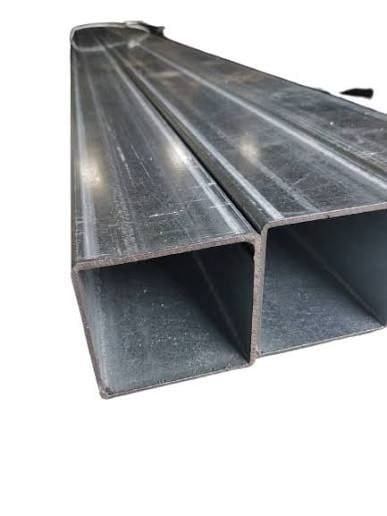
1. Integrated Steel Processing
The steel frame is one of the most important cost components of a padel court.
Chinese manufacturers can source structural steel and combine cutting, welding, galvanizing, powder coating and fabrication within established metal-processing clusters.
This can reduce subcontracting and intermediate logistics costs.
2. Access to Major Court Components
A complete padel court requires more than steel.
Manufacturers also need:
- tempered safety glass;
- artificial turf;
- LED lighting;
- fasteners;
- nets;
- posts;
- electrical components;
- packaging materials.
China’s industrial supply network allows many of these components to be sourced domestically.
3. Container Export Infrastructure
Many northern Chinese padel court manufacturers are located relatively close to Tianjin Port, one of China’s major international container ports.
For export-oriented factories, proximity to a major port can simplify container loading, consolidation and international shipping.
4. OEM and Specification Flexibility
Chinese manufacturers frequently support customization of:
- steel structure;
- court dimensions;
- frame color;
- glass thickness;
- turf;
- lighting;
- branding;
- logo;
- packaging.
This is particularly useful for distributors, contractors and buyers developing their own padel court brand.
What Makes Up the Cost of a Padel Court?
Steel structure and tempered glass typically represent the largest share of the physical court cost, followed by artificial turf, installation and lighting.
The exact percentage varies substantially between court designs and suppliers.
The major cost categories are:
Steel Structure
Important variables include:
- steel grade;
- tube dimensions;
- wall thickness;
- welding quality;
- hot-dip galvanizing;
- powder coating;
- structural reinforcement;
- wind-load design.
A lower quotation may sometimes result from lighter steel sections or a less comprehensive corrosion-protection process.
Tempered Glass
Padel courts commonly use 10 mm or 12 mm tempered safety glass.
Buyers should verify:
- glass thickness;
- tempering standard;
- edge processing;
- hole processing;
- certification;
- breakage policy;
- replacement availability.
Artificial Turf
Turf cost and playing characteristics depend on:
- fiber type;
- pile height;
- Dtex;
- stitch density;
- UV resistance;
- backing;
- sand requirements;
- manufacturer.
The cheapest turf option is not necessarily the lowest-cost option over the life of the facility.
Lighting
Lighting specifications should be evaluated using more than wattage.
Important factors include:
- number of fixtures;
- wattage;
- lux level;
- uniformity;
- glare;
- IP rating;
- pole configuration.
Logistics and Installation
For imported courts, logistics and installation can materially change the final cost.
Buyers should calculate:
Factory price + inland transport + ocean freight + insurance + import costs + foundations + unloading + installation + electrical work
before comparing offers.
Four Chinese Padel Court Manufacturers Worth Considering
The following companies illustrate different types of Chinese padel court manufacturing and export capacity.
The figures below are based on information published by the manufacturers themselves and should be independently verified during supplier qualification.
1. PP Courts
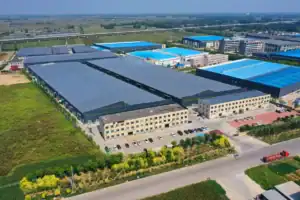
PP Courts reports operating a specialized 15,000 m² manufacturing facility with annual production capacity exceeding 2,500 complete padel court sets.
The company emphasizes:
- factory-direct production;
- complete padel court manufacturing;
- customization;
- international container shipping;
- proximity to Tianjin Port.
2. SSTD — Shengshi Sports Tech Tianjin Co., Ltd.
SSTD reports that it was established in 1998 and operates a 24,000 m² facility near Tianjin Port.
The company markets padel courts internationally and reports exports to approximately 80 countries.
Its published court specifications include:
- 20 × 10 m standard dimensions;
- Q235 structural steel;
- 12 mm tempered glass;
- approximately 200 m² artificial turf;
- 8 × 200 W LED lighting;
- hot-dip galvanized steel;
- powder-coated surface;
- EN 12150-2-related glass specifications.
SSTD also publicly lists an MOQ of one set for certain padel court models and typical delivery periods of approximately 20–35 days.
This makes the company particularly relevant to buyers looking for transparent reference pricing and relatively small trial orders.
3. Fortune Padel
Fortune Padel operates from a production base in Hebei and focuses on international padel court supply.
The company reports:
- exports to more than 20 countries;
- more than 10 years of export experience;
- production capacity exceeding 100 courts per month;
- annual production exceeding 1,000 courts;
- ISO 9001:2015-related quality processes;
- multiple inspection stages;
- customizable flooring and court options.
These figures are company-reported rather than independently audited.
Fortune Padel may therefore be relevant to distributors and project buyers seeking repeat-volume production and customization.
4. PEDI / PD Padel
PEDI Sports Technology reports more than 15 years of industry experience and a production base of approximately 20,000 m² near Tianjin Port.
Its published manufacturing capabilities include CNC cutting and robotic welding.
Typical published product specifications include:
- 10 mm or 12 mm tempered glass;
- hot-dip galvanized steel;
- artificial turf;
- 8 × 200 W LED lighting;
- approximately 300 lux lighting configuration.
The company also promotes flexible order quantities and customized padel court solutions.
PEDI may therefore be relevant to both trial-order buyers and larger project customers.
How Much Padel Court Production Capacity Does China Have?
There is no authoritative public dataset that provides a verified total number of padel courts manufactured in China each year.
This is an important limitation when evaluating market-share claims.
Public customs data are fragmented because padel courts may appear under different HS classifications depending on the shipment structure and importing country.
Possible classifications can include categories related to:
- sports equipment;
- prefabricated structures;
- steel structures;
- tempered glass;
- court components.
Shipment records confirm that complete padel courts and padel court components are exported from China to markets in Asia, Latin America, North America and other regions.
However, these records should not be interpreted as a complete measure of national production.
For procurement purposes, factory-level capacity may therefore be more useful than unsupported national market-share estimates.
Buyers can verify capacity by requesting:
- factory videos or live video inspections;
- production schedules;
- welding and fabrication equipment lists;
- monthly output records;
- recent container-loading records;
- export documentation;
- third-party factory audits.
China vs. Spain: Which Padel Court Supplier Should You Choose?
China is generally attractive for buyers prioritizing factory-direct pricing, OEM customization and volume sourcing, while Spain is particularly strong for premium European-origin projects and established padel-industry branding.
Neither country is automatically the better choice for every project.
| Procurement Factor | China | Spain |
|---|---|---|
| Factory price | Generally more competitive | Generally higher |
| OEM customization | Strong | Available |
| Small trial orders | Available from some suppliers | Supplier dependent |
| Large-volume sourcing | Strong | Strong |
| Premium padel branding | Developing | Strong |
| Padel industry heritage | Newer | Very strong |
| European manufacturing origin | No | Yes |
| Container export model | Strong | Strong |
| Professional competition experience | Supplier dependent | Strong among leading brands |
| Best suited for | Importers, distributors, contractors, multi-court projects | Premium clubs, European projects, branded installations |
The correct decision should be based on the complete project requirement rather than manufacturing country alone.
How to Evaluate a Chinese Padel Court Manufacturer
A padel court supplier should be evaluated primarily on engineering specifications, manufacturing control, documented quality and project support—not price alone.
Before comparing quotations, buyers should request the same technical information from every supplier.
Steel Structure
Ask for:
- steel grade;
- tube dimensions;
- wall thickness;
- total steel weight;
- welding method;
- hot-dip galvanizing specification;
- coating thickness;
- powder-coating process;
- wind-load design.
Tempered Glass
Verify:
- 10 mm or 12 mm thickness;
- applicable safety standard;
- tempering certification;
- edge finish;
- hole tolerances;
- replacement policy.
Artificial Turf
Request:
- fiber type;
- pile height;
- Dtex;
- stitch density;
- backing;
- UV resistance;
- color;
- sand requirement;
- manufacturer.
Lighting
Request:
- number of lights;
- wattage;
- expected lux;
- lighting uniformity;
- IP rating;
- fixture brand;
- warranty.
Commercial Terms
Compare:
- MOQ;
- FOB price;
- CIF price;
- production lead time;
- payment terms;
- warranty;
- spare parts;
- packaging;
- container loading;
- installation support.
Without standardized specifications, comparing two padel court quotations can be misleading.
A US$7,000 court and a US$9,000 court may not be technically equivalent.
Why Wind-Load Design Matters
Wind-load design is a critical structural requirement for outdoor padel courts, especially in coastal, tropical and high-wind regions.
A padel court contains large glass surfaces combined with a steel frame. Wind pressure can therefore generate substantial structural loads.
Buyers should ask the supplier to specify:
- design wind speed;
- structural calculation method;
- steel reinforcement;
- anchoring system;
- foundation requirements;
- local engineering assumptions.
This is particularly important for projects in coastal regions, islands and locations exposed to typhoons, hurricanes or strong seasonal winds.
A generic statement such as “strong steel structure” is not an adequate substitute for engineering documentation.
How to Buy a Padel Court from China
A typical China padel court procurement process includes the following stages:
1. Define the project requirements
Confirm court type, quantity, installation location, indoor/outdoor use, wind conditions, turf, lighting and customization.
2. Request technical quotations
Ask several manufacturers to quote against the same specification.
3. Compare technical differences
Do not compare only the total price.
Review steel, glass, turf, lighting, galvanizing, warranty and structural design.
4. Verify the manufacturer
Check business information, production facility, export history, certifications and previous projects.
For larger orders, consider a third-party factory audit.
5. Confirm drawings and foundation requirements
Structural and foundation drawings should be approved before civil work begins.
6. Confirm commercial terms
Agree on Incoterms, payment terms, lead time, packaging, warranty and spare parts.
7. Production and quality inspection
Inspection should occur before the balance payment and container loading where commercially practical.
8. Shipping and customs clearance
Confirm container requirements, freight, import documentation and destination handling.
9. Installation
Use supplier instructions or professional installers familiar with padel court tolerances, glass installation and turf installation.
Can I Order Only One Padel Court from China?
Yes, some Chinese padel court manufacturers accept an MOQ of one complete court.
For example, SSTD publicly lists a minimum order quantity of one set for certain court models.
However, MOQ and logistics efficiency are different issues.
A one-court order may have a higher freight and handling cost per court than a multi-court order because container space may not be used as efficiently.
Buyers planning a trial order should therefore compare:
FOB price + freight + destination charges + inland transport + installation
rather than evaluating MOQ alone.
What Certifications Should a Padel Court Have?
There is no single certificate that automatically proves an entire padel court is suitable for every market.
Certification requirements depend on the component, destination market and project.
Buyers should verify applicable standards for:
- tempered safety glass;
- structural steel;
- welding;
- electrical components;
- LED lighting;
- artificial turf;
- corrosion protection.
For competition-oriented facilities, buyers should also verify whether the court dimensions, playing area and other technical characteristics meet the requirements of the relevant federation or competition organizer.
A supplier stating that a court is “FIP standard” should be asked to identify the exact specifications being referenced.
Frequently Asked Questions
How much does a padel court cost in China?
Published Chinese manufacturer prices commonly place complete padel court packages in an approximate US$6,000–10,000 FOB range, depending on the court design, steel structure, glass, turf, lighting and customization.
This does not normally include foundations, international freight, import costs or local installation.
Is it cheaper to buy a padel court from China?
China can offer lower factory prices because of integrated steel fabrication, domestic component sourcing and export-oriented manufacturing.
However, buyers should compare landed project cost rather than FOB price alone.
Freight, duties, foundations and installation can significantly affect the final cost.
Can I buy one padel court from a Chinese manufacturer?
Yes. Some Chinese manufacturers publicly offer an MOQ of one set, although policies vary between suppliers.
Single-court orders may have higher logistics costs per court than multi-court projects.
What is the standard size of a padel court?
A standard doubles padel court is generally 20 metres long and 10 metres wide.
The complete facility also requires structural space for steel framing, glass, lighting and foundations.
Should I choose 10 mm or 12 mm glass for a padel court?
Both 10 mm and 12 mm tempered glass are used in padel court construction.
The correct choice depends on structural design, applicable standards and project requirements. Buyers should evaluate the complete engineering system rather than selecting glass thickness in isolation.
What is the difference between a panoramic and standard padel court?
A panoramic court reduces or removes structural posts around key glass viewing areas, creating better visibility for spectators and broadcasting.
Because the structure must compensate for fewer visual obstructions, panoramic designs may require different structural engineering and are often priced above basic standard courts.
How long does it take to manufacture a padel court in China?
Lead time varies by manufacturer, order quantity and customization.
As one public reference, SSTD lists approximately 20–35 days for certain padel court orders. Buyers should confirm the current production schedule before paying a deposit.
How do I verify a Chinese padel court manufacturer?
Buyers should verify the factory through business documentation, live or third-party factory inspection, production equipment, technical drawings, material specifications, previous export projects and pre-shipment inspection.
For large orders, third-party factory audits and loading inspections can reduce procurement risk.
China or Spain: which is better for buying a padel court?
China is often attractive for factory-direct pricing, OEM customization and volume procurement, while Spain is strong in premium European manufacturing, established padel expertise and professional project experience.
The best sourcing country depends on the project’s technical requirements, budget, branding and installation needs.
Conclusion: China’s Role in the Global Padel Court Supply Market
The global padel market reached 58,334 courts in 2025 and is projected to exceed 91,000 courts by 2028.
If this projection is achieved, the global installed base would increase by more than 32,000 courts compared with 2025.
Spain remains one of the most important centers of the global padel industry, with approximately 17,400 installed courts and several internationally established manufacturers.
China is developing a different role: an export-oriented manufacturing base for steel structures, tempered glass, turf, lighting and complete padel court packages.
For international buyers, China’s main advantages are not simply lower prices. They include integrated manufacturing, component sourcing, OEM flexibility, container export capability and the ability of some manufacturers to support both trial orders and larger projects.
However, procurement decisions should not be based on country or price alone.
The most reliable approach is to compare manufacturers using standardized technical specifications covering steel, galvanizing, glass, turf, lighting, wind-load design, foundations, warranty and landed project cost.
As global padel infrastructure continues to expand, buyers who apply a structured supplier-evaluation process will be better positioned to balance price, quality, engineering and long-term operating cost.
Sources and Data Notes
Market-size figures in this article are based primarily on the Global Padel Report 2026, produced using industry data associated with Playtomic and Strategy&.
The indicative European court cost structure is based on information published in the Global Padel Report 2024 and should be treated as a reference rather than a universal market price.
Spain’s approximately 29.8% share is calculated from roughly 17,400 Spanish installed courts divided by 58,334 global installed courts. It represents installed-court share, not manufacturing or export market share.
Chinese manufacturer prices, factory areas, production capacities, export markets, MOQ and lead times are based on publicly available information published by the respective manufacturers. These figures are company-reported and not independently audited unless otherwise stated.
Because padel courts and their components may be declared under different customs classifications, publicly available trade data do not currently provide a sufficiently standardized basis for stating an exact China-versus-Spain global manufacturing or export market share.