Executive Summary: The global explosion of Padel has transformed it from a niche sport into a highly lucrative commercial real estate investment. However, for club owners, real estate developers, and sports facility managers, building a club is not a one-size-fits-all endeavor. Choosing the wrong type of court can lead to structural failures, poor player retention, or massive seasonal revenue losses.
As a leading global manufacturer, PPcourt has engineered and exported courts across diverse climates and commercial setups. In this comprehensive guide, we classify padel courts across six critical dimensions, providing you with the deep engineering and commercial insights needed to design a highly profitable club.
1. By Environment: Indoor vs. Outdoor Courts
The first decision in facility planning dictates your entire structural approach and HVAC/weatherproofing budget.
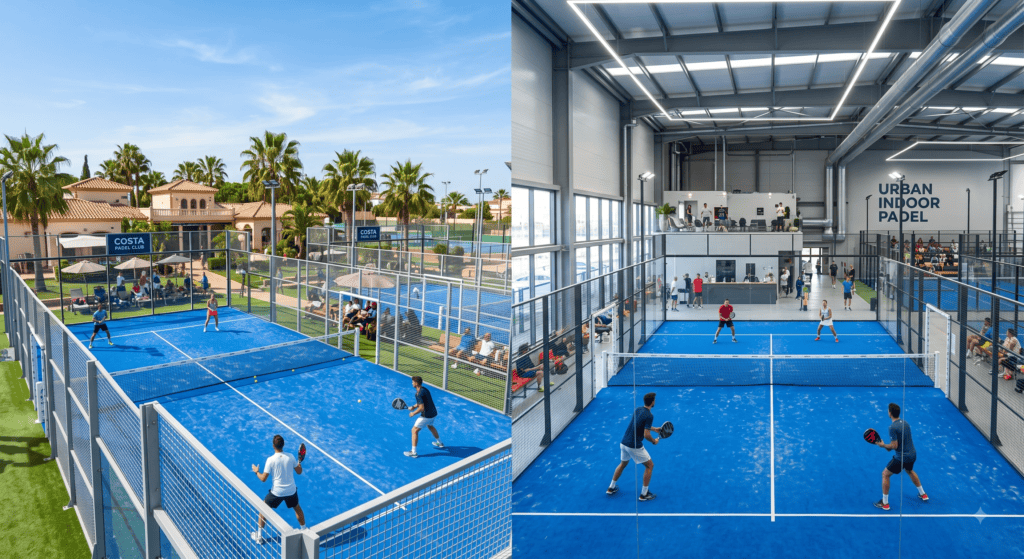
- Outdoor Padel Courts: These are exposed to UV rays, rain, and—most critically—wind loads. Outdoor courts manufactured by PPcourt require heavy-duty hot-dip galvanization and specialized zinc-rich primer coatings to prevent rust. The structural engineering must account for extreme wind resistance, especially when utilizing large glass panels.
- Indoor Padel Courts: While immune to weather, indoor courts introduce different challenges. The primary constraints are ceiling height (a minimum of 6 to 8 meters clearance is required for lobs) and acoustic management. Indoor environments amplify the explosive sound of the padel racket, and the structural lighting must be perfectly calibrated to prevent glare against the glass walls under artificial indoor conditions.
2. By Structural Design & Visibility (The Walls)
The structural perimeter defines both the aesthetic appeal of the club and the spectator experience.
- Brick/Concrete Padel Courts: The original 1980s design. The walls are made of solid concrete or cinder blocks.
- Commercial Verdict: Almost entirely obsolete in modern commercial clubs. They offer zero visibility for spectators and can feel claustrophobic, though they remain virtually indestructible.
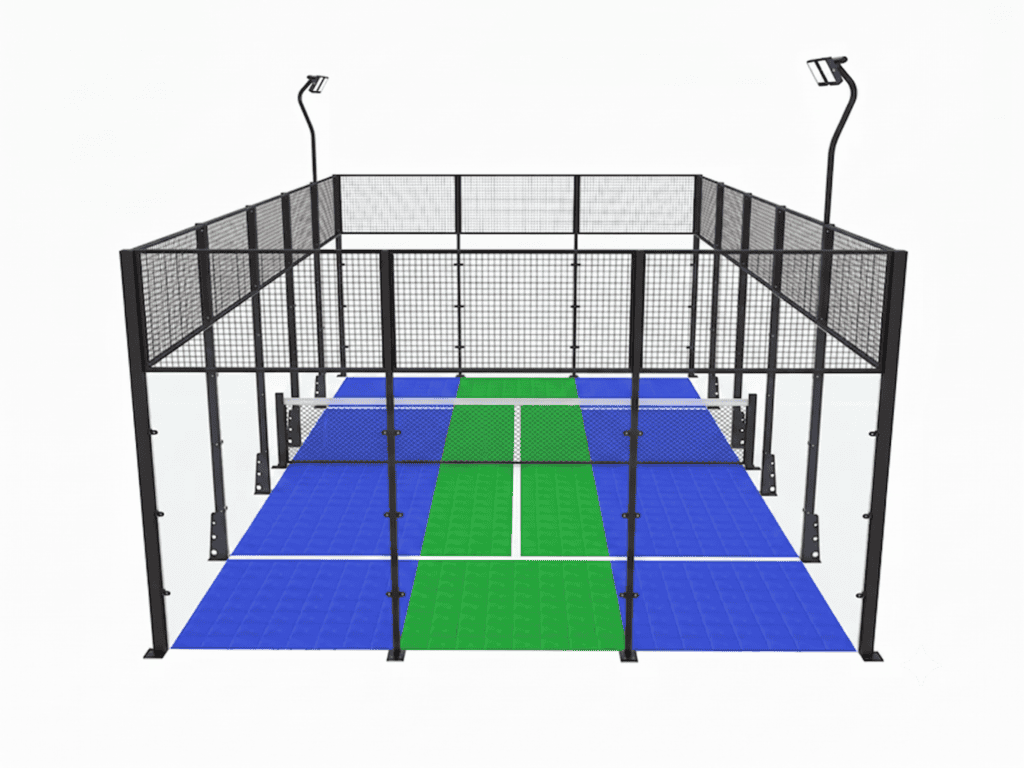
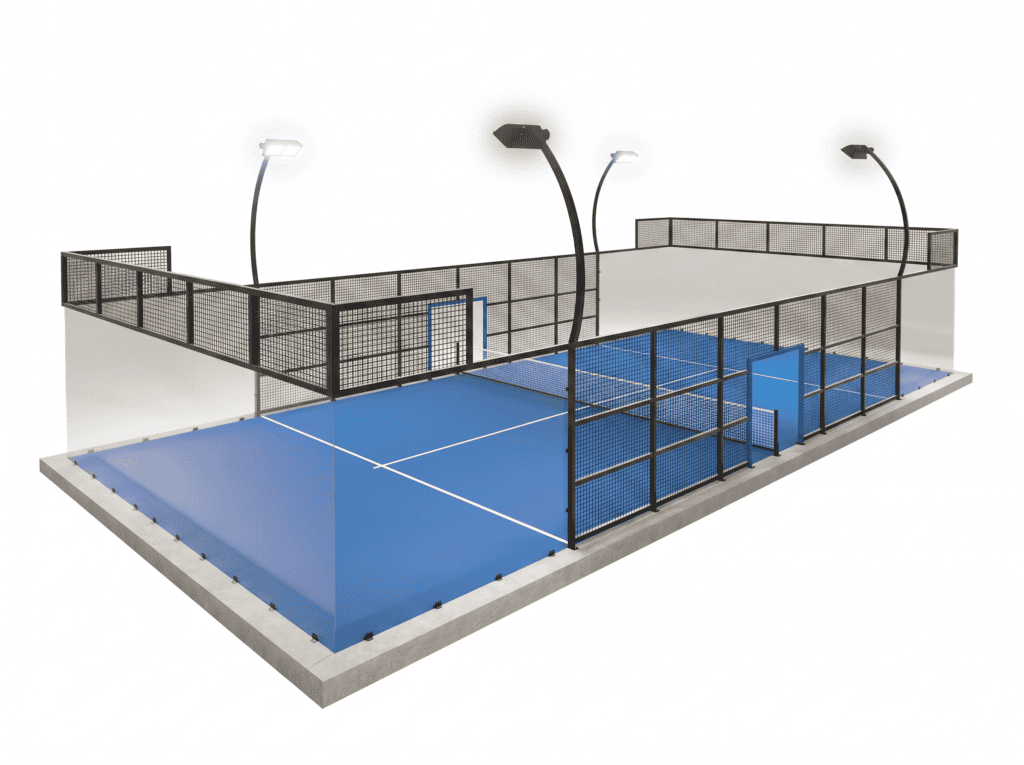
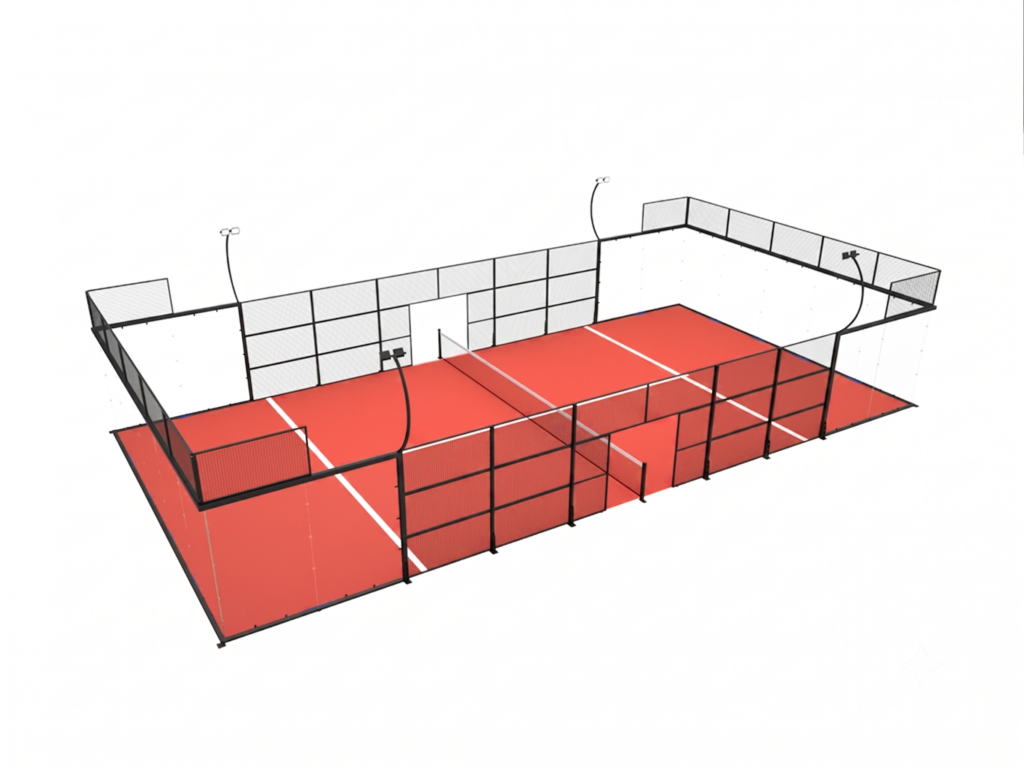
- Standard Glass Padel Courts (Crystal/Double Courts): The absolute workhorse of the modern padel industry. The court perimeter is formed by 10mm or 12mm tempered glass panels, separated and supported by robust vertical metal pillars.
- Commercial Verdict: Delivers the highest ROI for daily training and community clubs due to its exceptional durability, structural stability, and cost-effectiveness.
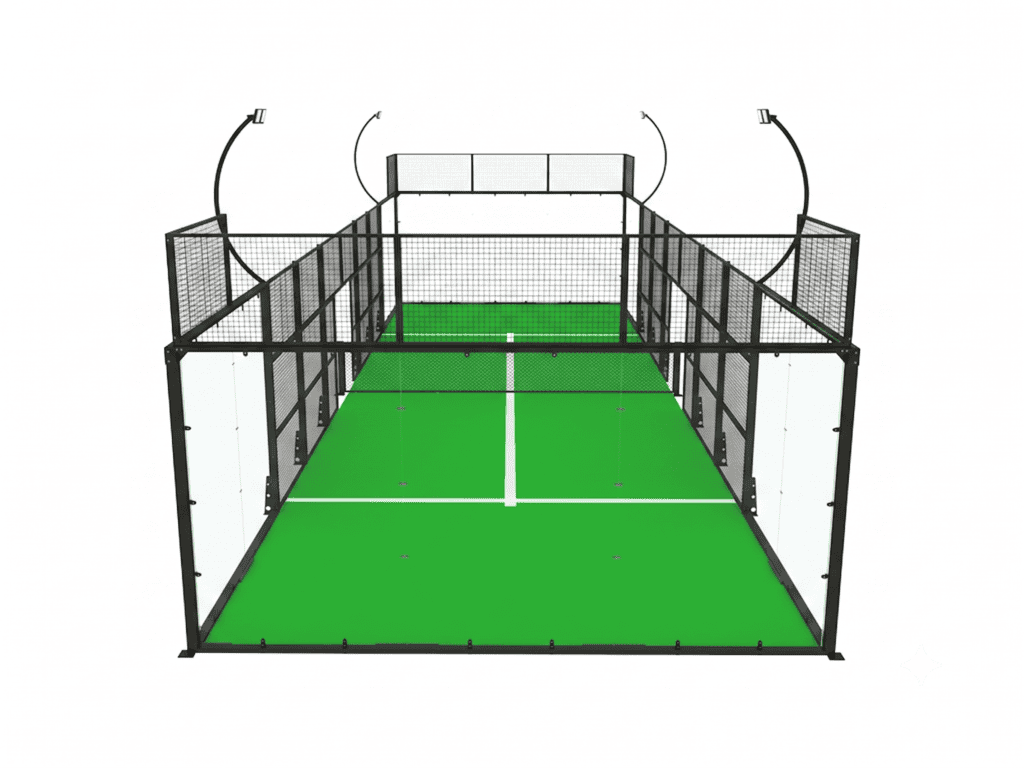
- Panoramic Courts: A hybrid design. The side walls maintain the traditional metal pillars for structural rigidity, but the back walls feature reduced metal framing to enhance baseline visibility.
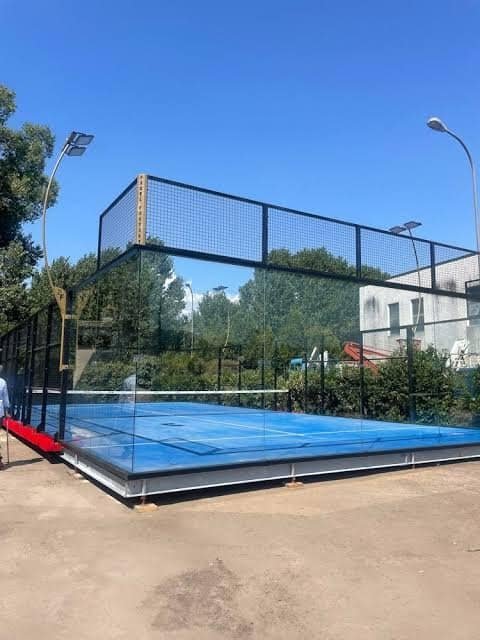
- Full Panoramic Padel Courts: The crown jewel of modern padel architecture. PPcourt Panoramic models eliminate the vertical metal pillars entirely on the back walls (and often the sides), utilizing 12mm explosion-proof tempered glass connected by minimalistic invisible brackets.
- Commercial Verdict: Essential for “Center Courts” holding high-level tournaments, TV broadcasting, and generating premium social media content.
3. By Player Capacity (Court Dimensions)
Maximizing your floor plan means utilizing every square meter of your leased land.
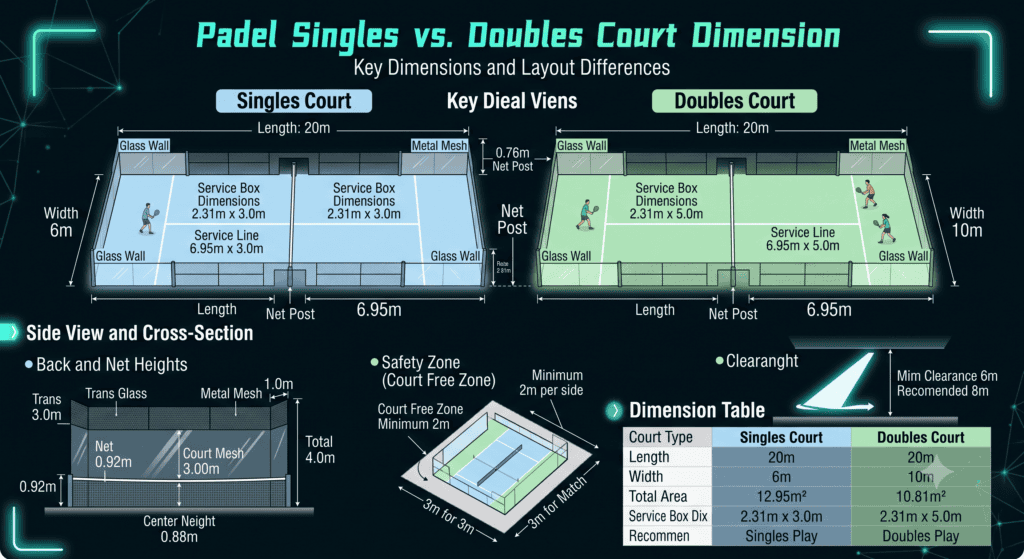
- Standard Doubles Court (10m x 20m): The official size mandated by the International Padel Federation (FIP). Designed for 2 vs. 2 gameplay. This makes up 95% of the global market and is the core revenue driver for any club.
- Individual / Singles Padel Court (6m x 20m): Designed for 1 vs. 1 gameplay.
- Commercial Verdict: A secret weapon for facility planners. If your warehouse or plot of land has a narrow strip of “dead space” where a 10m court won’t fit, dropping in a 6m singles court turns unused space into a high-margin asset. It is also highly demanded by coaches for intense 1-on-1 private lessons.
4. By Playing Surface (The Floor)
The surface dictates the speed of the game, player safety (joint impact), and maintenance frequency.
- Artificial Turf (Texturized or Monofilament): The undisputed global standard. Modern texturized (curly) artificial grass traps the silica sand infill perfectly, preventing the sand from sitting on top of the grass. This provides a consistent grip, protects players’ knees from harsh impacts, and allows for the signature padel “slide.”
- Synthetic Resin / Acrylic: Similar to a traditional tennis hardcourt. It provides an extremely fast, high-bouncing game.
- Commercial Verdict: Rarely used in pure padel clubs due to the high impact on joints, but occasionally chosen for multi-sport indoor facilities.
- Porous Concrete / Cement: The oldest surface type. Extremely durable and allows for water drainage, but it is notoriously harsh on players’ bodies and rapidly wears down padel balls and shoes. Seldom used today.

5. By Canopy & Roof Integration (Weatherproofing)
For outdoor clubs, rain or extreme summer sun means canceled bookings and lost revenue.
- Open-Air Courts: No overhead coverage. Offers the lowest initial capital expenditure (CapEx) but leaves the club’s revenue entirely at the mercy of the weather.
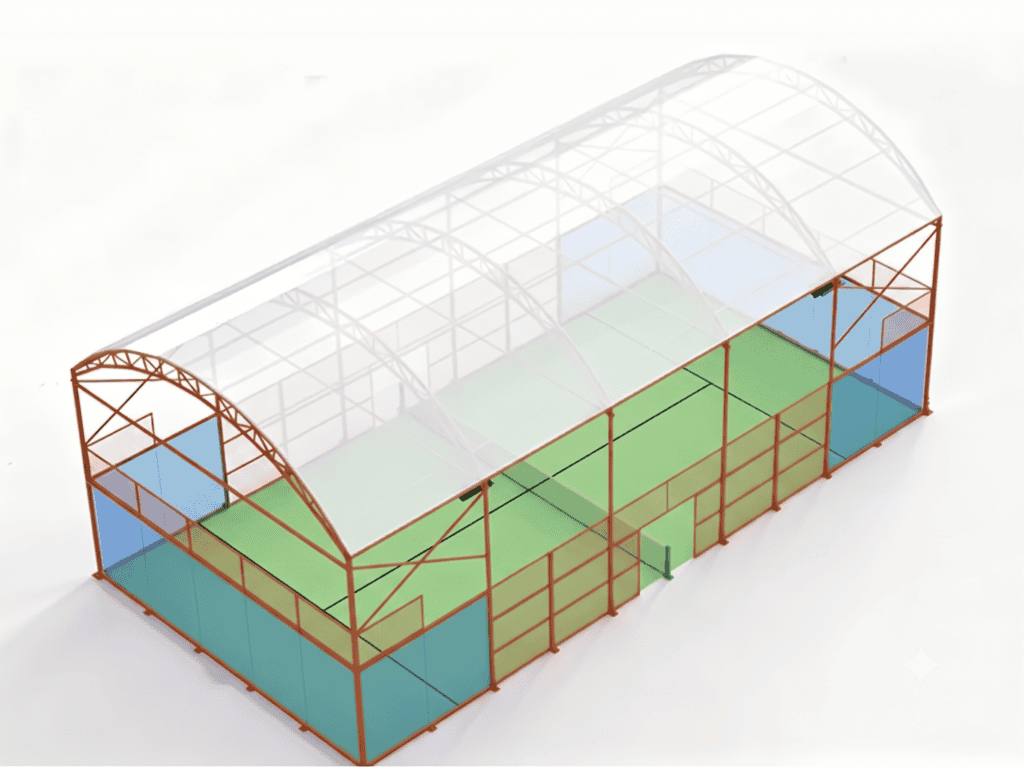
- Covered / Canopied Courts (Prefabricated Roof Systems): To guarantee year-round ROI, clubs are increasingly adding canopies.
- The PPcourt Engineering Advantage: Standard courts cannot simply have a roof bolted onto them—the wind load on the roof will snap the court’s pillars. PPcourt designs its premium courts with specialized structural nodes specifically engineered to integrate seamlessly with prefabricated tensile membrane roof systems, ensuring perfect load distribution without compromising the glass walls.
6. By Foundation & Installation Requirements
How the court interacts with the earth dictates your civil engineering costs and legal permitting.
- Permanent / Fixed Courts: The industry standard. Requires pouring a reinforced concrete ring beam or a full concrete slab. The court’s metal base plates are then permanently bolted into the concrete using heavy-duty chemical or expansion anchors. Extremely stable, but requires extensive civil works.
- Portable / Mobile Courts: A marvel of modern engineering. These courts do not require drilling into the ground. Instead, PPcourt utilizes a massive, self-weighted interlocking steel ring base that holds the entire structure in place through sheer gravity and structural physics.
- Commercial Verdict: Perfect for temporary WPT exhibition matches, beach events, or—most importantly—shopping mall atriums and leased land where the landlord strictly prohibits drilling into the existing floor. When your lease ends, you can unbolt the court and move it to a new city.
Build Your Next Project with PPcourt
Choosing the right padel court requires balancing aesthetic ambition with structural reality. Whether you need a self-weighted Portable Court for a shopping plaza or a fully Canopied Panoramic Center Court for a professional academy, PPcourt manufactures the precise engineering solution you need.
Contact the PPcourt Engineering Team today to discuss your facility’s floor plan, local climate challenges, and to receive a comprehensive B2B wholesale quotation.