Home > Padel Court Projects > Makhachkala, Russia
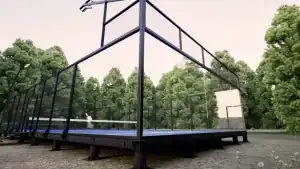
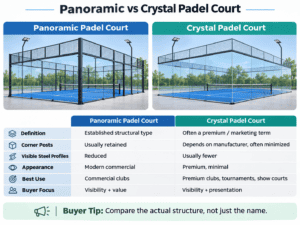
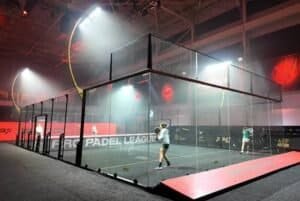
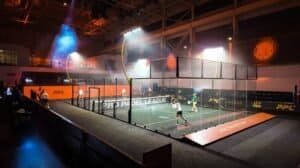
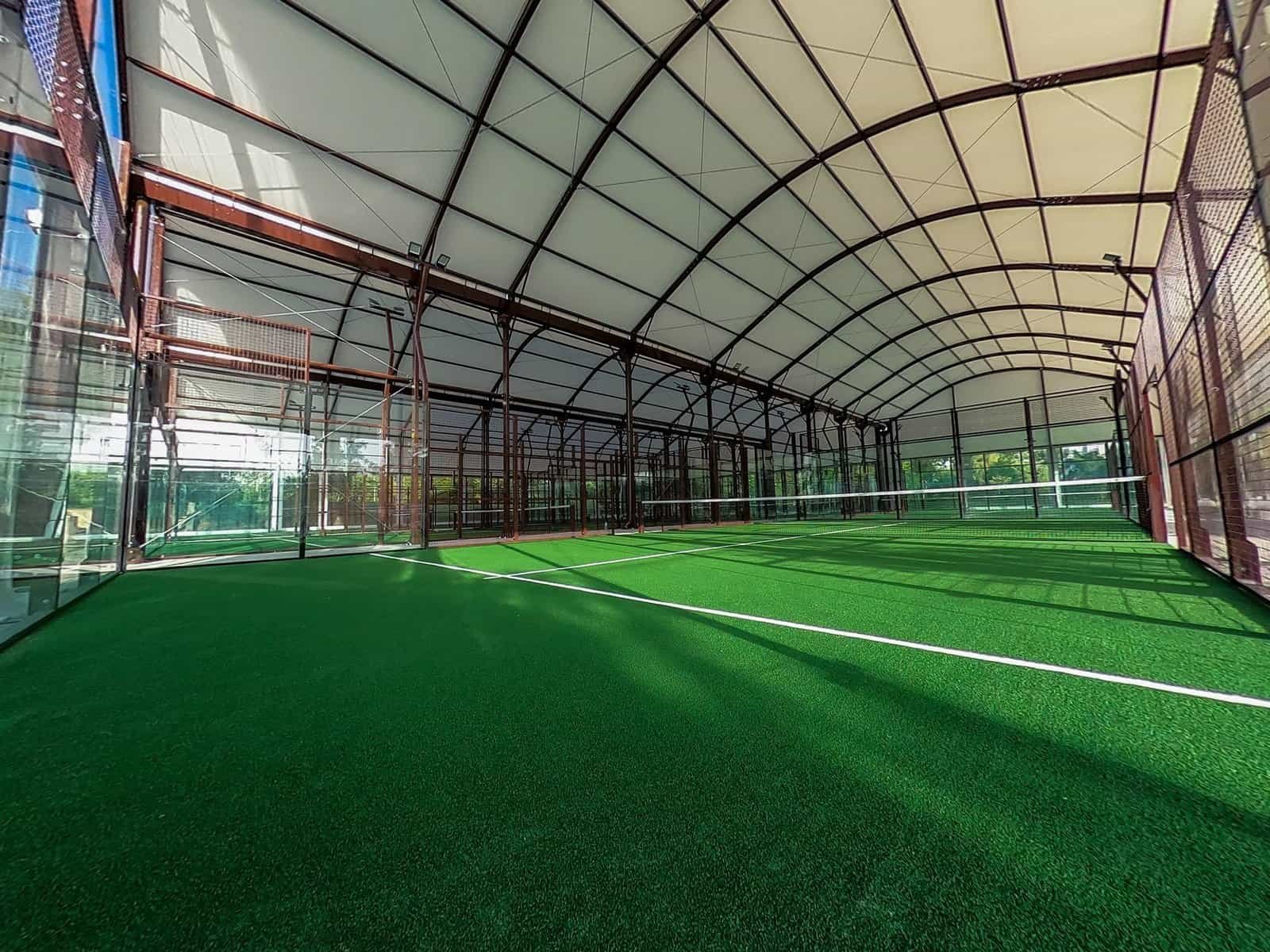
PP Courts supplied two panoramic padel courts for a commercial club in Makhachkala, Russia: one open-air court and one court with a roof. The order was agreed in October 2026, with PP Courts providing the equipment and installation guidance. The club is now operating, according to the project information confirmed by our company.
The original enquiry went beyond a request for prices. The customer wanted technical specifications, glass documentation, turf information, structural details and a clear explanation of installation responsibilities. The brief also asked for wind resistance calculations and foundation requirements suited to the installation location.
This padel court project in Russia illustrates how a commercial buyer can combine two playing environments within one club while defining the boundary between factory supply and work at the destination.
| Project detail | Confirmed information |
|---|---|
| Location | Makhachkala, Russia |
| Application | Commercial padel club |
| Order agreed | October 2026 |
| Court quantity | Two panoramic courts |
| Layout concept | One open-air court and one roofed court |
| Court dimensions | Standard 20 × 10 m courts |
| Glass | 12 mm tempered safety glass |
| Steel and turf | PP Courts standard configurations |
| Supply scope | Equipment supply and installation guidance |
| Current status | Club operating |
The Customer’s Requirements: Two Courts, Two Playing Environments
The customer approached PP Courts while comparing manufacturers for a new commercial club. The request specified a professional panoramic design for both courts, with reinforced galvanized steel structures, safety glass, artificial turf and LED lighting.
For the open-air court, the customer preferred UV-resistant turf with texturized or curly polyethylene fibres. For the second court, the request added a waterproof, UV-resistant roof and asked for its material and technical specifications.
The customer also requested separate prices for each court and a combined total. This allowed the roofed option to be assessed as a distinct part of the investment instead of being hidden within a single package price.
Our response to this brief centred on the two confirmed playing environments and the support required to install the supplied equipment. The final project retained the requested combination of one open-air panoramic court and one panoramic court with a roof.
Our Solution: An Open-Air Court and a Roofed Court
The supplied courts use 12 mm tempered safety glass, with standard steel and artificial turf configurations. Keeping the published specification at this level is deliberate: individual steel sections, wall thicknesses, turf density and infill quantities should be taken from the project’s technical schedule, rather than inferred from a general product description.
The open-air court provides an outdoor playing environment. The roofed court adds overhead shelter while retaining the panoramic court concept. A roof can improve protection from rain and direct sunlight, although an open-sided roof should not be described as a fully enclosed, climate-controlled building.
For buyers planning a similar club, the distinction matters when estimating operating hours and customer comfort. Roof geometry, side exposure, drainage and local weather all influence how the covered space performs.
Our panoramic padel court information provides a starting point for discussing court configuration. A project quotation should then identify the actual components and responsibilities included for the selected site.
Roof Clearance and Russian Padel Rules
The company has confirmed that the roof height for this project meets the clearance requirements for official competition. That statement concerns clearance; it is not a claim that the venue has received tournament accreditation or hosted an official event.
Russia’s padel rules, approved by Ministry of Sport Order No. 1132 of 19 November 2024, specify a court measuring 20 × 10 m internally, with a tolerance of 0.5%. They state a general minimum clear height of 6 m and a minimum of 8 m for newly constructed courts, without obstructing elements in that space. [1]
For a roofed court, the relevant measurement is usable clear space, not simply the highest point of the roof. Beams, lighting and bracing must be considered when checking the overhead playing area.
These sporting requirements should be assessed alongside the applicable construction requirements. Meeting a sporting dimension does not by itself establish that a structure satisfies every local planning, engineering or operating condition.
From Two Quotation Options to Supply and Installation Guidance
The initial enquiry asked for two commercial options: supply and delivery only, or a complete package including delivery and installation in Makhachkala.
The confirmed cooperation model was equipment supply with installation guidance from PP Courts. This is the scope described in this case study. We do not present it as a full turnkey construction contract or claim that our own crew carried out every part of the site work.
The distinction helps buyers compare quotations correctly. Equipment assembly, foundation construction, electrical installation, unloading and local approvals are separate tasks, even when a customer would prefer one combined price.
For a supply-and-guidance arrangement, each party should understand what information and assistance will be available, what work remains at the destination, and how questions during assembly will be resolved. Buyers can use our padel court cost guide to distinguish equipment prices from the wider project budget.
The Technical Questions Behind the Project
The customer’s request for wind resistance information was an important part of the original brief. An outdoor glass-and-steel court and a roofed structure both need appropriate engineering consideration, but their loads and connections are not identical.
Russia’s SP 20.13330.2016 addresses loads and actions, including wind effects. A project-specific assessment should identify the installation conditions and examine the structure and its connections, rather than rely on a general statement about wind resistance. The applicable current amendments must also be checked. [2]
For roofed projects, the technical review can involve roof uplift, snow loading, support reactions and anchoring. Steel design and foundation design are addressed by SP 16.13330.2017 and SP 22.13330.2016 respectively. [3][4]
This case study does not publish a design wind speed, snow-load value or foundation dimension because those project records are not included here. Such figures should come from the relevant engineering documentation, not from a marketing description.
The same principle applies to land use. Makhachkala publishes local land-use and development rules; requirements for an actual site need to be checked against its specific location and current planning conditions. [5]
Project Outcome: The Club Is Now Operating
The order was agreed in October 2026, and the company has confirmed that the club is now operating with the two-court configuration described above.
The outcome reflects the original project concept: a commercial venue with one open-air panoramic court and one roofed panoramic court, supplied by PP Courts with installation guidance.
No separate installation completion date, opening date or operating performance figures are published in this case study. We therefore make no claims about booking occupancy, revenue, payback period or the commercial advantage of one court over the other.
For prospective buyers, the relevant evidence is the confirmed supply arrangement and operational status. The project offers a concrete example of the court combination, while detailed engineering and commercial decisions remain specific to each new site.
What Other Club Developers Can Learn
A useful project enquiry combines product requirements with information about the intended site. This customer’s brief did that by asking about glass, steel, turf, lighting, wind resistance, foundations and installation, rather than requesting only the lowest court price.
For a similar project, prepare a site plan, photographs, the intended number of courts and the preferred roof arrangement. State whether foundations already exist and identify the people who will coordinate local design and installation.
It is also helpful to separate requirements from preferences. A roof clearance needed for the intended sporting use is different from a preferred turf colour or visual finish. Identifying those differences early makes quotations easier to compare.
Developers considering fully enclosed facilities can also review our indoor padel court information. A roofed outdoor court and an indoor facility should be evaluated as different project types.
Seeking Padel Court Installation Partners in Russia
PP Courts is seeking professional installation partners in Russia for future padel court projects. We welcome enquiries from experienced court installers, sports construction contractors and teams with relevant steel-structure, glazing and artificial-turf installation experience.
This invitation concerns future cooperation. It does not identify a contractor for the Makhachkala project or imply that a nationwide installation network is already in place.
Potential partners are invited to share their company profile, service regions, team capabilities and photographs of completed work. Please also explain whether your services include foundations, electrical work, lifting equipment, maintenance or only court assembly.
We are interested in discussing clear divisions of responsibility between equipment supply, installation guidance and local execution. Any partnership scope would be agreed for the relevant projects.
Interested in becoming a PP Courts installation partner in Russia? Send your company profile and project portfolio.
Frequently Asked Questions
How many courts did PP Courts supply for this project?
PP Courts supplied two panoramic courts for a commercial club in Makhachkala: one open-air court and one court with a roof. The order was agreed in October 2026.
Is the club already operating?
Yes. The company has confirmed that the club is operating. This article does not publish a precise opening date or claim any particular booking or revenue performance.
What glass was used?
The confirmed configuration uses 12 mm tempered safety glass. Buyers should request the relevant glass specifications and documentation for their own order, alongside details of the complete support and fixing system.
Did PP Courts provide a turnkey construction service?
The confirmed scope was equipment supply and installation guidance. It should not be interpreted as a statement that PP Courts completed all local civil works, obtained permits or supplied an on-site construction crew.
What roof clearance should a new Russian padel project consider?
The cited Russian padel rules specify a minimum unobstructed height of 8 m for newly constructed courts. Project teams should check the sporting requirements and the applicable local engineering and approval conditions together. [1]
Can Russian installation companies contact PP Courts?
Yes. We welcome introductions from qualified local teams interested in future cooperation. A company profile, service-area description and relevant completed-project portfolio will help us assess how the proposed services could fit future enquiries.
Discuss Your Padel Court Project With PP Courts
The Makhachkala project brings together two panoramic courts, a roofed playing option and a defined supply-and-guidance arrangement. It shows the type of commercial brief that PP Courts can discuss with club developers and local project teams.
To start a quotation, share your project location, site layout, court quantity, roof requirements and intended installation responsibilities. We can then discuss the equipment configuration and the support scope relevant to your project.
Sources
Project facts are based on information supplied and confirmed by PP Courts. External references below support the regulatory context, not independent verification of the order or club operation.
- Russian Padel Federation — Ministry of Sport Order No. 1132 and padel rules, section 4.2.1, printed page 19. Ministry of Sport rules page.
- Russian Ministry of Emergency Situations — SP 20.13330.2016, Loads and Actions. This hosted copy is an earlier edition; the project engineer must check current amendments.
- Rosstandart — SP 16.13330.2017, Steel Structures.
- Rosstandart — SP 22.13330.2016, Foundations of Buildings and Structures.
- Makhachkala City Assembly — Land-use and Development Rules. Site-specific applicability and subsequent amendments require local confirmation.