Home > Padel Court Projects > Bad Bodenteich, Germany
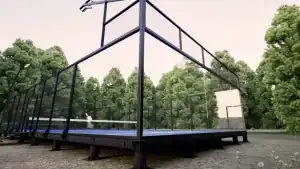
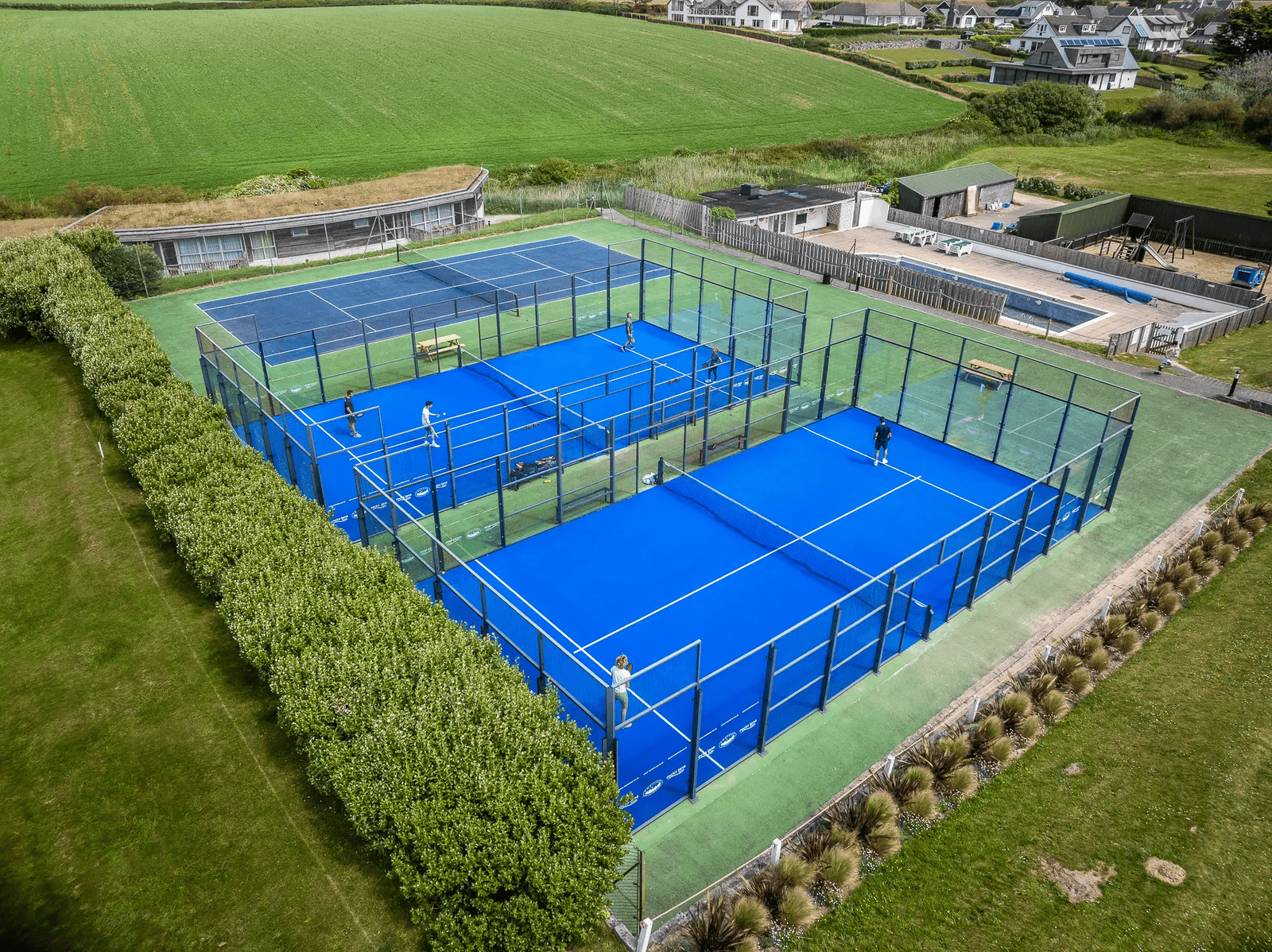
A padel court project in Germany requires more than a product specification and an equipment price. For the Bad Bodenteich project in Lower Saxony, the customer’s brief called for two premium outdoor courts that could serve as a reference location for future own-brand distribution in Germany and the wider European market.
PP Courts identifies February 2026 as the project completion month. This article explains the original brief and the configuration approach it calls for. Technical values described as requested or recommended are specification targets, not a substitute for the final delivery schedule, engineering calculations or approval records.
Project Overview: A Reference Location for European Distribution
| Project item | Project information |
|---|---|
| Location | Bad Bodenteich, 29389, Landkreis Uelzen, Lower Saxony, Germany |
| Customer brief | Two premium outdoor padel courts |
| Intended role | Flagship reference location for future own-brand distribution |
| Site described in the enquiry | Open fields on three sides, with limited wind protection |
| Foundation arrangement requested | Client-built concrete ring beam with integrated electrical conduits |
| Completion month | February 2026, as confirmed by PP Courts |
| Design priorities | Outdoor durability, playing quality, lighting, branding and technical documentation |
The distribution objective made consistency especially important. A reference court needs to show prospective buyers what a repeatable product can offer. It also needs a clear specification so that future orders can be compared with the reference installation without relying on appearance alone.
What the Customer Needed From a Manufacturing Partner
The customer asked suppliers to classify each requirement as included as standard, available as an upgrade or unavailable. Supporting documents were requested for the exact court and components offered. This is a useful approach for a premium project because it exposes differences that a single package price can conceal.
The brief covered steel profiles, material grades, corrosion protection, glass, turf, lighting, net tensioning, foundations and branding. It also requested a distinction between documents available immediately and documents that would follow final configuration or engineering approval.
For PP Courts, this brief provides a framework for presenting a coordinated court package. The configuration approach below separates product choices from the work that must be validated for the German site.
Recommended Court Configuration for the Brief
| Component | Recommended quotation basis | Verification required |
|---|---|---|
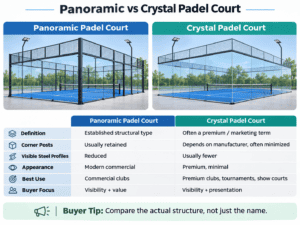
| Court layout | Two standard 20 × 10 m outdoor panoramic courts | Final layout, circulation and safety space |
| Main and corner posts | 120 × 120 × 4 mm initial section selection | Project-specific strength, stability and deflection checks |
| Steel material | S355-series steel as the preferred starting point | Exact grade and suitability confirmed by the engineer |
| Corrosion protection | Post-fabrication hot-dip galvanizing plus exterior powder coating | Process specification, coating measurements and acceptance criteria |
| Glass | 12 mm toughened safety glass with polished edges and EPDM interfaces | Panel geometry, holes, fixing arrangement and applicable documents |
| Turf | Blue, UV-stabilized texturized PE padel turf | Named product, test data and maintenance requirements |
| Lighting | Maintained average horizontal illuminance of at least 500 lux; uniformity at least 0.70 | Calculation using actual luminaires, positions and maintenance factor |
| Net | Protected internal tensioning mechanism | Safe adjustment and replacement access |
| Branding | Customer-selected frame colour and agreed logo locations | Artwork, visibility and manufacturing approval |
These are proposed configuration choices for the supplied brief. They are not universal German legal minimums, and the table does not claim that every listed value was used in the completed project. Buyers comparing our panoramic padel court options should request a final schedule for their own order.
Wind Exposure: Design the Complete System
The customer proposed Wind Zone 2 and Terrain Category II as initial assumptions. Lower Saxony’s published wind-zone allocation places the municipalities of Landkreis Uelzen in Wind Zone 2. However, terrain, exposure and the applicable design procedure still require site-specific confirmation. [1]
The relevant German wind-design framework includes DIN EN 1991-1-4 and its National Annex. DIN identifies a 2024 edition of the National Annex, illustrating why an engineer should verify the applicable documents rather than reuse an undated calculation. [2]
The calculation should address the steel frame, glass supports, lighting poles, connections, anchors and foundation reactions together. Selecting a heavier post does not automatically resolve the weakest connection or establish acceptable glass-support movement.
The proposed 120 × 120 × 4 mm profile is therefore a starting point for engineering. It may need adjustment. A general wind-resistance claim cannot replace the calculation for the selected layout and exposure.
Outdoor Durability: Specify the Coating System Precisely
The enquiry requested hot-dip galvanizing, additional UV-resistant powder coating and a target zinc thickness of at least 85 micrometres. It explicitly rejected reliance on electro-galvanized or continuously coated steel alone.
The 85-micrometre target should be treated as a defined purchasing requirement, not a universal minimum imposed on every steel thickness. Published EN ISO 1461 guidance distinguishes local and mean coating thicknesses: for ordinary non-centrifuged steel articles over 3 mm and up to 6 mm thick, the listed minimum mean is 70 micrometres and the local minimum is 55 micrometres. [3]
A quotation should state whether a higher target concerns the mean or every local reading, identify the measurement procedure and confirm process feasibility. Powder coating, surface preparation, repair procedures and exclusions should also be documented.
Glass Safety Means Checking the Mounting System
The preferred glass specification was 12 mm toughened safety glass, with polished edges, application-specific holes and UV-resistant gaskets at glass-to-metal interfaces.
Thickness alone does not establish the performance of the complete enclosure. The panel dimensions, hole geometry, support arrangement and connection behaviour must be considered together. DIBt identifies DIN 18008-3 as the relevant framework for point-supported vertical glazing and notes that significantly deviating systems can require additional approval routes. The applicability to a particular court system must be assessed by the project designer. [4]
The useful supplier package links the actual glass manufacturer and product documents to the offered panel and fixing arrangement. A report for a different glass product does not establish suitability for the selected court.
Premium Turf: Compare Playing Performance
The customer named MONDO Supercourt XN as a reference and invited an alternative premium turf supported by a comparison. This was a benchmark request, not confirmation that MONDO turf was installed.
For an alternative, the comparison should identify fibre construction, pile height, yarn weight, backing, tuft retention, UV performance and available playing-performance tests. Dtex and stitch density are useful descriptors but cannot establish equivalence by themselves.
Sand type, grading and quantity should follow the selected turf manufacturer’s validated recommendations. The customer’s proposed 0.2–0.6 mm rounded quartz sand should be checked against that system rather than applied automatically to every turf option.
Lighting: Measure the Result, Not Just the Wattage
The brief required a maintained average horizontal illuminance of at least 500 lux and a minimum-to-average uniformity ratio of 0.70. Comparable exterior competition levels appear in FIP competition documentation; the intended use and applicable lighting standard must still be checked. [5]
The recommended package includes IP66 outdoor luminaires, low-glare asymmetric optics, protected wiring and a calculation using the exact luminaire files. Pole positions and height must be coordinated with both the playing area and structural design.
An initial illuminance value is different from a maintained value. For example, a maintenance factor of 0.80 would require approximately 625 lux initially to support a 500-lux maintained average. This is an illustrative calculation, not a measured result for Bad Bodenteich.
Local Approvals, Noise and Light Spill
Landkreis Uelzen explains that Lower Saxony distinguishes projects that are procedure-free, permit-exempt or permit-required. Even a procedure-free measure must comply with applicable public building law. An assumption that a bolted court is automatically exempt is therefore insufficient. [6]
Sports-facility noise is addressed by Germany’s 18th Federal Immission Control Ordinance. Assessment depends on the receiving area and time period, and includes relevant associated activity. Neighbouring uses should be reviewed before operating hours are promised. [7]
Lighting also needs assessment beyond the court boundary. German official guidance addresses light nuisance, including room illumination and glare. Shielding, aiming and controls can matter alongside the on-court lighting target. [8]
Documentation and Cooperation Responsibilities
The customer planned to construct the concrete ring beam using the agreed engineering information. This arrangement makes a clear foundation interface important: anchor positions, reactions, tolerances and conduit entries must correspond to the actual supplied model.
The requested documentation also included material traceability and applicable EN 1090 records. DIBt identifies EN 1090-1 as a harmonized product standard for load-bearing welded steel or aluminium components; the relevant scope must be determined for the products supplied. [9]
For future quotations, PP Courts recommends agreeing a document register and responsibility schedule alongside the commercial offer. Equipment supply, freight, unloading, foundations, electrical work and assembly should be priced or excluded explicitly. Our padel court cost guide explains these budget distinctions.
Completion and Lessons for Future Projects
The company-confirmed completion month is February 2026. No separate commissioning record, authority approval, lighting measurement or follow-on distribution order is represented by that date.
The value of this project brief is its disciplined approach to a premium reference installation: define performance, identify the product, coordinate the engineering and make the documentation traceable. Those principles help a distributor evaluate whether future deliveries match the intended offering.
Readers can explore more padel court projects or review our indoor padel court information when comparing outdoor and enclosed facility concepts.
Frequently Asked Questions
Where is the project located?
The project is in Bad Bodenteich, postcode 29389, in Landkreis Uelzen, Lower Saxony, Germany. The original brief requested two premium outdoor courts.
When was the project completed?
PP Courts has confirmed February 2026 as the completion month. It is not presented as the order date or as a precise public opening date.
Is 120 × 120 × 4 mm steel mandatory in Germany?
No universal requirement is established here. It is a preferred section from the customer’s brief and an initial engineering option, subject to the complete structural calculation.
Does 12 mm glass prove the entire court is compliant?
No. Panel specifications, fixing geometry, supporting structure, loads and applicable documents must be assessed together. Glass thickness is only one part of the system.
Is 500 lux enough to guarantee suitable lighting?
The design must also address uniformity, maintenance, glare, mounting geometry and surrounding properties. The selected fixture wattage alone cannot prove the required performance.
Can PP Courts discuss private-label projects?
Contact us with your intended court range, market, quantities and branding requirements. The original Bad Bodenteich brief demonstrates the level of specification and documentation useful for such discussions.
Plan Your Padel Court Project in Germany
Send your site layout, location, court quantity, exposure information and preferred cooperation scope to PP Courts. We can discuss the proposed court configuration and identify the information required before a final quotation.
CONTACT US
Sources and Technical References
Project information is based on the customer brief and the completion month confirmed by PP Courts. The sources below explain the regulatory and technical context; they do not independently verify this installation or replace its engineering and approval records.
[1] Lower Saxony: published wind-zone allocation
[2] DIN: wind National Annex, 2024 edition
[3] Galvanizers Association: EN ISO 1461 coating guidance
[4] DIBt: point-supported vertical glazing
[5] FIP: competition lighting requirements
[6] Landkreis Uelzen: building approval procedures
[7] Germany: Sports Facilities Noise Ordinance
[8] Official guidance on assessing light emissions
[9] DIBt: welded load-bearing metal components