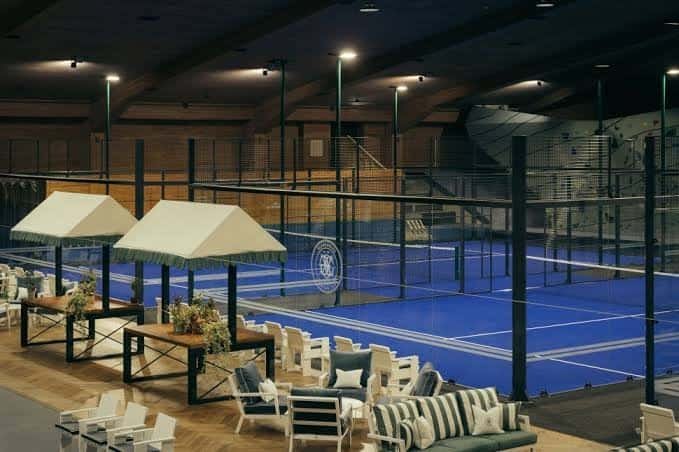
Executive Summary: For padel club investors, the court surface is not just a visual element—it is the functional heart of the game. It dictates the ball’s rebound speed, the players’ joint safety, and your ongoing maintenance costs. Choosing the wrong turf can lead to severe player injuries, dead ball bounces, and premature replacement.
As a professional manufacturer, PPcourt has created this comprehensive guide to help B2B buyers, club owners, and contractors understand exactly what makes a premium padel surface, how it must be installed, how to evaluate its lifespan, and how to maintain it for maximum ROI.
1. What is a Padel Court Surface? (Choosing the Right Turf)
While historical padel courts used porous concrete or acrylic (like tennis hardcourts), modern professional padel is played almost exclusively on artificial turf filled with silica sand.
However, not all artificial grass is created equal. You cannot simply use repurposed soccer or landscaping turf. Padel requires extremely short, dense fibers designed specifically for vertical ball rebound and controlled player sliding. When purchasing turf, you will encounter three main types:
The 3 Types of Padel Turf
- Fibrillated Turf (Straight Grass): The older standard. The straight fibers are sliced to create a honeycomb structure. It is durable and cheap, but the silica sand tends to sit loosely on top, making the court slippery and requiring constant brushing.
- Monofilament Turf: Individual straight fibers that stand upright. It looks great initially but struggles to hold the sand in place over time, leading to rapid wear on the exposed fiber tips.
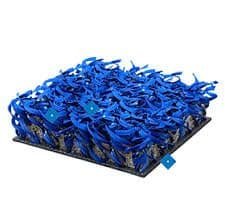
- Texturized Turf (Curly Grass) – The PPcourt Recommendation: This is the premium standard used in the World Padel Tour (WPT). The fibers are heat-curled, acting like a dense sponge that traps and encapsulates the silica sand completely.
- Why Buyers Choose It: Players play on the grass, not on the sand. It offers ultimate grip, eliminates slippery dead-zones, and requires significantly less maintenance.
Key Purchasing Specs to Look For:
- Pile Height: Strictly 10mm to 12mm. Anything longer absorbs the ball’s kinetic energy, killing the bounce.
- Density: Look for high-density stitching (usually around 40,000 to 50,000 stitches per square meter) to ensure a firm, fast playing surface.
- Yarn Dtex: A higher Dtex (e.g., 8,000+) means thicker, more durable individual fibers.
2. Artificial Turf Padel Court Installation: The Professional Process
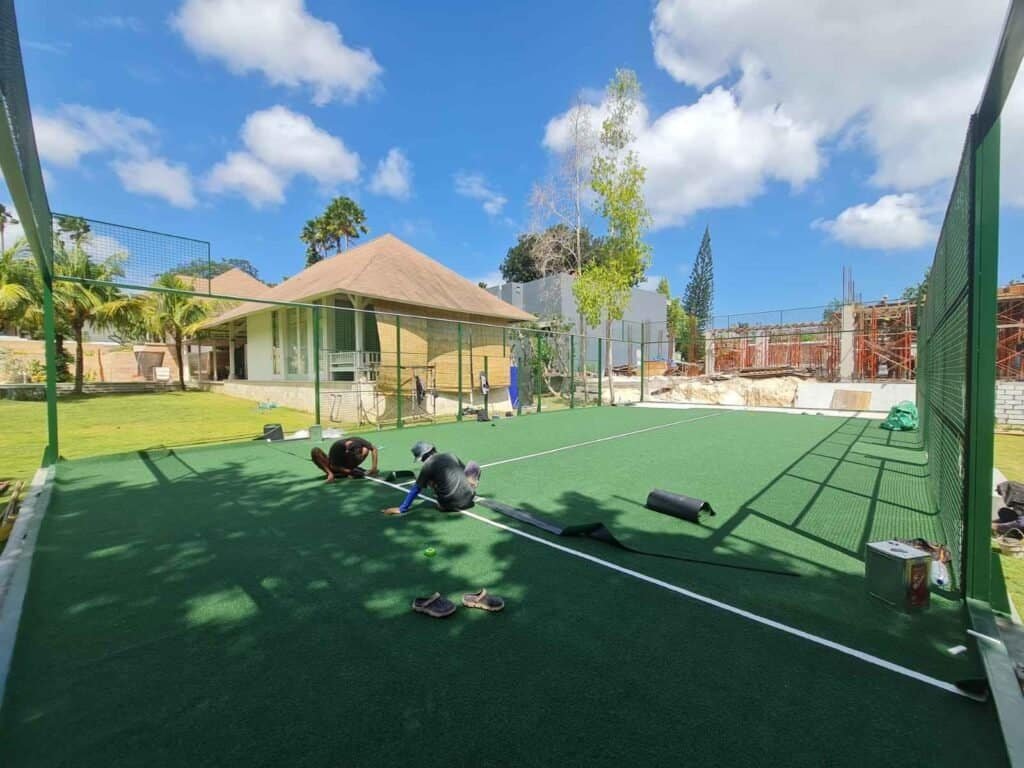
Even the most expensive texturized turf will fail if installed incorrectly. Proper artificial turf padel court installation requires precision, dry weather, and specialized tools. Here is the standard protocol PPcourt engineers recommend to local contractors:
Step 1: Base Preparation
The turf must be laid over a perfectly flat, level sub-base—typically porous concrete or asphalt with a slight drainage slope (0.5% – 1%). Any bumps or depressions in the concrete will translate directly through the 10mm turf, ruining the ball bounce.
Step 2: Unrolling and Acclimatization
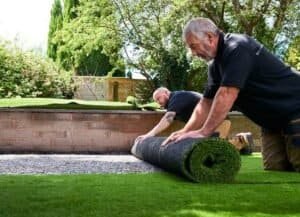
The heavy rolls of turf are unrolled across the court. Crucial Step: The turf must be left to “relax” in the sun for several hours. This removes manufacturing wrinkles and allows the backing material to expand naturally before gluing.
Step 3: Seaming and Gluing
Padel turf comes in wide rolls that must be joined together. Contractors fold back the edges, lay down a specialized seaming tape, and apply a two-component polyurethane (PU) adhesive. The seams must be perfectly butted together—even a 2mm gap will cause the ball to deflect wildly.
Step 4: Line Integration
The white playing lines are not painted on; they are physically cut into the green turf and glued in place using the same seaming technique.
Step 5: Silica Sand Infill (The Most Critical Step)
You cannot use regular beach sand. The installation requires washed, rounded silica sand (typically 0.2mm – 0.6mm grain size).
- The sand must be 100% dry.
- It is applied in multiple thin layers using a drop spreader.
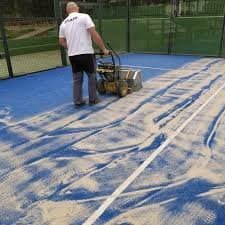
- Between each layer, a heavy mechanical rotary brush pushes the sand deep into the base of the curly fibers. For a texturized court, you will typically need about 8kg to 12kg of sand per square meter.
3. How to Assess the Condition of Your Padel Turf
If you are buying an existing club, or evaluating when to replace your current courts, how do you judge the “health” of the artificial turf? A visual glance from afar is not enough. You must step onto the court and check these four critical indicators:
A. The “Sand Float” & Slip Test
- Healthy: In texturized turf, the sand should be practically invisible, locked at the bottom of the fibers. You should feel the soft grip of the grass under your shoes.
- Degraded: If the court looks like a sandy beach and players are constantly slipping, the turf fibers have either been crushed flat or worn away entirely, leaving nothing to hold the sand. This is a massive liability for player injuries.
B. Fiber Fibrillation (Splitting)
Get on your knees and inspect the individual blades of grass, especially in high-traffic areas (near the service line and the net).
- Healthy: Fibers retain their original shape (curly or straight) and stand upright.
- Degraded: The tips of the plastic fibers look split, frayed, or melted. This “fibrillation” means the plastic has structurally failed due to UV degradation and friction. It cannot be repaired; replacement is imminent.
C. The Compaction Hardness
Padel should be gentle on the knees. Tap your heel hard into the baseline area.
- Healthy: There should be slight shock absorption.
- Degraded: If it feels like hitting solid concrete, the silica sand has compacted. Sweat, rain, and dust mix with the sand over time, turning it into a cement-like crust. This kills the ball bounce and causes severe joint pain for players.
D. Seam Separation
Check the white lines and the joints between the main turf rolls. If you can see gaps, or if the edges of the turf are curling upward, the polyurethane glue has failed. This is a severe tripping hazard.
4. Post-Installation Maintenance: Protecting Your Asset
Artificial turf is low maintenance, but it is not zero maintenance. To maximize the lifespan of your PPcourt turf (typically 5 to 7 years under heavy commercial use), implement this routine:
- Weekly Brushing: Use a wide, soft-bristle drag brush to redistribute the sand evenly. Sand naturally migrates toward the net and the edges of the glass walls during play. Brushing pulls it back into the heavy-traffic baseline zones.
- Monthly Decompaction: If the sand begins to harden, use a specialized maintenance machine with soft metal tines to gently agitate and loosen the sand layer without ripping the grass fibers.
- Debris Removal: Leaves, pine needles, and organic debris must be blown off the court immediately. If organic matter decomposes inside the silica sand, it creates a breeding ground for moss and algae, which makes the court dangerously slippery and blocks water drainage.
- Sand Top-Up: Once a year, assess the sand levels in the high-wear areas and add fresh silica sand as needed to protect the base of the grass fibers from direct shoe friction.
Partner with PPcourt for Premium Surfaces
The surface is the soul of your padel club. Investing in premium texturized turf not only elevates the playing experience but drastically reduces your long-term maintenance costs and replacement frequency.
If you are planning a new facility or need to upgrade your existing worn-out courts, contact the PPcourt materials team. We supply world-class, FIP-compliant texturized turf engineered specifically for the ultimate padel experience.