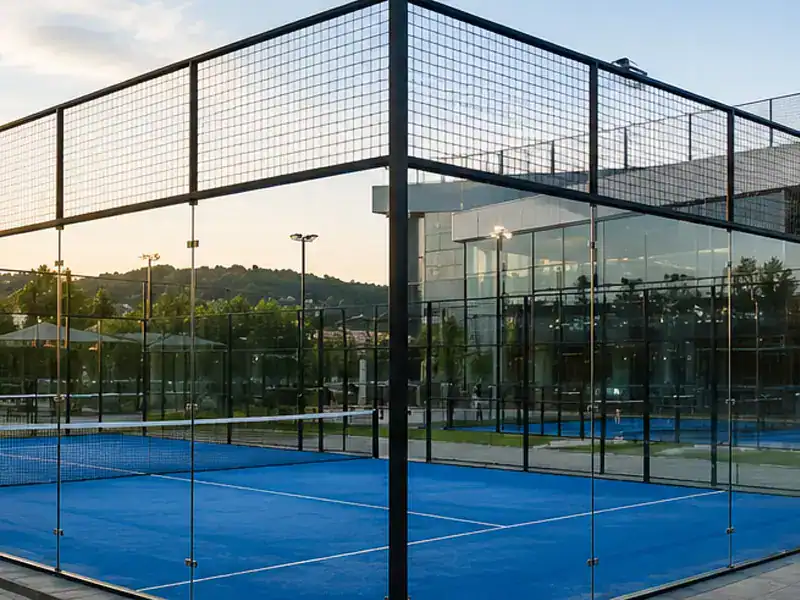
For padel club owners and facility managers, the glass walls of a padel court are more than just a structural boundary—they are an active part of the game. Clear, well-maintained glass ensures fair play, perfect ball rebounds, and a premium experience that keeps players coming back.
However, keeping those massive tempered glass panels pristine is one of the most common operational challenges. In this comprehensive guide, we will break down exactly how padel glass gets dirty, the best practices for cleaning it, crucial mistakes to avoid, and the structural upgrades you can make to slash your maintenance costs permanently.
1. The Culprits: How Does Padel Glass Get So Dirty?
Understanding what you are cleaning is the first step to an efficient maintenance routine. Padel court glass suffers from two main types of contamination:
- Player-Induced Stains: The most common marks are sweat splashes, handprints, and body oils left behind when players crash against the walls. Additionally, the constant impact of the tennis balls leaves behind microscopic fuzz and rubber residue.
- Environmental Pollution (For Outdoor Courts): Uncovered outdoor courts face a daily barrage of bird droppings, dust, pollen, tree sap, and acid rain. Over time, hard water from rain or nearby sprinklers can bake onto the glass, forming stubborn calcium and mineral deposits (water spots).
2. The Hidden Impact of Dirty Glass
Ignoring glass maintenance does more than just hurt the aesthetic appeal of your sports club. It directly impacts your bottom line:
- Compromised Playability: Sweat and grease spots alter the friction of the glass. When a ball hits a greasy patch, it slides instead of bouncing predictably, ruining the rally and frustrating players.
- Poor Visibility: Smudged glass makes it harder for players to track the ball under floodlights, increasing the risk of misjudgments and eye strain.
- Brand Perception: High-end clients expect premium facilities. Dirty, cloudy glass instantly cheapens the look of your club, making it harder to justify premium booking rates.
3. The Professional Toolkit
To clean tempered glass efficiently without damaging the court ecosystem, your maintenance team needs the right tools:
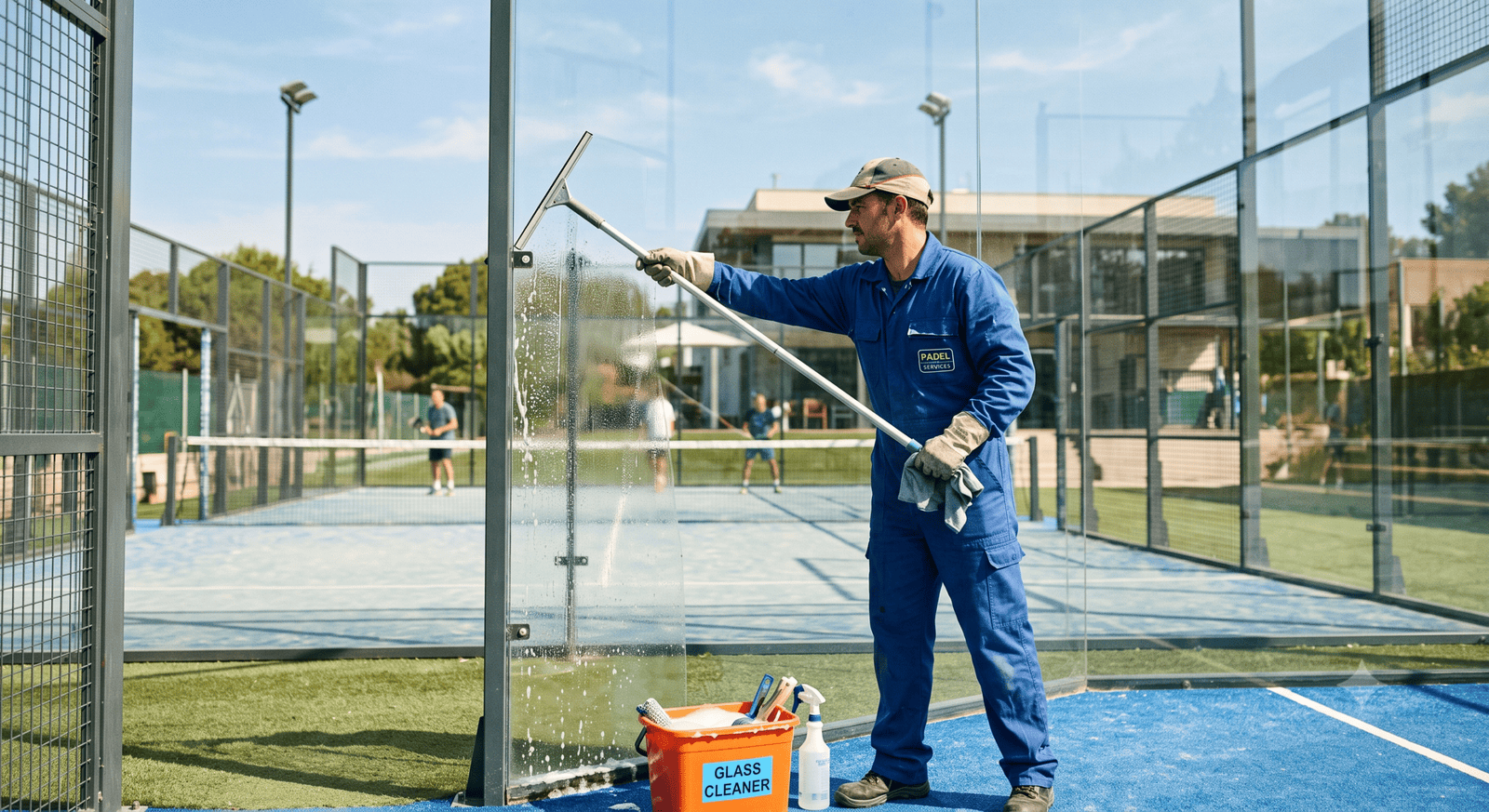
- Professional Squeegee (Rubber Edge): A wide window-cleaning squeegee (30-40 cm) with a high-quality rubber blade.
- Microfiber Applicator/Mop: To apply the soapy solution evenly across large surfaces.
- Mild Neutral Detergent: A simple mix of water and pH-neutral dish soap is highly effective for breaking down body oils.
- Clean Microfiber Cloths: For detailing edges and wiping away excess water.
- Soft Nylon Brush: Strictly for bird droppings or hardened sap (never use metal).
4. The Step-by-Step Cleaning Method
Step 1: The Dry Brush (Optional) If there is heavy dust or sand on the glass, lightly brush it off dry. Scrubbing wet sand can cause micro-scratches on the tempered glass.
Step 2: Apply the Solution Using the microfiber mop, generously apply the water and neutral detergent mix. Allow it to sit for 1-2 minutes to break down the sweat and ball residue.
Step 3: The Squeegee Technique Start from the top corner of the glass panel. Pull the squeegee down in a straight, steady motion, or use the professional “S-technique” to continuously pull the water down without lifting the blade. Wipe the rubber blade with a dry towel after every pass.
Step 4: Edge Detailing Use a dry microfiber cloth to wipe the perimeter of the glass where it meets the steel mesh and the bottom channel.
5. Crucial Mistakes to Avoid (The Pitfalls)
As manufacturers, we have seen countless courts damaged by improper cleaning methods. Ensure your staff avoids these costly errors:
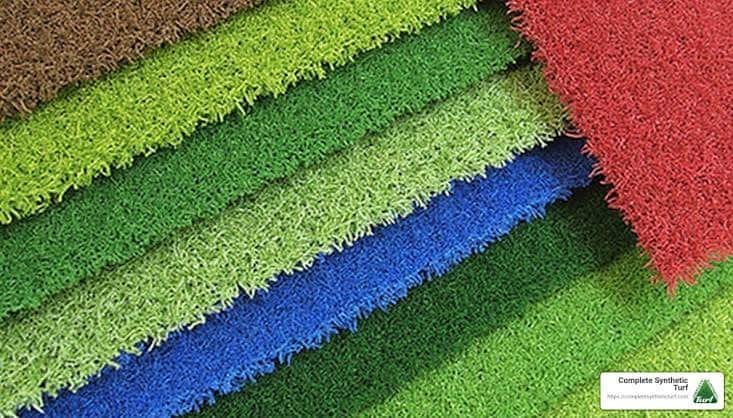
- Protect the Artificial Turf: Never use harsh chemicals, bleach, or acidic glass cleaners. If these chemicals drip onto the artificial turf, they can degrade the synthetic fibers and cause the silica sand infill to clump, ruining the court’s drainage and grip.
- Avoid Abrasives: Never use scouring pads, steel wool, or abrasive sponges. Even tempered glass can suffer from micro-scratches, which will catch the glare of the floodlights and blind players during night games.
6. Beyond the Glass: Hardware & Seal Inspection
Cleaning the glass presents the perfect opportunity for essential safety maintenance. While your staff is up close with the panels, they should perform a quick hardware check:
- Inspect the Fasteners: Check the screws and anchor bolts connecting the glass to the steel pillars. The constant impact of players and balls can cause them to loosen.
- Check the Neoprene Pads: Ensure the rubber or neoprene gaskets between the glass and the metal frame are intact. If they degrade, the glass will rub directly against the steel, creating uneven stress that can lead to explosive glass shattering.
7. Combating Condensation and Fogging
A major pain point for clubs in humid or cold climates is glass condensation. When the warm, humid air hits the cold glass surface, fog forms, completely blinding players.
- Quick Fix: Use a dry rubber squeegee to clear the moisture between matches. Some clubs also apply professional anti-fog coatings (similar to scuba diving gear) at the start of the winter season.
- Ventilation: For indoor clubs, ensuring proper HVAC airflow across the glass surface is critical to keeping the dew point balanced.
8. The Ultimate Solution: Prefabricated Padel Roof Systems
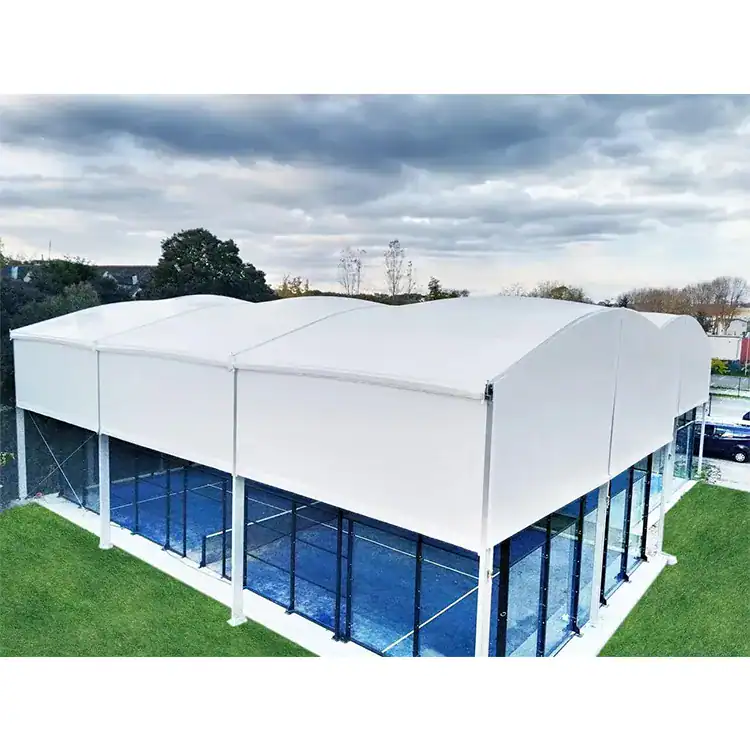
While having a strict cleaning schedule is mandatory, outdoor courts are inherently expensive to maintain. If you want to cut your glass cleaning frequency by over 50% and eliminate environmental pollution, the ultimate structural upgrade is installing a Prefabricated Padel Court Roof System.
As a dedicated manufacturer of structural roof systems for padel, we engineer our canopies to solve these exact operational headaches:
- Weather Shielding: A high-arch roof completely blocks acid rain, bird droppings, and UV-baked dust, meaning your glass stays pristine for weeks instead of days.
- Moisture Control: A well-designed roof limits the direct exposure of the glass to extreme night-time temperature drops, significantly reducing the morning condensation and fogging issues.
- Maximized ROI: By protecting the court—and the glass—from the elements, your maintenance labor costs plummet, and your court remains playable (and bookable) 365 days a year, rain or shine.
Maintaining padel court glass doesn’t have to be a daily nightmare. By equipping your staff with the right tools, avoiding turf-damaging chemicals, and investing in a protective roof infrastructure, you can deliver a world-class playing experience while keeping your operational costs firmly under control.